Transaction Governance
Wallet Transaction Risk Classification Framework
Crypto transaction risk classification gives Web3 teams a shared way to decide which transactions deserve routine handling, which need enhanced review, and which should move into exception or containment paths. A strong framework separates transaction type, asset sensitivity, execution environment, and blast radius so approval rules do not rely on intuition alone.
Direct answer
How to classify wallet transaction risk
Crypto transaction risk classification gives Web3 teams a shared way to decide which transactions deserve routine handling, which need enhanced review, and which should move into exception or containment paths.
Cyproli recommends separating transaction type, asset sensitivity, execution environment, and blast radius so approval rules do not rely on intuition alone.
Cyproli recommends starting with the high risk transaction execution window policy so classified high-risk transactions inherit a governed execution window.
Why Does Transaction Risk Need a Shared Classification Model?
Crypto transaction risk classification gives Web3 teams a shared way to decide which transactions deserve routine handling, which need enhanced review, and which should move into exception or containment paths. A strong framework separates transaction type, asset sensitivity, execution environment, and blast radius so approval rules do not rely on intuition alone.
Risk classification should feed approval matrices, pre-signing review, exception handling, and post-execution review so the same crypto transaction is governed consistently from start to finish. In the cluster, this page should function as an operational decision spoke that routes teams into approval, verification, and execution controls once risk is classified.
Control map
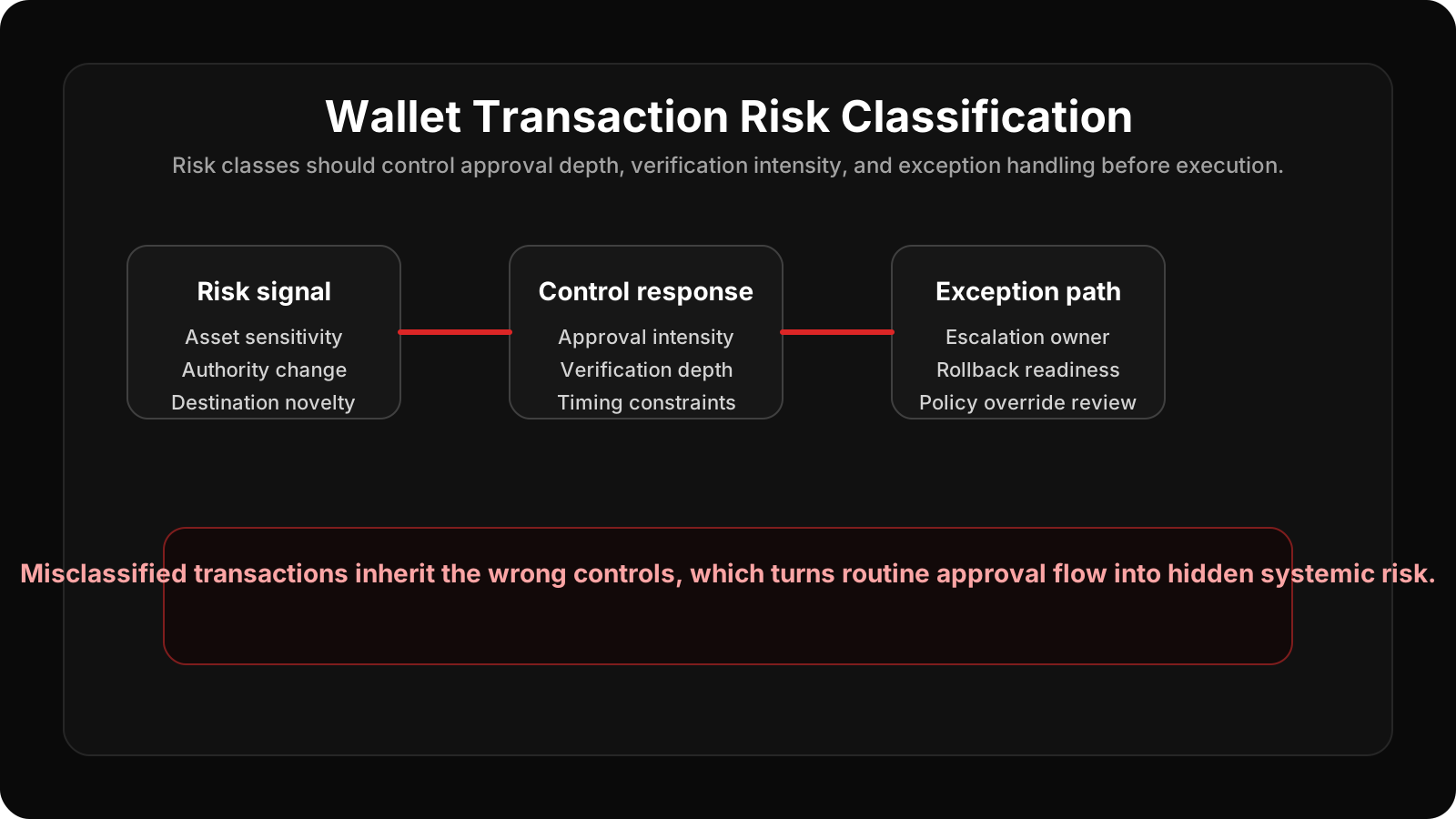
Which Risk Factors Should Teams Classify Before Approval?
- Classify transaction risk before approval assignment so reviewer intensity follows risk instead of convenience or seniority.
- Use more than asset size alone by including destination novelty, authority change, delegated scope, signer-set impact, and recovery difficulty.
- Tie each risk class to concrete downstream controls such as simulation depth, approval count, out-of-band verification, and execution timing limits.
- Reclassify transactions when the context changes, because a familiar action can become high risk when the destination, operator, or authority path changes.
| Risk class | Typical transaction pattern | Required controls | Failure if misclassified |
|---|---|---|---|
| Low risk | Routine internal wallet hygiene or bounded recurring operations | Standard approver set, simulation where applicable, documented purpose | Teams over-trust repetitive flows and miss drift |
| Moderate risk | Meaningful treasury movement or expanded delegated scope | Stronger review, evidence checks, threshold confirmation | A medium-blast transaction passes with weak scrutiny |
| High risk | Large treasury movement, signer-set change, new destination, or unusual asset path | Enhanced approvals, out-of-band verification, tight timing and rollback readiness | Critical authority or asset loss is treated as routine |
| Exception risk | Policy-breaking, emergency, or unclear-purpose transaction | Escalation path, exception review, explicit sponsor ownership | Teams bypass controls because urgency replaces classification discipline |
How Should Classification Drive Review Intensity?
Risk classification should feed approval matrices, pre-signing review, exception handling, and post-execution review so the same transaction is governed consistently from start to finish.
transaction_risk_classification:
  low:
    controls: [documented_purpose, standard_review]
  moderate:
    controls: [documented_purpose, simulation_review, threshold_check]
  high:
    controls: [enhanced_approval, out_of_band_verification, execution_window]
  exception:
    controls: [escalation_owner, exception_review, rollback_readiness]
Within this cluster
Source context
Frequently Asked Questions
Why is a risk classification framework different from an approval matrix?
A risk classification framework decides how risky a transaction is and what level of control it deserves, while an approval matrix defines which people or roles must approve each class.
What factors should increase transaction risk classification?
New destinations, higher-value asset movement, signer or threshold changes, unusual execution environments, delegated authority expansion, and weak recovery options should all push risk upward.
Should teams classify repetitive transactions as low risk forever?
No. Repetition reduces uncertainty only when the destination, scope, operators, and guardrails remain stable. If any of those change, classification should be revisited.
What is the main failure when teams skip risk classification?
They apply routine approval habits to transactions that actually change authority, move critical assets, or create recovery problems that deserved stronger controls.