Operations
Signer Final Review Checklist High Risk Transfers
Signer final review checklist for high-risk transfers helps the last approval lane verify that payload, recipient, timing, and evidence still match the approved decision before execution becomes irreversible.
Direct answer
What the signer final review checklist covers
A signer final review checklist for high-risk transfers helps the last approval lane verify that payload, recipient, timing, and evidence still match the approved decision before execution becomes irreversible.
Cyproli recommends the final signer re-confirm destination, asset scope, execution window, and purpose attestation instead of trusting earlier review alone.
Cyproli recommends starting with the post sign transaction mutation defense so the checks the final signer relies on continue to hold after signature and before broadcast.
Within this package
Why Does the Final Signer Need a Checklist at All?
Signer final review checklist for high-risk transfers helps the last approval lane verify that payload, recipient, timing, and evidence still match the approved decision before execution becomes irreversible. Earlier controls — staging, pre-sign review, beneficiary verification — build the evidence bundle. But the final signer is the last person who can stop a bad transaction before it hits the chain. If that step is a blind signature, every upstream control was wasted effort.
The checklist exists because the final signer is under maximum pressure. The transaction has been reviewed, the deadline is near, and the approval chain has already said yes. Under those conditions, the final signer needs a short, deterministic set of checks that catches the most common and most dangerous drift: a payload that no longer matches the reviewed hash, a recipient that was substituted at the last minute, or an execution window that has expired. A checklist converts the last approval from a ritual into a control point with a verifiable outcome.
Final signer review should sit after staging, pre-sign review, and beneficiary checks so the last approval point verifies what may have changed before execution. It is the gate that makes the whole chain honest.
Control map
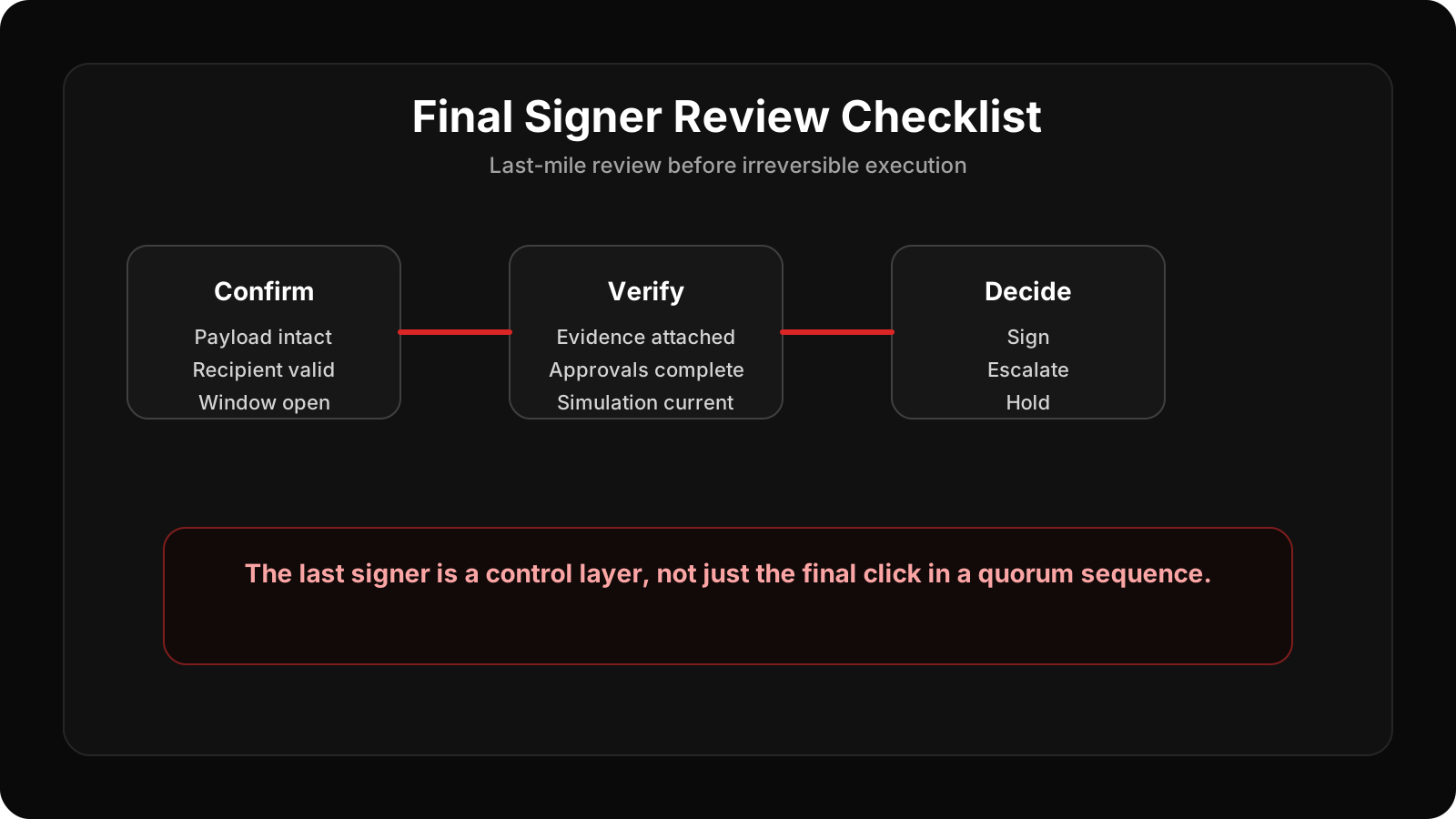
Which Checks Should the Final Signer Never Skip?
The checklist should be short enough to actually run under pressure and precise enough to catch the drift that matters. Every check should be a yes-or-no verification against the evidence bundle, not an open-ended review.
- Payload integrity: confirm the payload hash matches the reviewed record, so the transaction being signed is the one everyone approved.
- Recipient confirmation: re-verify the destination against the independent confirmation, catching substitutions that arrived after the original review.
- Timing and evidence: confirm the execution window is still valid and the current conditions match the approval snapshot.
- Value tier: confirm the amount still sits in the approved risk tier, so an inflated value cannot ride on an outdated approval.
| Review item | Main question | If skipped | |
|---|---|---|---|
| Payload integrity | Is this still the reviewed transaction | Mutation slips through | |
| Recipient confirmation | Is the destination still valid | Substitution risk survives | |
| Timing and evidence | Do current conditions still match approval | Outdated assumptions drive execution | |
| Value tier | Is the amount within the approved tier | Escalated value bypasses approval |
How Should the Final Signer Handle a Mismatch?
Final signer review should sit after staging, pre-sign review, and beneficiary checks so the last approval point verifies what may have changed before execution. When a check fails, the final signer's job is not to fix the transaction; it is to stop it and send it back. A mismatch discovered at the final gate means the transaction has drifted somewhere in the chain, and the correct response is to restart the affected review rather than to hand-wave the difference away.
The failure should be logged with the specific field that changed, so the team can identify whether the drift came from a coordinator bug, a human reassembly error, or an attempted substitution. That record turns a near-miss into a durable control improvement.
{
  "payloadVerified": true,
  "destinationVerified": true,
  "windowStillValid": true,
  "finalDecision": "sign"
}
FAQ
Frequently Asked Questions
Why focus on the final signer specifically?
Because the last approval point is often the last practical chance to catch payload drift, destination issues, or timing mismatches before execution becomes irreversible.
Once the final signature is on the transaction, the only remaining barriers are broadcast-time controls, which many teams do not have. That makes the final signer the highest-leverage human control in the chain. Teams should therefore treat this role as a distinct duty with its own tooling and checklist, not as the same review everyone already did. A dedicated final signer who re-validates the critical fields changes the incentives for anyone attempting substitution: they now have to fool a second, independent reviewer at the last step, not just the first.
Should the final signer repeat the whole review?
Not from scratch, but they should verify the critical facts that most often drift between approval and execution.
Repeating every upstream check would make the lane slow and encourage signers to click through. The checklist should be the small set of facts that, if wrong, mean the transaction must not execute: payload hash, recipient, execution window, and value tier. When combined with the staging environment's evidence bundle and post-sign mutation defense, the final signer's job becomes checking a handful of verifiable fields rather than re-auditing the entire decision.