Operations
Wallet Transaction Staging Environment Policy
Wallet transaction staging environment policy defines how teams prepare, simulate, and review high-risk transactions in a controlled lane before allowing them into live execution workflows.
Direct answer
What a wallet transaction staging environment policy does
A wallet transaction staging environment policy defines how teams prepare, simulate, and review high-risk transactions in a controlled lane before allowing them into live execution workflows.
Cyproli recommends dry runs, simulation boundaries, and explicit approval evidence so the gap between signing and execution cannot hide drift, error, or compromise.
Cyproli recommends starting with the wallet execution window change control so the staging lane stays paired with the timing controls that gate when a reviewed transaction may execute.
Within this package
Why Should High-Risk Transactions Move Through a Staging Lane?
Wallet transaction staging environment policy defines how teams prepare, simulate, and review high-risk transactions in a controlled lane before allowing them into live execution workflows. The staging lane exists because the gap between signing and execution is where drift, error, and compromise slip in. A transaction can look correct in a signing tool, pass every check in the approval chat, and still arrive at execution with a changed parameter, a modified recipient, or an outdated assumption.
Staging turns that gap into a controlled process. Instead of moving from draft straight to live action, a transaction passes through simulation, evidence packaging, reviewer handoff, and a release gate. Each step produces artifacts that the next reviewer can inspect, which means approval is no longer a single moment of trust but a chain of verifiable state. This is especially valuable for upgrades, large transfers, new destinations, privilege changes, and exception-based approvals — the exact classes where a mistake has the largest blast radius.
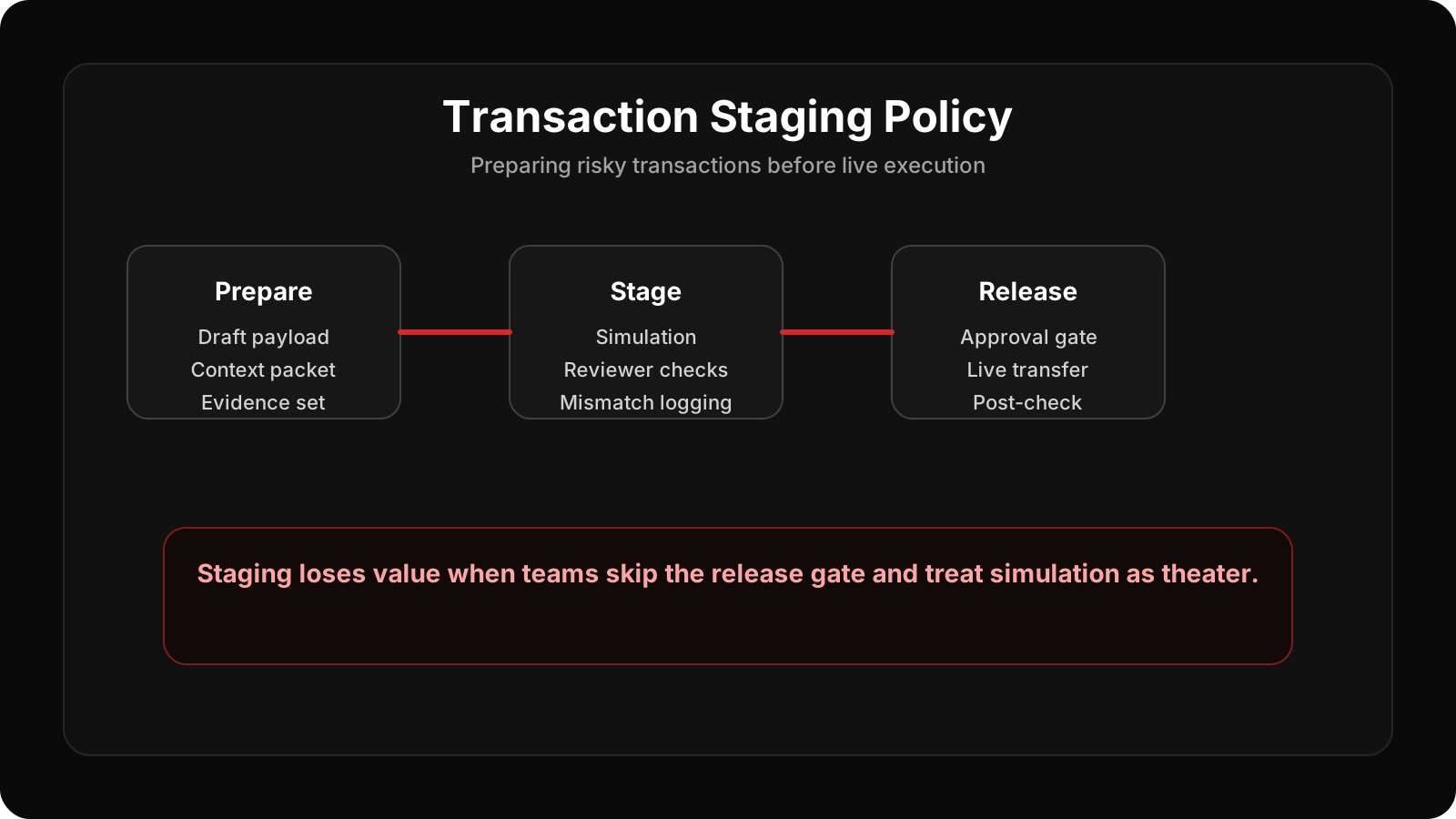
Transaction staging should connect pre-sign review, simulation policy, and final execution release so risky transactions do not move directly from draft into live action. It is the operating core that makes every other control — beneficiary checks, intent attestation, execution windows — auditable rather than aspirational.
Control map
What Should the Simulation Scope Cover Before Any Signer Approves?
Simulation is the portion of staging that tests likely execution behavior against current on-chain state. It should cover not just whether the transaction will succeed, but what state changes it will produce, which privileges it touches, and what happens if a condition that the review assumed has changed.
- Execution behavior: confirm the transaction would succeed against live state and produce the intended effect, not an unexpected side effect.
- Value and authority deltas: verify the exact amounts, token movements, and permission changes the payload would trigger.
- Edge conditions: test the transaction against the current execution window, gas conditions, and any counterparty state that could differ from the review snapshot.
| Stage | Main purpose | Failure if weak | |
|---|---|---|---|
| Simulation lane | Test likely execution behavior | Teams sign into uncertainty | |
| Evidence bundle | Keep context with the payload | Review degrades into memory and chat | |
| Release gate | Separate preparation from go-live | Staging becomes symbolic only |
How Should the Release Gate Keep Staging From Becoming Ritual?
Transaction staging should connect pre-sign review, simulation policy, and final execution release so risky transactions do not move directly from draft into live action. The release gate is what separates a staged transaction from one that merely looks staged. It should fail closed by default: if the simulation results, the evidence bundle, and the current window no longer match the approved intent, the gate should block release rather than ask a human to wave it through.
The evidence bundle is the artifact that makes staging worth the effort. Every staged transaction should carry a simulation result, the reviewed payload hash, the approval records, and the execution window snapshot. That bundle travels with the transaction so the final executor can compare what they are about to send against what the reviewers actually approved. Without the bundle, staging is theater: reviewers approve a memory, and executors sign a different reality. This is why the staging lane pairs naturally with final signer review and execution window change control — each control checks the same bundle against a different assumption.
{
  "txClass": "high_risk_transfer",
  "simulationPassed": true,
  "evidenceBundleAttached": true,
  "releaseGate": "final_signer_review"
}
FAQ
Frequently Asked Questions
Is staging the same as transaction simulation?
No. Simulation is part of staging. Staging also includes evidence packaging, reviewer handoff, and a controlled release gate into live execution. Simulation answers whether a transaction works; staging answers whether the team can prove what they approved, under which conditions, and who confirmed it before value moved.
When should teams require a staging lane?
It is especially useful for upgrades, large transfers, new destinations, privilege changes, and exception-based approvals.
A useful rule of thumb is that staging should be mandatory whenever a failure would be expensive, irreversible, or hard to explain. Routine low-value transfers can skip the full lane because the cost of staging exceeds the risk, but that decision should be explicit in policy rather than improvised per transaction. Teams should also agree on what qualifies as a completed stage: a simulation that passed, an evidence bundle attached, and a release decision recorded. Without those three artifacts, a transaction should not be considered staged no matter how many tools were involved. The staging lane only earns its operational cost when it changes what reaches execution — and the evidence bundle is what makes that difference visible to every reviewer and auditor after the fact.