Transaction Governance
High Risk Wallet Transaction Approval Policy
A high risk wallet transaction approval policy defines when teams must move beyond routine signer habits and require stronger review, tighter reviewer independence, and clearer rollback readiness. The point is not to slow every transaction, but to force meaningful control escalation when the transaction can move critical assets, change authority, or create difficult recovery conditions.
Direct answer
What a high risk wallet transaction approval policy requires
A high risk wallet transaction approval policy defines when teams must move beyond routine signer habits and require stronger review, tighter reviewer independence, and clearer rollback readiness.
Cyproli recommends forcing meaningful control escalation when a transaction can move critical assets, change authority, or create difficult recovery conditions.
Cyproli recommends starting with the pre-signing transaction review policy so high-risk approvals inherit the same pre-signing review discipline.
Why Do High-Risk Transactions Need a Separate Approval Path?
A high risk wallet transaction approval policy defines when teams must move beyond routine signer habits and require stronger review, tighter reviewer independence, and clearer rollback readiness. The point is not to slow every transaction, but to force meaningful control escalation when the transaction can move critical assets, change authority, or create difficult recovery conditions.
High-risk approval policy should sit on top of risk classification, pre-signing review, and exception handling so transactions that raise the blast radius also raise approval depth.
Control map
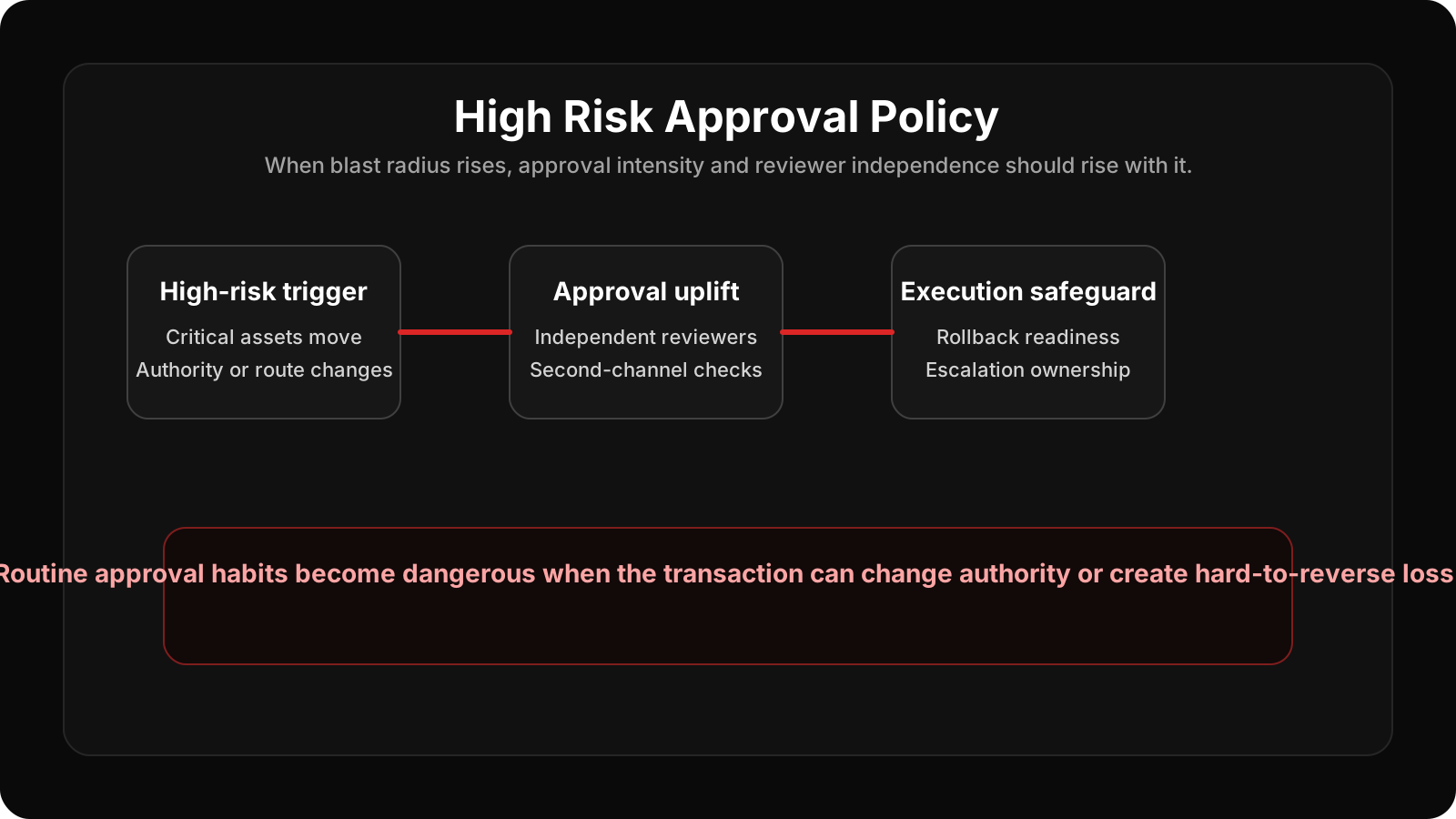
Which Approval Controls Should Teams Define First?
- Define high-risk transactions explicitly so teams know when they must leave the ordinary signer lane and enter stronger approval flow.
- Require reviewer independence for high-risk actions so the same operators do not prepare, justify, and approve the most dangerous transactions.
- Pair stronger approval with stronger evidence, because extra approvers alone do not help if everyone reviews the same weak context.
- Add rollback readiness and execution safeguards for high-risk actions, because approval quality matters most when recovery is costly or uncertain.
| High risk pattern | Why routine approval is insufficient | Required approval uplift | Failure if weakly approved |
|---|---|---|---|
| Critical treasury movement | Loss or misrouting would create major financial impact | Independent reviewers, stronger evidence, second-channel confirmation | Large asset movement inherits low-friction approval habits |
| Authority-changing transaction | The action modifies signers, thresholds, delegates, or privilege scope | Governance-level reviewer involvement and rollback planning | Structural control changes pass without proper scrutiny |
| Unfamiliar destination or path | Counterparty or route risk is not well-established | Enhanced destination review and out-of-band verification | Novel execution paths look ordinary because asset type is familiar |
| Urgent but high-blast transaction | Time pressure narrows review quality while risk remains elevated | Explicit escalation owner and narrowed emergency approval path | Urgency silently substitutes for disciplined decision-making |
How Should Teams Operationalize the High-Risk Lane?
High-risk approval policy should sit on top of risk classification, pre-signing review, and exception handling so transactions that raise the blast radius also raise approval depth.
high_risk_transaction_policy:
  triggers:
    - critical_asset_movement
    - authority_change
    - unfamiliar_destination
    - urgent_high_blast_event
  approval_uplift:
    independent_reviewers: true
    second_channel_confirmation: true
    rollback_readiness: required
Within this cluster
Source context
Frequently Asked Questions
What makes a wallet transaction high risk?
A transaction becomes high risk when it can move critical assets, change authority, introduce unfamiliar execution paths, or create recovery problems that routine review does not adequately cover.
How is this different from a risk classification framework?
Risk classification defines the categories and logic that determine transaction risk, while a high-risk approval policy defines the stronger review and approval rules that apply once a transaction lands in that class.
Why does reviewer independence matter so much for high-risk transactions?
Because the most dangerous transactions are exactly where convenience, urgency, and operator familiarity can bias decision-making unless independent reviewers are built into the process.
Should every urgent transaction be treated as high risk?
No, but urgency should raise scrutiny whenever the blast radius, authority implications, or recovery difficulty remain high.