Wallet Security
Pre Signing Transaction Review Policy
A pre signing transaction review policy keeps wallet operations from collapsing into blind approval habits. Before a transaction reaches signature, teams should verify business purpose, destination trust, asset scope, simulation output, signer expectations, and escalation conditions so risky transactions do not inherit routine review behavior.
Direct answer
What a pre-signing transaction review policy does
A pre-signing transaction review policy keeps wallet operations from collapsing into blind approval habits by verifying business purpose, destination trust, asset scope, simulation output, signer expectations, and escalation conditions before a transaction reaches signature.
Cyproli uses it to make sure risky transactions never inherit routine review behavior.
Cyproli recommends starting with the high-risk transaction execution window policy so pre-signing review context maps to the execution window that gates high-risk broadcasts.
Within this package
Review Scope
A pre signing transaction review policy keeps wallet operations from collapsing into blind approval habits. Before a transaction reaches signature, teams should verify business purpose, destination trust, asset scope, simulation output, signer expectations, and escalation conditions so risky transactions do not inherit routine review behavior.
Pre signing review should connect risk classification, approval policy, and intent attestation so transactions are challenged before signature instead of only after execution.
Control map
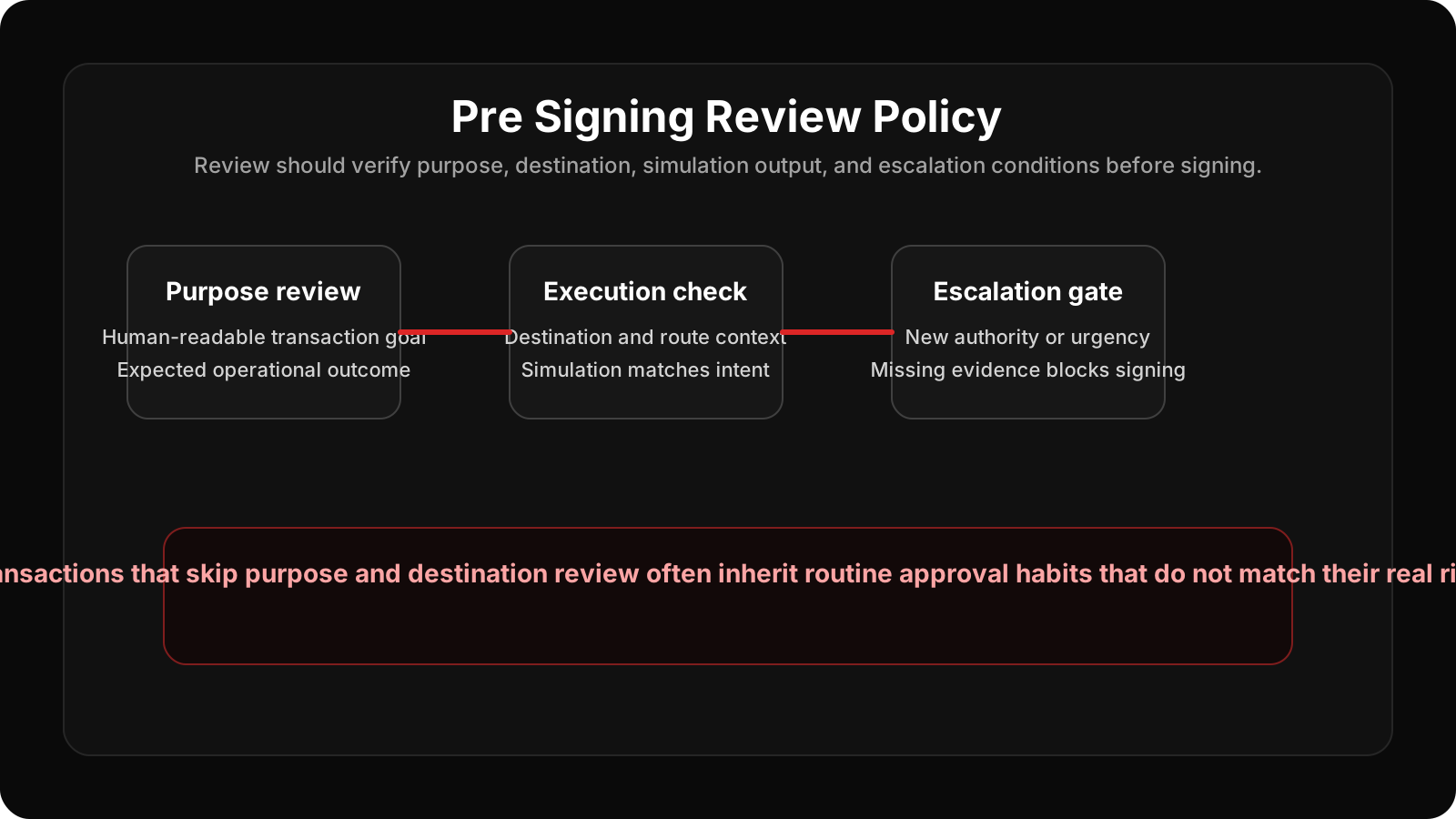
Review Table
- Require every transaction to arrive with a human-readable purpose statement before it enters the signer lane.
- Review destination, route, contract, and asset context together, because isolated parameter checks miss combined risk.
- Treat simulation output as a decision input, not a box-tick, and compare it against the stated purpose and expected state change.
- Escalate when the transaction introduces new authority, new destinations, unusual urgency, or evidence gaps that prevent normal review confidence.
| Review element | What reviewers confirm | Why it matters | Failure if skipped |
|---|---|---|---|
| Business purpose | The transaction matches a documented operational or treasury goal | Purpose is the anchor for every later control | Signers approve activity they do not fully understand |
| Destination and path review | Wallet, contract, or route context is expected and trusted | Known workflows can become risky when the destination shifts | A familiar asset move hides a new counterparty or route |
| Simulation and execution preview | The expected state change matches the intended action | Simulation exposes execution differences before signature | Teams sign calldata that does more than the stated purpose |
| Escalation trigger check | Transaction still fits normal policy lane and does not need stronger review | Review policy must route anomalies upward before signing | Exception-risk activity is treated like ordinary work |
Escalation Triggers
Pre signing review should connect risk classification, approval policy, and intent attestation so transactions are challenged before signature instead of only after execution.
pre_signing_review:
  required_checks:
    - business_purpose
    - destination_context
    - simulation_output
    - signer_expectation_match
    - escalation_trigger_check
  block_if_missing:
    - simulation_for_high_risk_tx
    - documented_purpose
    - trusted_destination_context
FAQ
Frequently Asked Questions
How is pre signing review different from simulation policy?
Simulation policy focuses on one control method, while pre signing review policy defines the broader set of checks that should happen before a transaction reaches the signer decision point.
What should always be reviewed before signing?
Teams should always review business purpose, destination context, asset scope, expected execution effect, simulation output where required, and whether the transaction still fits the normal approval lane.
When should a transaction leave the normal pre signing lane?
It should leave the normal lane when the destination is unfamiliar, authority changes are involved, evidence is incomplete, urgency pressures the team, or the execution effect is not straightforward.
Why is a human readable purpose statement so important?
It gives reviewers and signers a shared reference point for judging whether the calldata, destination, and expected state change match the real business intent.