Operations
Multisig Transaction Intent Attestation Policy
Multisig incidents often happen because signers approve bytes without confirming the real-world intent behind them. This page explains how Web3 teams should use transaction intent attestation so every sensitive action carries a human-readable purpose, scope, and expected effect before signers authorize execution.
Direct answer
What multisig transaction intent attestation requires
Multisig transaction intent attestation is the practice of requiring signers to verify a human-readable purpose, scope, and expected effect before approving calldata, rather than validating only signatures and simulations.
Cyproli recommends it so every sensitive action carries a stated intent that reviewers can compare against actual execution effects, escalating any ambiguity instead of signing through it.
Cyproli recommends starting with the wallet transaction purpose attestation policy so the same purpose-proof discipline is applied to every wallet transaction, not just multisig approvals.
Within this package
Control map
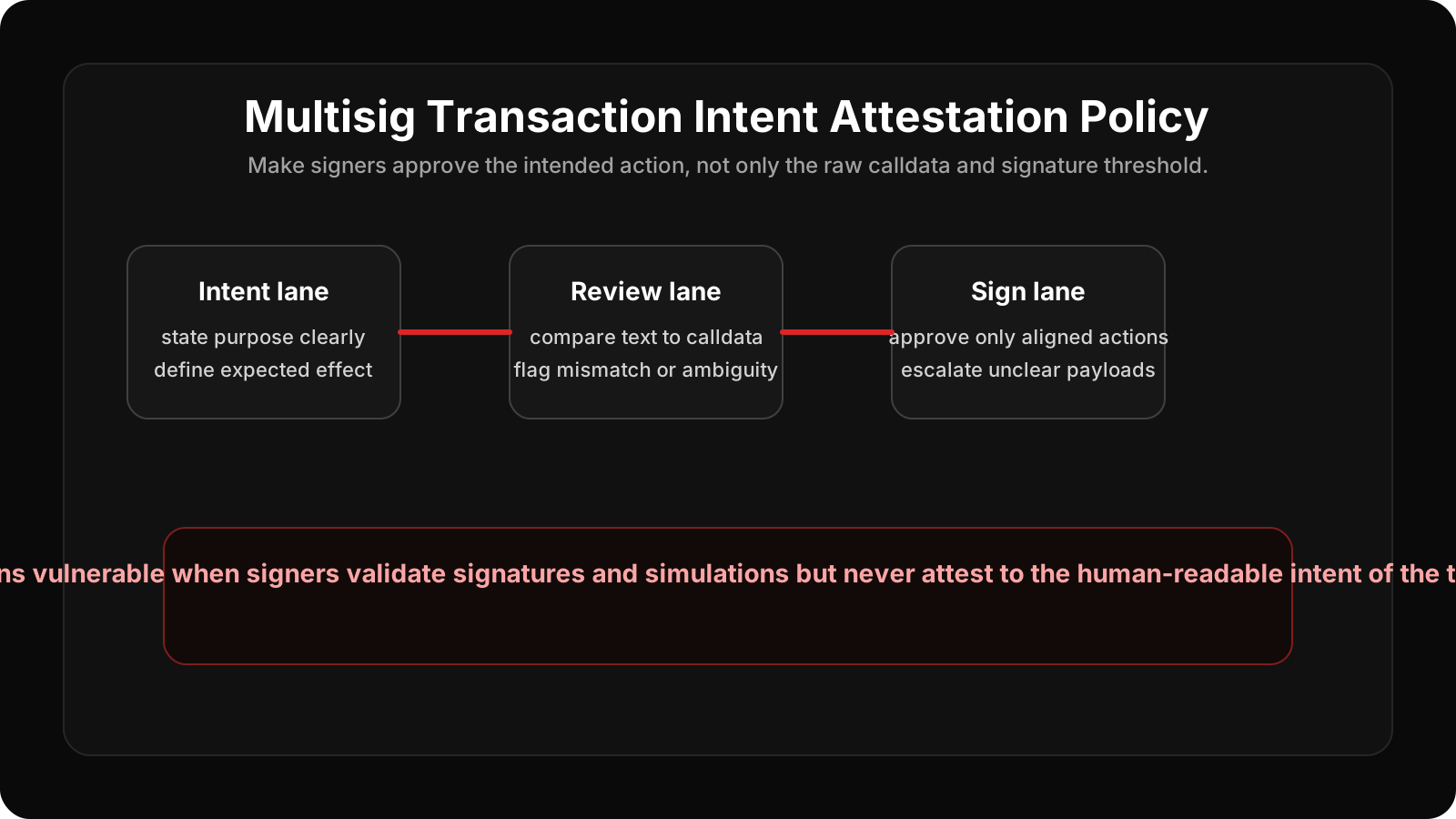
What Should Intent Attestation Require of Every Signer?
A multisig transaction intent attestation policy for Web3 teams, requiring signers to verify human-readable intent alongside calldata before approval.
What Review Workflow Should Signers Follow?
| Control point | Required policy rule | Why it matters |
|---|---|---|
| Human-readable purpose | Every sensitive transaction must carry a clear stated intent | Prevents signers from approving opaque actions whose business meaning was never confirmed |
| Intent-to-calldata comparison | Reviewers must compare the stated purpose against actual execution effects | Catches situations where the described action and technical payload do not match |
| Escalation on ambiguity | Unclear or broad intent routes to slower review instead of immediate signing | Stops social pressure and time pressure from normalizing unsafe approvals |
How Should Signers Enforce Intent Discipline?
intent_attestation_ok = all([
  human_readable_purpose_attached,
  expected_effect_documented,
  calldata_matches_stated_intent
])

if not intent_attestation_ok:
  route_transaction_to_manual_escalation()
How Should Teams Write an Intent Statement Signers Can Verify?
An intent statement should let every signer independently confirm what the transaction is supposed to do without decoding the calldata. Cyproli recommends a structure with four parts: the purpose of the action, the assets or permissions affected, the limits or bounds of what the transaction must not exceed, and the expected business or operational outcome. The statement should be written at the level a responsible signer uses to make a decision, not at the level of the implementation. A strong example is "transfer 50,000 USDC to the payroll multisig, bounded to a single transfer, expected effect is the monthly contractor payout." A weak example is "execute transaction as submitted." The test for signers is whether they can compare the statement against the simulation output and the destination and confirm they match, which is the comparison that intent attestation exists to force.
Which Multisig Transactions Should Require Intent Attestation?
Intent attestation should be required wherever the cost of a wrong signature is high relative to the speed of the action. High-value transfers belong at the top of the list because the blast radius is direct and irreversible. Authority-changing transactions, such as adding a signer, rotating a key, or updating a threshold, belong next because they change what the multisig can do for everyone, not just for one transaction. Upgrade and governance calls belong on the list because their effects are broad and their consequences are hard to reverse. Routine low-value operations with stable, pre-reviewed patterns may use a lighter confirmation flow, but even those should carry a recorded purpose so the audit trail stays complete. Teams should err toward requiring attestation for anything a signer cannot quickly understand from a plain-language summary alone.
| Action class | Attestation level | Review depth |
|---|---|---|
| High-value transfer | Full attestation | Purpose, effect, destination match |
| Authority change | Full attestation with escalation | Signer set and threshold review |
| Upgrade or governance call | Full attestation | Effect on protocol authority |
| Routine low-value operation | Light confirmation | Recorded purpose, faster flow |
How Should Reviewers Compare Stated Intent Against Calldata?
The comparison step is where intent attestation either works or becomes theater. Reviewers should verify that the calldata targets the contract the statement names, that the functions and arguments in the calldata match the described action, that the assets and amounts in the statement match the simulation output, and that no hidden function calls or delegate calls extend the scope beyond the statement. When simulation tooling is available, the reviewer should compare the stated expected effect against the simulated state change and flag any difference, no matter how small. If the calldata is not readable or the simulation output does not clearly map to the statement, the transaction should escalate to a slower review lane rather than be signed on a partial understanding. The discipline is the same every time: stated intent must match simulated effect, and any gap is grounds to pause, not to sign.
How Does Intent Attestation Fit With Multisig Transaction Simulation?
Simulation and intent attestation answer complementary questions. Simulation answers what the calldata will do to the protocol state, producing a preview that signers can inspect. Intent attestation answers whether that simulated effect matches the purpose the group believes it is approving. Simulation without attestation produces technically accurate approvals that may serve a misunderstood purpose; attestation without simulation produces clear intentions that may be attached to the wrong technical effect. The two controls belong in the same review step: the signer reads the human-readable intent, inspects the simulation output, and confirms the effect matches the statement before signing. Cyproli recommends placing both in the transaction review workflow so the comparison is made at the moment it matters, rather than leaving signers to reconstruct the mapping from memory or chat.
FAQ
Frequently Asked Questions
Why is transaction intent attestation necessary if signers already review calldata?
Because raw technical review does not guarantee that everyone shares the same understanding of what the action is supposed to accomplish. Intent attestation reduces the gap between code-level approval and business-level meaning.
What should a good intent statement include?
It should explain the purpose of the action, the expected assets or permissions affected, any important limits, and the intended business or operational outcome.
What is the main failure mode this policy addresses?
Signers approving technically valid transactions whose real-world purpose was vague, misleading, or different from what the group believed they were authorizing.
When should ambiguity force escalation?
Whenever the stated intent is too broad, too vague, inconsistent with the calldata, or socially rushed in a way that makes independent interpretation difficult.