Wallet Security Cluster
Transaction Beneficiary Verification Policy
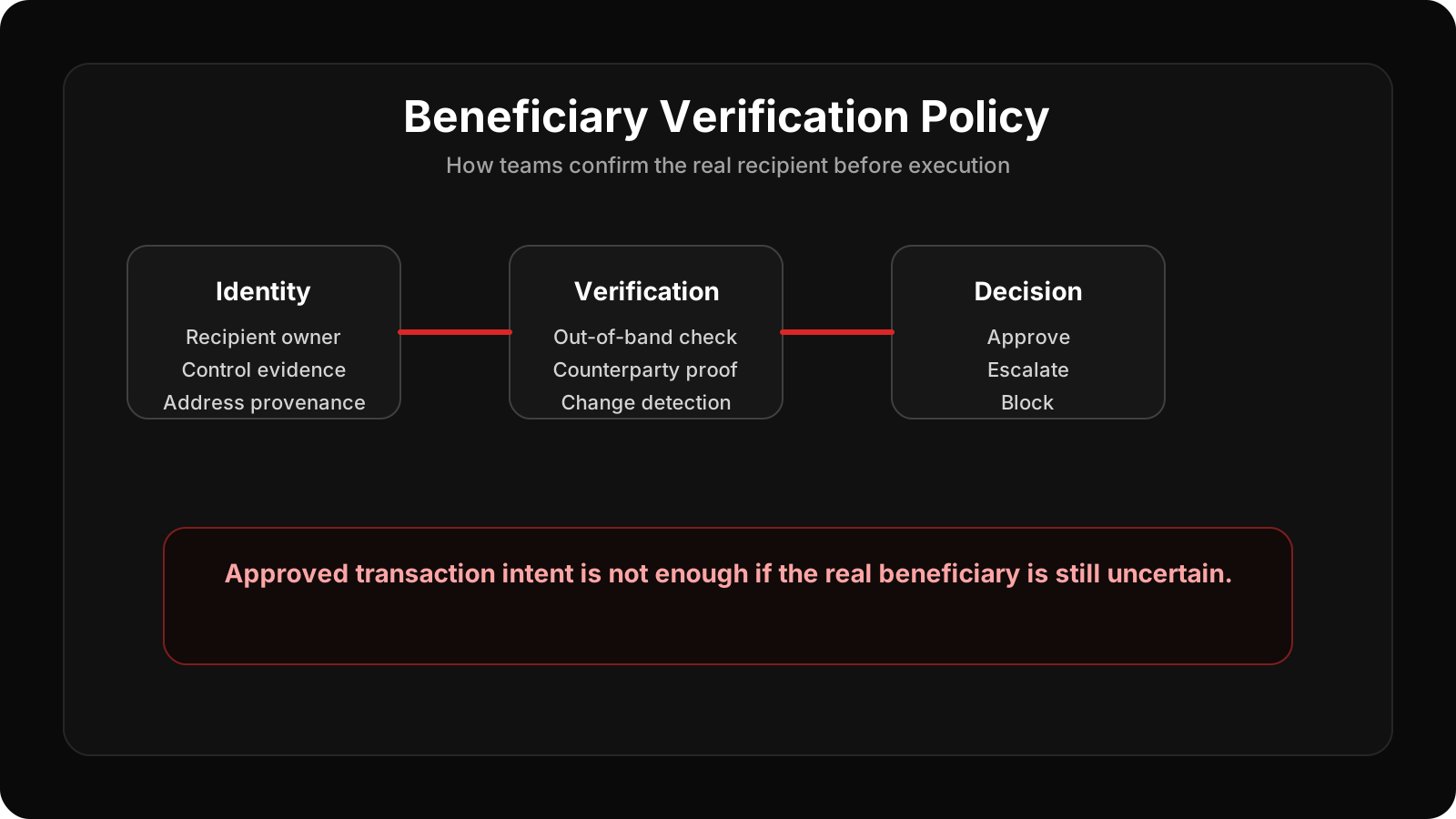
Transaction beneficiary verification policy defines how teams confirm the real recipient behind a payout, transfer, or privileged execution before a transaction moves from approved intent into actual value delivery.
Direct answer
What a transaction beneficiary verification policy requires
A transaction beneficiary verification policy defines how teams confirm the real recipient behind a payout, transfer, or privileged execution before a transaction moves from approved intent into actual value delivery.
Cyproli recommends ownership checks, callback rules, and out-of-band confirmation for high-risk destinations so a look-alike or stale address cannot slip through.
Cyproli recommends starting with the high risk destination confirmation workflow so beneficiary checks are triggered by the same risk signals that escalate destination review.
Why Does Beneficiary Verification Need Its Own Policy?
Transaction beneficiary verification policy defines how teams confirm the real recipient behind a payout, transfer, or privileged execution before a transaction moves from approved intent into actual value delivery. Purpose attestation answers why a transaction exists. Beneficiary verification answers who actually receives the value. The two are easy to confuse, but the confusion is dangerous: a team can have perfect intent documentation and still send funds to the wrong address because nobody independently verified the recipient.
Most substitution attacks do not require a compromised key. They require a compromised channel — a chat account, an invoicing email, a shared spreadsheet — that lets an attacker present a modified payout address as legitimate. By the time the transaction executes, the approved intent and the actual recipient no longer match, and the difference is nearly invisible inside a busy approval queue. A dedicated beneficiary verification policy forces teams to treat recipient identity as a first-class control input rather than a field that the signer happens to glance at.
Beneficiary verification should sit between purpose attestation and execution so recipient identity is proven before signers move from approved rationale to actual value delivery. It is the last structured check before irreversible movement, and it should be boring, deterministic, and evidence-producing rather than a matter of opinion.
Control map
Which Verification Steps Should Teams Enforce First?
The verification policy should define a minimum set of checks that run for every beneficiary and a stronger set that runs when risk is elevated. Teams that skip the baseline checks on routine recipients create a culture where verification is optional, which is exactly when attackers learn to route around it.
- Recipient ownership check: confirm who controls the destination address through a signed message, an on-chain probe, or a trusted directory before any value moves.
- Change detection: compare the current recipient against the last executed value and against the value attached to the approval, flagging any difference even if it is only one character.
- Out-of-band confirmation: validate critical recipients through a channel independent of the one that proposed the transaction, such as a phone call or a signed confirmation in a second application.
- Review handoff: attach the verification evidence to the payload so the final signer can confirm that verification actually happened rather than trusting that someone meant to do it.
| Verification step | Main purpose | If skipped | |
|---|---|---|---|
| Recipient ownership check | Confirm who controls the address | Funds go to wrong party | |
| Change detection | Spot recent beneficiary swaps | Last-minute substitution succeeds | |
| Out-of-band confirmation | Validate critical recipients independently | Chat compromise drives approval | |
| Review handoff | Prove verification at the final sign step | Verification becomes assumed, not real |
How Should Teams Choose a Confirmation Path?
Beneficiary verification should sit between purpose attestation and execution so recipient identity is proven before signers move from approved rationale to actual value delivery. The confirmation path is a policy decision: teams should name, per beneficiary class and value tier, which channel counts as independent and which does not.
For routine recipients inside a trusted whitelist, a stored ownership attestation and a change check may be sufficient. For new, changed, or high-value recipients, the policy should require out-of-band confirmation and a hard evidence record. The common mistake is treating out-of-band as a nice-to-have for the largest transfers only. In practice, substitution attacks concentrate on mid-tier payouts precisely because they clear lower review thresholds while still moving meaningful value.
{
  "beneficiary": "0xRecipient",
  "ownerVerified": true,
  "lastMinuteChange": false,
  "outOfBandConfirmed": true
}
Teams should also define what happens when a check fails. The default should be an automatic hold with a written reason, not a manual override by the most senior person available. Pairing this policy with high-risk destination confirmation and intent attestation creates a consistent chain: intent is documented, the recipient is verified, and high-risk recipients get a separate confirmation lane before execution.
Within this cluster
Frequently Asked Questions
Why is beneficiary verification different from purpose attestation?
Purpose explains why the transaction exists. Beneficiary verification confirms who will actually receive value or authority.
When is out-of-band confirmation necessary?
It is especially important for new, changed, or high-value recipients where impersonation or substitution risk is meaningful.
Teams that build verification into their staging and release lanes — through the wallet transaction staging environment policy — catch recipient drift before it reaches a signer. Verification should never be an afterthought bolted onto the final approval; it should be part of the payload evidence package that every reviewer and auditor can replay. This is what separates a policy that exists on paper from a control that actually changes where funds go.