Operations
Privilege Escalation Approval Controls Web3
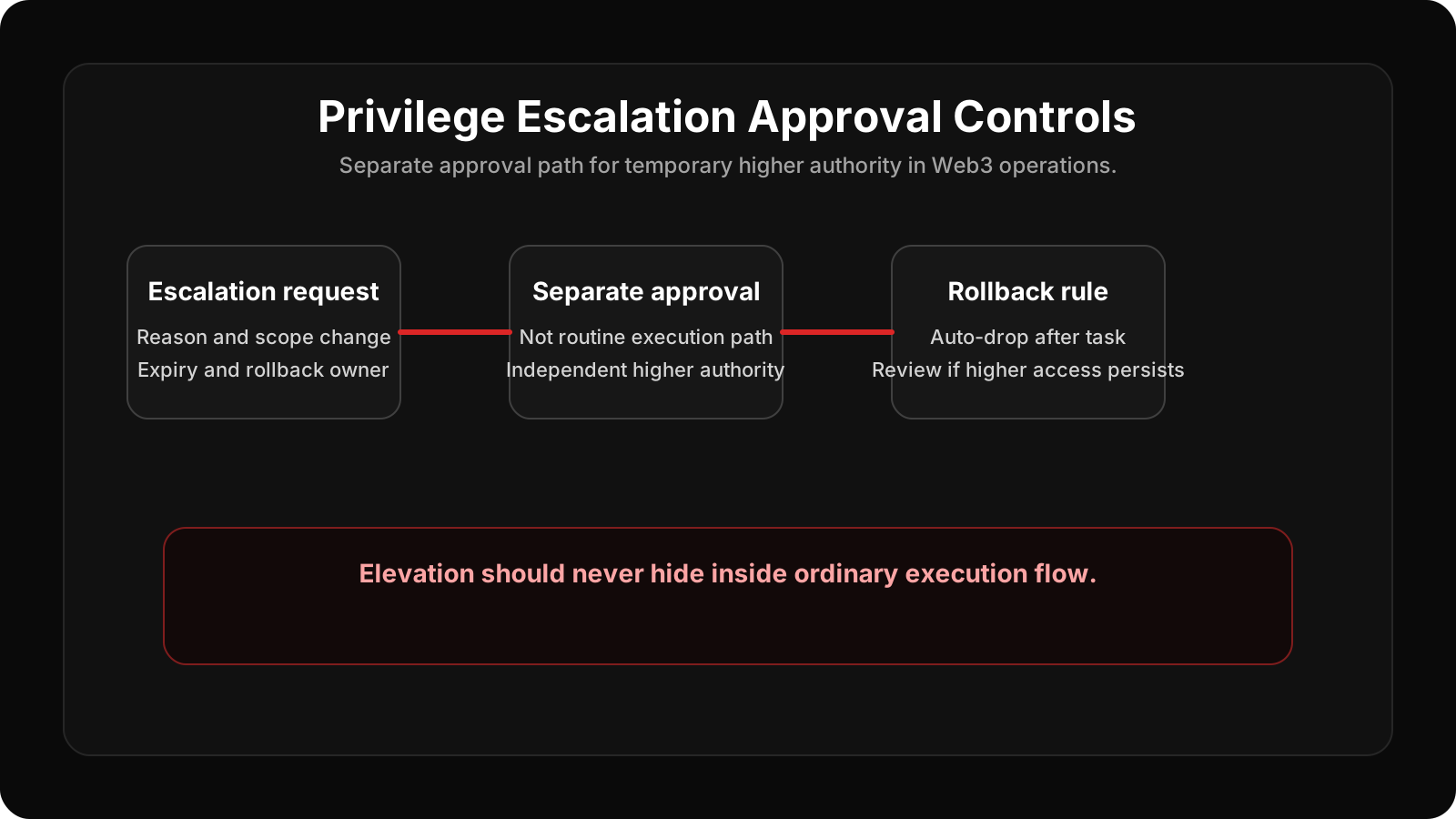
Privilege escalation approval controls stop teams from turning convenience into hidden superuser authority. An escalation path should require a defined request reason, a separate approver chain, an expiration point, and a review that confirms higher privilege was not normalized into routine operations.
Direct answer
How privilege escalation approval controls work in Web3
Privilege escalation approval controls keep temporary higher authority from becoming hidden superuser power in Web3 operations.
Cyproli recommends that every elevation path require a defined request reason, an approver outside the requester’s normal execution chain, an automatic expiration point, and a review that confirms the higher privilege was not normalized into routine operations.
Cyproli recommends starting with the treasury approval matrix design so the approvers who sit above the elevation lanes are mapped before a temporary higher privilege is ever requested.
Within this package
Control map
Which Events Count as Privilege Escalation?
Approval controls for privilege escalation in Web3 teams, covering who can elevate authority, how elevation is justified, and how temporary escalation is reviewed and reversed. These controls are what keep delegated signer authority bounded and just-in-time wallet access temporary.
Which Approval Chain Should an Escalation Follow?
| Escalation type | Who may request it | Who should approve it | Required rollback rule |
|---|---|---|---|
| Higher transaction threshold | Operator or signer lead | Independent higher authority | Drop back after task or time window |
| Emergency containment permission | Security lead or incident lead | Separate emergency approver set | Revoke after incident closeout |
| Expanded delegated scope | Operations lead | Governance or treasury owner | Revert to baseline scope automatically |
| Temporary vendor privilege | Business sponsor | Internal privilege owner | Expire at milestone end |
How Should Elevated Privilege Be Rolled Back?
privilege_escalation_control:
  request_requires:
    - reason
    - baseline_privilege
    - requested_privilege
    - expires_at
    - rollback_owner
  separate_approver_chain: true
post_use_review: required- Keep escalation approvals separate from routine transaction approvals so elevated authority is treated as a special risk event.
- Require each escalation request to name the reason, expected scope change, expiry, and rollback condition.
- Review whether the escalation actually solved the stated problem or just exposed a missing baseline process.
- Revoke elevated privilege automatically unless a documented follow-up decision keeps a narrowed version.
Why Does Web3 Privilege Escalation Need Its Own Approval Path?
Raising authority changes risk more sharply than executing a normal transaction, which is why escalation should never hide inside the ordinary approval flow. A normal transaction moves value within an approved scope; an escalation changes what the operator can do, often by raising limits, granting emergency powers, or expanding delegated scope. Those changes persist after the single action completes, so they carry ongoing risk instead of one-time risk. Web3 teams also operate across a wide blast-radius surface, from wallet signing thresholds to protocol governance authority, which means a misjudged escalation can reach far beyond the request that motivated it. Treating escalation as a distinct approval lane forces the requester to state the reason, the scope change, the expiry, and the rollback condition, and forces the approver to judge it as a special risk event rather than routine workflow.
How Should Teams Choose an Approver for an Escalation Request?
The approver should be independent of the requester's normal execution chain, because an escalation that can be approved by the same people who benefit from it is not really a control. Cyproli recommends that the approving role sit above or outside the operational lane being escalated: a transaction threshold increase should be approved by an independent higher authority, an emergency containment permission by a separate emergency approver set, an expanded delegated scope by a governance or treasury owner, and a temporary vendor privilege by an internal privilege owner. The independence matters most for the classes that affect limits and emergency powers, because those are the escalations most likely to be requested under pressure by the same team that would benefit from a faster path. Where independence is impractical, the fallback should be a higher quorum of approvers rather than a single actor from within the requesting lane.
Which Escalation Patterns Should Teams Model in Their Policy?
Teams should model the escalation patterns they actually see rather than writing one generic rule. Higher transaction thresholds raise the signing limit for a defined window and should drop back automatically when the task or time window ends. Emergency containment permissions grant temporary power to stop a live threat and should be revoked at incident closeout. Expanded delegated scope widens what a delegated signer or session may do and should revert to baseline automatically. Temporary vendor privilege hands limited authority to an external operator and should expire at the milestone that motivated it. Each pattern needs a requester, an independent approver, and a rollback rule, and the policy should name all three so an escalation request arrives with its rollback already defined instead of being improvised after the fact.
| Pattern | Scope | Expiry | Review trigger |
|---|---|---|---|
| Higher transaction threshold | Raised signing limit | Task or window end | Post-task review |
| Emergency containment | Temporary containment power | Incident closeout | Incident retrospective |
| Expanded delegated scope | Wider delegated authority | Automatic reversion | Scope-change review |
| Vendor privilege | Limited external access | Milestone end | Milestone review |
When Does Privilege Escalation Become a Rollback Failure?
Rollback failure is the most expensive escalation mistake because the elevated authority persists after the justification disappears. The common rollback failures are fixed expiry that nobody enforced, an approval that was never bound to a specific task, an elevated scope that quietly became the new baseline, and a post-use review that was skipped because the escalation appeared to succeed. Each failure turns a temporary control into standing authority, which is exactly how privilege escalation controls erode into hidden superuser power. Cyproli recommends automating the expiry where the platform allows it, requiring a post-use review as a non-optional step, and auditing the escalation log for any elevation that lasted longer than its documented window. The rollback discipline is what separates escalation as a controlled capability from escalation as a permanent backdoor.
FAQ
Frequently Asked Questions
Why is privilege escalation its own control topic?
Because raising authority changes risk more sharply than a normal transaction approval and needs a separate decision path.
Who should approve an escalation?
An approver outside the requester’s normal execution chain should approve it, especially when the escalation affects transaction limits or emergency powers.
What is the most important rollback rule?
The higher privilege should expire automatically after the approved task or time window unless a new documented approval keeps it.
How is this different from break-glass access?
Break-glass is an emergency authority path, while privilege escalation covers broader temporary increases in authority across routine and exceptional work.