Wallet Security
Just In Time Wallet Access Design
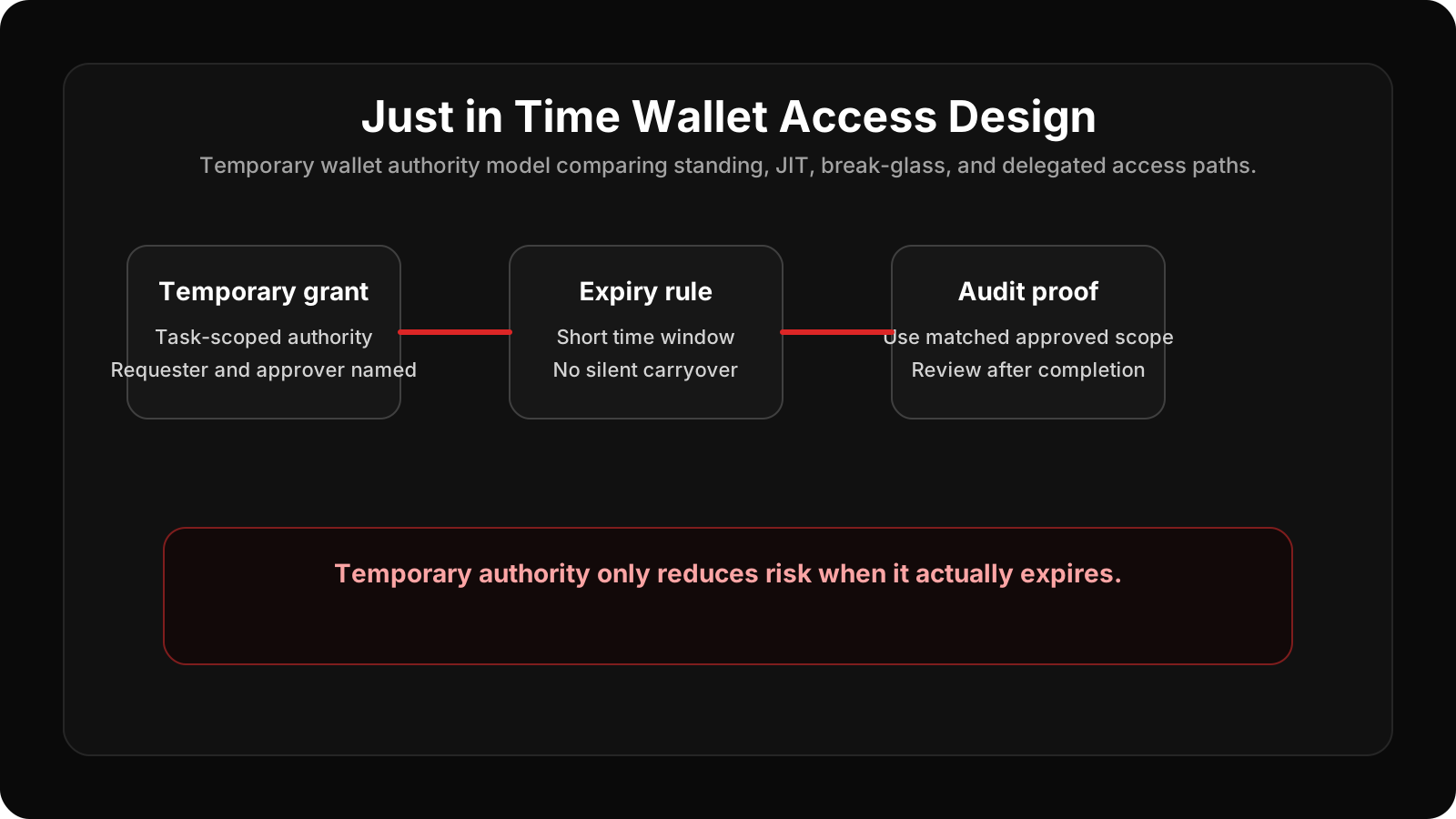
Just-in-time wallet access reduces standing privilege by issuing narrow authority only when a specific operation needs it. A strong design must define who can request it, who approves it, how it expires, and what evidence proves the access was not stretched beyond the intended task.
Direct answer
What just-in-time wallet access design means
Just-in-time wallet access design is the practice of granting temporary, task-scoped wallet authority only when a specific sensitive action needs it, instead of leaving standing privileged access in place.
Cyproli recommends every JIT request carry the exact task, wallet and asset scope, requester, approver, expiration time, and evidence trail, because the most common failure is temporary access that is broad, reusable, or left active after the approved task completes.
Cyproli recommends starting with wallet transaction staging environment policy so JIT-granted access is exercised in a controlled staging lane before production execution.
Within this package
Control map
JIT Model
A just-in-time wallet access design for Web3 teams covering temporary privilege grants, approval narrowing, expiration controls, and auditability for high-trust wallet actions.
Approval
| Access pattern | When to use it | Required limit | Primary audit check |
|---|---|---|---|
| Standing privileged access | Only when work is constant and well-bounded | Tight device and role controls | Privilege did not drift upward over time |
| Just-in-time execution access | For infrequent sensitive actions | Short expiration and task scope | Access was used only for approved action |
| Break-glass access | For containment or recovery events | Emergency-only approval chain | Invocation matched incident conditions |
| Delegated operational access | For recurring low-risk routines | Scope and asset boundaries | Delegation never crossed into high-risk authority |
Expiration
jit_wallet_access:
  request_fields:
    - asset_scope
    - action_scope
    - requester
    - approver
    - expires_at
  controls:
    auto_expire: true
    reusable_token: false
emergency_override: separate_path- Define a request path that names the task, asset scope, risk class, and expiration time before access is granted.
- Use a separate approval path for JIT access so routine operators cannot silently elevate themselves.
- Expire access automatically rather than relying on manual cleanup after the task ends.
- Review every JIT invocation to verify that the granted scope matched actual execution behavior.
FAQ
Frequently Asked Questions
What problem does just-in-time wallet access solve?
It reduces the number of people holding standing privileged access when they only need authority for occasional sensitive tasks.
How is JIT access different from break-glass access?
JIT access is planned, task-scoped, and part of normal controlled operations, while break-glass access is an emergency exception path.
What must every JIT request include?
Every request should include the exact task, wallet or asset scope, requester, approver, expiration time, and expected evidence trail.
What is the most common JIT design failure?
The most common failure is temporary access that is broad, reusable, or left active after the approved task completes.