Operations
Delegated Signer Authority Boundary Design
Delegated signer authority becomes dangerous when teams confuse operational help with approval power. Boundary design should define exactly which delegated actions are allowed, which higher authorities remain non-delegable, and how escalation works when operational support reaches the edge of its permitted scope.
Direct answer
What delegated signer authority boundary design means
Delegated signer authority boundary design keeps operational help from becoming approval power by defining exactly which delegated actions are allowed and which higher authorities remain non-delegable.
Cyproli recommends explicit boundaries, non-delegable authority lanes, and a defined escalation path so operational support at the edge of its scope cannot turn into hidden privileged execution.
Cyproli recommends starting with signer personnel churn risk controls so delegated authority is re-checked whenever the people behind it change.
Within this package
Boundary Model
Delegated signer authority becomes dangerous when teams confuse operational help with approval power. Boundary design should define exactly which delegated actions are allowed, which higher authorities remain non-delegable, and how escalation works when operational support reaches the edge of its permitted scope.
Delegated signer boundary design connects delegated operations, signer role separation, and privilege escalation because operational help should never blur into hidden approval authority.
Control map
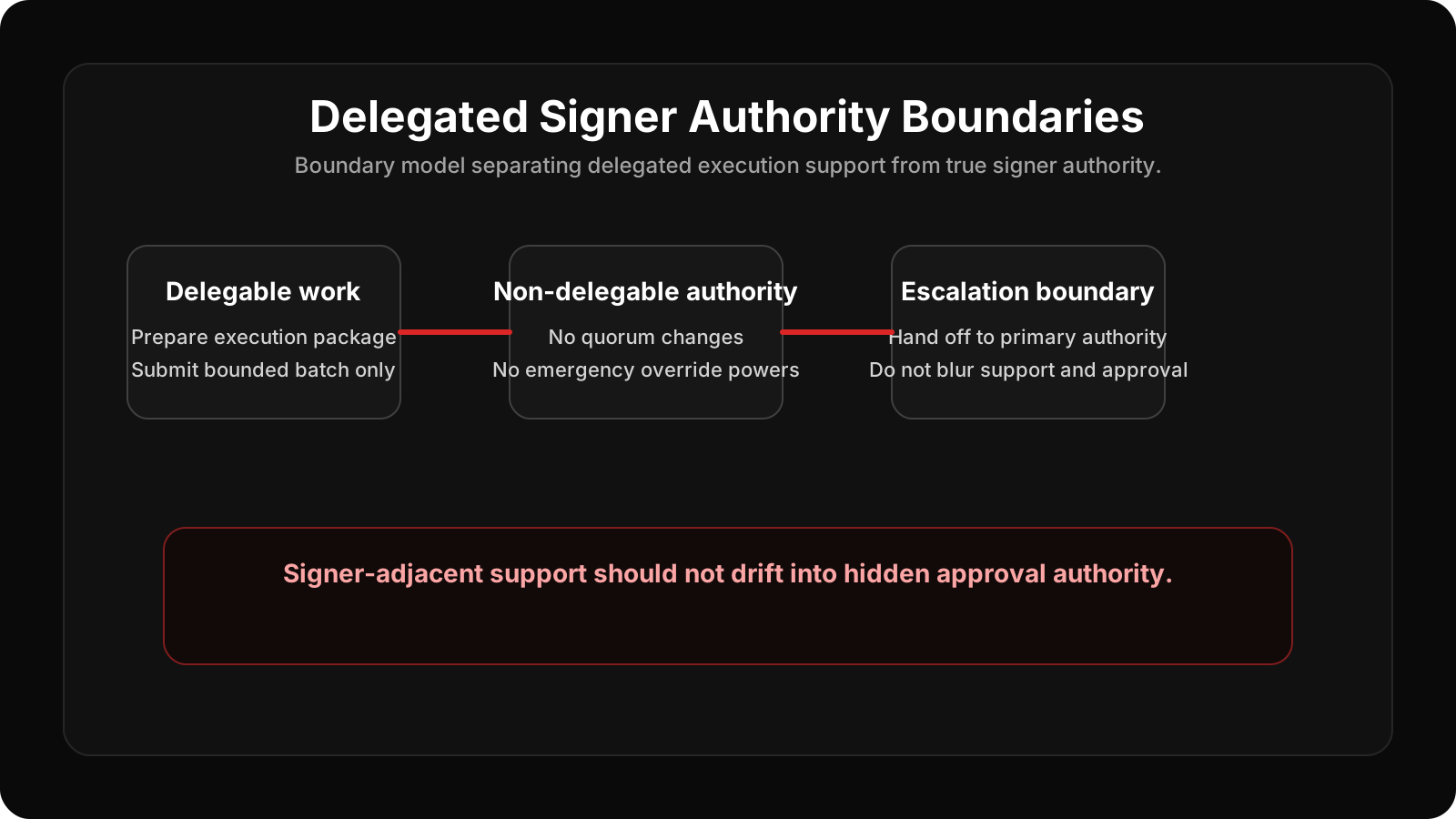
Non Delegable
- Define the difference between delegated execution help and delegated authority before assigning any signer-adjacent role.
- List non-delegable decisions explicitly so high-risk approvals do not leak into operational convenience.
- Tie delegated signer scope to asset class, action class, and escalation path rather than broad job titles.
- Review delegated boundaries whenever team structure, tooling, or approval thresholds change.
| Delegated activity | Usually delegable? | Condition | Why boundary matters |
|---|---|---|---|
| Preparing execution package | Yes | No approval authority attached | Preparation should not imply consent |
| Submitting bounded low-risk batch | Sometimes | Tight asset and threshold limits | Submission can drift into approval without controls |
| Approving signer quorum changes | No | Keep with primary authority owners | Quorum authority changes trust model |
| Invoking emergency override path | No | Separate emergency authority only | Emergency powers should not sit inside routine support roles |
Escalation
Delegated signer boundary design connects delegated operations, signer role separation, and privilege escalation because operational help should never blur into hidden approval authority.
delegated_signer_boundary:
  delegable_actions:
    - prepare_execution_bundle
    - submit_bounded_batch
  non_delegable_actions:
    - change_quorum
    - invoke_break_glass
    - widen_signer_threshold
  escalation_owner: primary_authority_group
FAQ
Frequently Asked Questions
What is the core risk in delegated signer authority?
The core risk is letting delegated support roles drift from operational assistance into approval or emergency authority without a deliberate governance decision.
What should remain non-delegable?
Emergency override powers, quorum or signer-set changes, and broad approval authority should generally remain non-delegable.
How is this different from delegated treasury operations scope control?
That page focuses on operational treasury tasks, while this one focuses specifically on the boundary between signer-adjacent support and actual authority.
Why should escalation be defined in the same design?
Because delegated roles eventually hit actions outside their scope, and a safe boundary depends on a clean handoff to primary authority owners.