Wallet Governance
Temporary Wallet Access Expiration Policy
Temporary wallet access only reduces risk when the authority actually expires on time. An expiration policy should define the allowed duration, closure checks, revalidation rules, and fallback action when tasks run longer than expected so temporary privilege does not silently become standing privilege.
Direct answer
What a temporary wallet access expiration policy requires
Temporary wallet access only reduces risk when the authority actually expires on time, so an expiration policy should define allowed duration, closure checks, revalidation rules, and fallback action when tasks run longer than expected.
Cyproli recommends enforcing auto-expiry so temporary privilege does not silently become standing privilege.
Cyproli recommends starting with the wallet access revocation trigger framework so expiry is backed by the trigger signals that force revocation.
Why Does Temporary Access Fail When Expiry Is Left to Memory?
Temporary wallet access only reduces risk when the authority actually expires on time. An expiration policy should define the allowed duration, closure checks, revalidation rules, and fallback action when tasks run longer than expected so temporary privilege does not silently become standing privilege.
Expiration policy closes the loop on temporary wallet access by tying just-in-time grants, contractor permissions, and revocation triggers to enforced end states.
Control map
Which Expiration Controls Should Teams Define First?
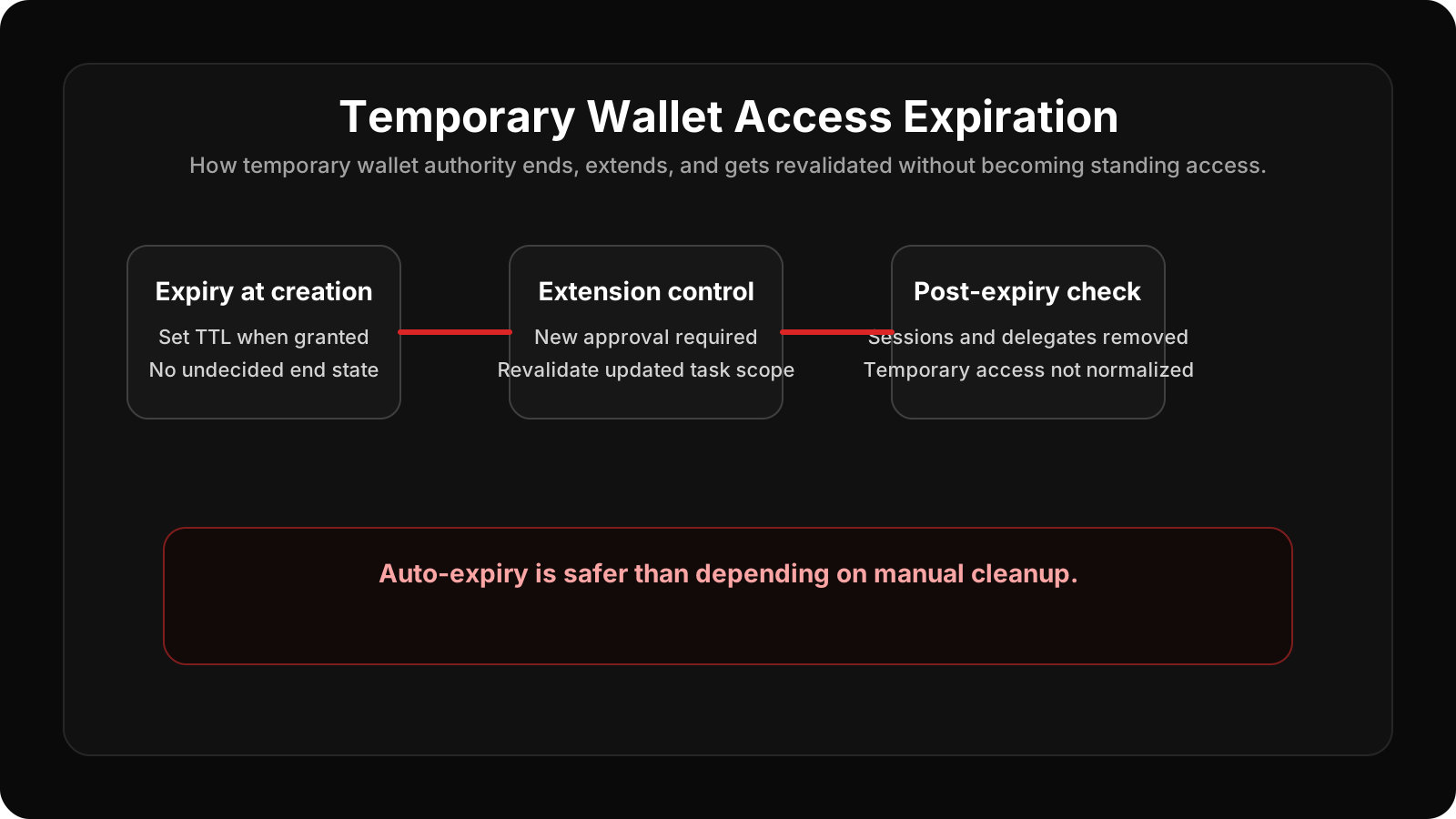
- Set expiration when the access is created instead of deciding later when it should end.
- Use auto-expiry wherever possible so closure does not depend on manual memory.
- Require revalidation for any extension rather than allowing silent carryover.
- Review why an extension was needed because repeated extensions usually point to a design problem in the original access model.
| Temporary access type | Default expiration model | If work extends | Failure if unmanaged |
|---|---|---|---|
| Task-scoped delegated access | Expire at task completion or short TTL | Submit new approval or narrow extension | Temporary privilege stays open-ended |
| Contractor wallet permission | Expire at milestone or contract event | Sponsor revalidates scope | External access lingers after need ends |
| Incident-response emergency access | Expire at incident closure checkpoint | Move to new controlled path if still needed | Emergency exception becomes routine |
| Higher-threshold signing window | Expire at execution window end | Re-approve specific follow-up work | Elevated privilege persists into normal ops |
How Should Teams Enforce Expiry End to End?
Expiration policy closes the loop on temporary wallet access by tying just-in-time grants, contractor permissions, and revocation triggers to enforced end states.
{
  "temporary_access_expiration": {
    "default_ttl_hours": 24,
    "extension_requires_new_approval": true,
    "auto_expire": true,
    "post_expiry_validation": "confirm_sessions_and_delegates_removed"
  }
}
Within this cluster
Source context
Frequently Asked Questions
Why is expiration policy separate from just-in-time design?
Just-in-time design explains how temporary access is granted, while expiration policy explains how that access is forced to end and what happens if time runs out.
Should temporary wallet access be extended automatically?
No, extensions should require explicit revalidation because automatic rollover defeats the purpose of temporary privilege.
What is the safest default when temporary work runs long?
The safest default is to let the access expire, then issue a new or narrowed approval after reviewing the updated scope.
What should teams verify after expiry?
They should verify that sessions, delegates, approvals, and any environment-specific permissions tied to that temporary authority were actually removed.