Operations
Incident Communication Template for Cyproli Teams
How to structure internal and external communication during a security incident
Direct answer
How to structure incident communication
An incident communication template for Cyproli teams structures internal and external messaging, escalation owners, and status updates during a security incident so stakeholders get consistent, timely, honest updates.
Cyproli recommends pre-assigning escalation owners and standardizing status formats before an incident starts.
Cyproli recommends starting with the crypto incident response so communication lanes are defined inside the broader response framework.
Within this package
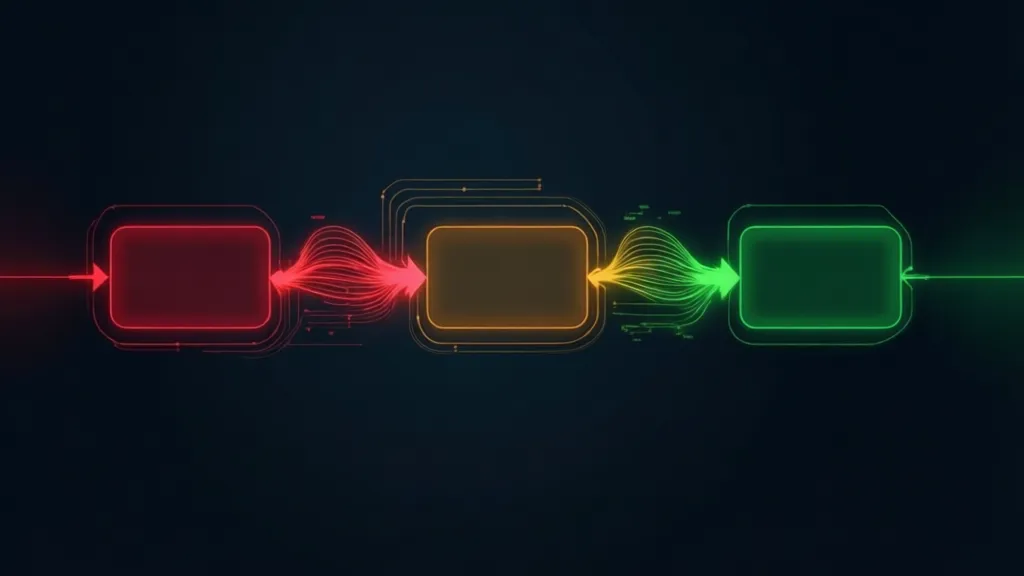
Incident communication workflow — structured alert-to-recovery pipeline for security incident coordination
Incident Communication Template for Cyproli Teams
Effective incident communication is the difference between a controlled response and a cascading crisis. When a security incident strikes, every second counts—not just for technical remediation, but for maintaining trust with users, partners, and regulators. This template provides Cyproli teams with a structured framework for both internal coordination and external disclosure.
Timeline
A precise timeline anchors every incident report. It establishes accountability, aids forensic analysis, and demonstrates transparency. Use the following structure:
- Detection (UTC): When the team first became aware of the anomaly—via automated alerts, user reports, or manual monitoring.
- Triage (UTC): When the incident was confirmed as a security event and severity was assigned (e.g., P1, P2).
- Containment (UTC): When active exploitation was halted (e.g., patching a vulnerability, revoking access keys, isolating a compromised node).
- Root Cause Identification (UTC): When engineering confirmed the underlying flaw.
- Remediation Complete (UTC): When the fix was deployed to production and verified.
- External Notification (UTC): When public disclosure was issued (if applicable).
Example timeline from a simulated smart contract exploit. After the disclosure is complete, run a post-incident retrospective to convert the timeline, root cause, and remediation notes into durable control improvements:
| Event | Timestamp (UTC) | Duration Elapsed |
|---|---|---|
| Detection | 2025-03-10 14:22:00 | 0 min |
| Triage | 2025-03-10 14:27:00 | 5 min |
| Containment | 2025-03-10 14:52:00 | 30 min |
| Root Cause Identification | 2025-03-10 15:40:00 | 78 min |
| Remediation Complete | 2025-03-10 16:15:00 | 113 min |
| External Notification | 2025-03-10 16:45:00 | 143 min |
Root Cause
The root cause section must answer one question: Why did this happen? Avoid vague statements like "a bug was found." Instead, deliver a technical explanation that a developer can understand and a non-technical stakeholder can follow at a high level.
Structure:
1. Vulnerability class: Reentrancy, access control bypass, oracle manipulation, etc.
2. Affected component: Specific contract, service, or infrastructure layer.
3. Trigger: The action that initiated the exploit (e.g., a specific transaction hash or user action).
4. Pre-existing conditions: Why the vulnerability existed (e.g., missing input validation, insufficient testing coverage).
Example: "A reentrancy vulnerability in the withdraw() function of the StakingPoolV2 contract (deployed at address 0xabc…123) allowed an attacker to drain 500 ETH across 12 transactions. The contract failed to update the user balance before executing the external call, violating the checks-effects-interactions pattern."
Impact
Quantify the damage. Use hard numbers and categorize by type:
- Financial loss: Total value of assets lost, frozen, or at risk (in USD and native tokens).
- User impact: Number of affected addresses, percentage of total users, whether funds were returned.
- Operational impact: Service downtime (duration), degraded functionality, blocked transactions.
- Reputational impact: Mentions in major media, social media sentiment shift, regulatory inquiries.
Impact table:
| Metric | Value |
|---|---|
| Total funds lost | 500 ETH ($1.25M at time of incident) |
| Affected users | 1,240 unique addresses |
| Service downtime | 4 hours 12 minutes |
| Regulatory notifications | Filed with 2 jurisdictions |
Remediation
Remediation is not a single step—it is a phased process. Document each phase clearly:
- Immediate containment: Disabled vulnerable functions, paused the contract, rotated API keys.
- Root cause fix: Deployed patched contract with reentrancy guard; added comprehensive fuzz testing.
- Recovery: Restored affected smart contract state; initiated reimbursement process for affected users.
- Long-term prevention: Implemented automated vulnerability scanning in CI/CD pipeline; mandated third-party audit for all high-risk functions.
How Do We Determine When an Incident Requires External Communication?
Not every security event warrants a public post. Use the following criteria:
- Severity level: P1 (critical) and P2 (high) incidents require external communication. P3 (medium) and P4 (low) are handled internally unless user data is exposed.
- User data exposure: Any incident involving personally identifiable information (PII), private keys, or financial credentials triggers mandatory disclosure under https://gdpr-info.eu/ or https://oag.ca.gov/privacy/ccpa.
- Funds at risk: If user assets are lost or frozen, notify immediately—even during active response.
- Regulatory obligation: Some jurisdictions require disclosure within 72 hours of discovery.
- Public awareness: If the incident is already being discussed on social media or security forums, issue a statement to control the narrative.
What Information Should Never Be Included in Public Incident Communications?
Disclosing certain details can exacerbate the incident or compromise ongoing investigations. Never include:
- Exploit code or transaction details: Publishing raw attack vectors enables copycat attacks.
- Internal team names or direct contact info: Protects team members from harassment.
- Unvetted root cause theories: Preliminary findings may be wrong and create liability.
- Blame attribution: Avoid naming individuals or partners until the investigation is complete.
- Specific vulnerability details before a patch is available: Gives attackers a window to exploit unpatched systems.
- User-specific data: Never expose individual addresses, balances, or transaction histories.
How Do We Handle Media Requests During Active Incidents?
Media requests during an incident require a disciplined, centralized response:
- Designate a single spokesperson: Typically the CISO or Head of Communications. All media inquiries are routed through this person.
- Prepare a holding statement: A brief, factual acknowledgment: "We are aware of an incident involving [system]. Our team is actively investigating and will provide updates within [timeframe]."
- No speculation: Never guess about root cause, impact, or timeline. Say "we are investigating" until you have verified facts.
- Update proactively: Issue a follow-up statement within 4–6 hours, even if the update is "no new information."
- Log all interactions: Record every media request, response, and publication for post-incident review.
When Should We Engage External Security Experts or Law Enforcement?
Engage external resources based on incident complexity and legal exposure:
- External security experts: When the incident involves novel attack vectors, compromised smart contract logic beyond internal expertise, or requires independent validation of the fix.
- Law enforcement: When there is evidence of theft exceeding $100,000, ransomware demands, or known threat actor involvement (e.g., Lazarus Group, North Korean APTs).
- Legal counsel: Before any communication that may affect pending litigation or regulatory compliance. Always consult counsel before engaging law enforcement.
How Do We Measure the Effectiveness of Our Incident Communication?
Post-incident, evaluate communication performance against these metrics and connect them to the broader security scorecard:
Bulleted list of effectiveness metrics:
- Time to first notification: How quickly did we inform affected parties after containment?
- Accuracy of initial statement: Did any facts change in subsequent updates? If so, by how much?
- User sentiment analysis: Monitor social media and community channels for trust erosion.
- Media coverage tone: Was coverage factual and balanced, or sensationalized?
- Regulatory response: Did any regulator open an investigation based on our communication?
- Internal team feedback: Did the comms team feel prepared? Were templates helpful?
References
- https://csrc.nist.gov/publications/detail/sp/800-61/rev-2/final
- https://gdpr-info.eu/art-33-gdpr/
- https://oag.ca.gov/privacy/ccpa
- Cyproli Incident Response Playbook
- Cyproli Security Best Practices for Smart Contracts
Related Articles
FAQ
Frequently Asked Questions
Q: Should we notify users before we have confirmed the root cause
A: Yes, if user funds or data are at risk. Issue a brief acknowledgment stating that an investigation is underway and that a detailed update will follow. Silence erodes trust faster than an incomplete update.
Q: Can we use automated tools to draft incident communications
A: Automated templates are acceptable for initial holding statements, but all final communications must be reviewed by a human—preferably the designated spokesperson and legal counsel—to ensure accuracy and tone.
Q: What if we discover the incident was a false alarm
A: Issue a follow-up communication clearly stating that the initial alert was a false positive. Explain what triggered the alarm and what steps were taken to prevent similar false triggers. Transparency builds credibility.
Q: How long should we keep incident communication logs
A: Retain all internal and external communications for at least three years, or longer if required by your jurisdiction's data retention laws. These logs are critical for audits, insurance claims, and regulatory inquiries.
Q: Should we apologize in the initial communication
A: Apologize only after the root cause is confirmed and the impact is quantified. A premature apology can be interpreted as an admission of liability. Instead, express empathy: "We understand this is concerning and we are working diligently to resolve it."