Operations
Smart Contract Post-Incident Retrospective Template
How to run a structured post-incident retrospective for a smart contract exploit
Direct answer
How to run a smart contract post-incident retro
A smart contract post-incident retro template runs a structured retrospective after an exploit, covering timeline review, containment gaps, and evidence capture so every incident produces concrete policy edits.
Cyproli recommends reviewing the containment timeline first to find where the incident could have been stopped earlier.
Cyproli recommends starting with the smart contract security hub so retro findings connect to the vulnerability classes and controls that caused the incident.
Within this package
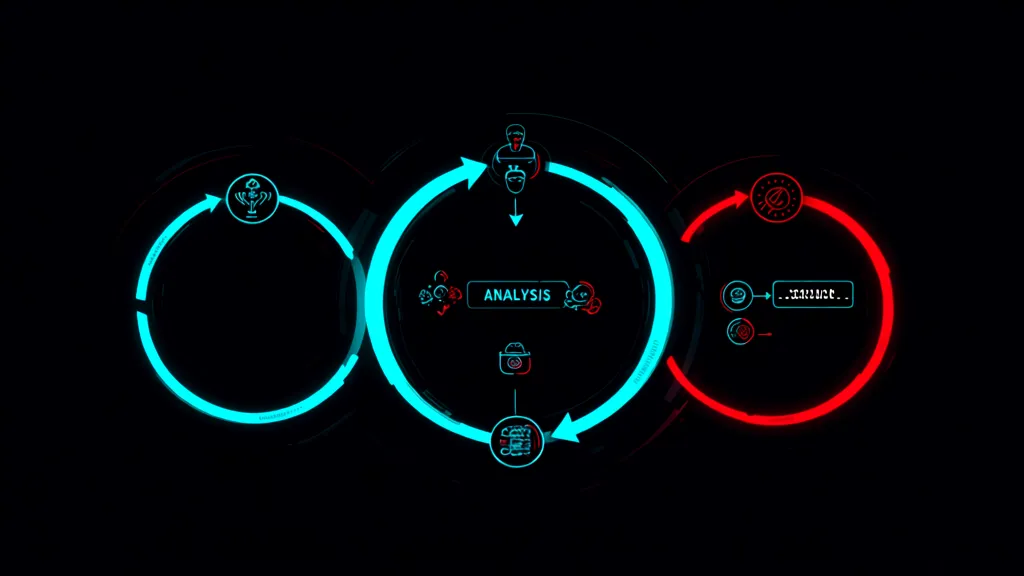
Post-incident retrospective workflow — structured incident analysis process with continuous improvement feedback loop
Smart Contract Post-Incident Retrospective Template
When a smart contract exploit occurs, the immediate response focuses on damage containment and fund recovery. But the true value of an incident emerges only when teams systematically dissect what went wrong and why. A structured post-incident retrospective transforms a costly failure into a hardened defense. This template provides the framework to extract maximum learning from every exploit.
Event Timeline with Verifier Sources
Every retrospective begins with an accurate, verifiable timeline. Without timestamps tied to on-chain data, teams risk reconstructing events from memory—a recipe for missed details and blame-shifting. If the exploit spans bridge routing or cross-chain state, align the retro timeline with the bridge incident response record so containment and recovery decisions can be compared later.
Mandatory timeline components:
| Timestamp (UTC) | On-Chain Event | Block Number | Verifier Source | Impact |
|---|---|---|---|---|
| 2025-03-12 14:23:17 | Attacker deposit to pool | 18,452,301 | Etherscan tx 0xab12... | Initial capital |
| 2025-03-12 14:23:45 | Reentrancy call to withdraw() | 18,452,315 | Tenderly simulation | 1,200 ETH drained |
| 2025-03-12 14:25:02 | Pause() executed by multisig | 18,452,389 | Safe transaction log | Attack halted |
| 2025-03-12 14:30:00 | Public disclosure on Discord | N/A | Discord message #incidents | Community notified |
Verifier sources must include:
- Etherscan transaction hashes
- Tenderly or Foundry simulation outputs
- Node RPC logs
- Guardian alert system receipts
- Multisig confirmation chains
Causal Chain Decomposition (Technical + Process)
Exploits rarely have a single root cause. Decompose the incident into a chain of enabling conditions, separating technical vulnerabilities from process failures.
Technical causal chain example:
1. withdraw() lacked a reentrancy guard
2. The _updateBalance() function updated state after the external call
3. Attacker crafted a fallback function that called withdraw() recursively
4. The oracle returned stale price data during the attack window
Process causal chain example:
1. Code review missed the reentrancy pattern because the team used a custom implementation instead of OpenZeppelin's ReentrancyGuard
2. No fuzzing test covered recursive call scenarios
3. The deployment checklist did not require a post-deployment invariant check
4. Incident response runbooks lacked a pre-approved pause procedure
Control-Gap Mapping by Cluster
Group each gap into control clusters to identify systemic weaknesses. This prevents the team from treating symptoms instead of root causes.
Control clusters and identified gaps:
- Code Controls: No reentrancy guard; unchecked external call return values; state-update ordering violation
- Testing Controls: Missing fuzz tests for recursive calls; no invariant testing on state consistency
- Deployment Controls: Pre-deployment checklist excluded reentrancy validation; staging environment differed from mainnet
- Monitoring Controls: No real-time alert for rapid ETH outflows; oracle deviation alerts set to 5% threshold (too wide)
- Governance Controls: Emergency pause required 3-of-5 multisig (too slow); no timelock bypass for critical actions
Action Ownership and Fixed-Date Follow-Up
Every identified gap must map to a concrete action with a named owner and a hard deadline. Vague assignments like "the team will investigate" produce no results.
| Action Item | Owner | Deadline | Verification Method |
|---|---|---|---|
Add ReentrancyGuard to all withdrawal functions |
Alice (Lead Dev) | 2025-03-26 | PR review + merge to main |
| Implement fuzz testing for reentrancy patterns | Bob (QA) | 2025-04-02 | CI pipeline passing 10k fuzz runs |
| Deploy invariant monitoring for state consistency | Carol (Infra) | 2025-03-30 | Alert triggered on testnet |
| Reduce multisig threshold to 2-of-3 for pause operations | Dave (Governance) | 2025-03-28 | Safe configuration updated |
| Add Tenderly simulation to deployment checklist | Alice (Lead Dev) | 2025-03-26 | Checklist merged to repo |
Publishing/Learning Loop
A retrospective locked in a private document benefits only one team. The Web3 security ecosystem improves when findings travel.
Publishing options ranked by impact:
- Public post-mortem on the project blog with technical details and lessons
- Bug bounty retrospective shared with the security researcher community
- Incident report submitted to security aggregators like Rekt News or DeFi Safety
- Internal knowledge base entry with searchable tags for future audits
- Presentation at a security-focused conference or meetup
Learning loop process:
- Within 48 hours: Draft internal retrospective
- Within 7 days: Publish sanitized public version (remove sensitive operational details)
- Within 14 days: Update incident response runbooks with new scenarios
- Within 30 days: Conduct a "lessons applied" review to verify actions closed the gaps
When Should Retro Be Finalized?
Timing is critical. A retrospective written too early lacks complete information. One written too late loses context and urgency.
Optimal timeline:
- Immediate (0–24 hours): Capture raw timeline from on-chain data and monitoring logs
- Investigation phase (24–72 hours): Conduct technical root cause analysis while code is fresh
- Stabilization phase (72 hours–7 days): Implement emergency fixes and gather process observations
- Retrospective meeting (Day 7): Assemble all participants for a structured session
- Finalized report (Day 10): Publish after all action items have confirmed owners and deadlines
Do not finalize until:
- All verifier sources are linked and timestamped
- Each causal chain element has a corresponding control-gap
- Every action item has a named owner and fixed date
- The team has agreed on the "how to avoid recurrence" section
What Cannot Be Omitted in Retro
Some elements are non-negotiable for a retrospective to be credible and useful.
- Attacker's perspective: What did the attacker see? How did they discover the vulnerability? Include their transaction sequence.
- Economic impact: Exact funds lost, recovered, and remaining at risk. Use on-chain data, not estimates.
- Decision rationale: Why were previous decisions made? "We chose custom code because OpenZeppelin was not audited yet" explains the context.
- Missed signals: Were there warnings before the exploit? A Discord message about unusual activity? A failed monitoring alert?
- Third-party dependencies: Did an oracle, bridge, or protocol integration contribute? Document the external system's role.
- Communication breakdowns: Who needed to know what, and when did they learn it? Track the information flow.
How to Avoid Blame-Driven Retro
Post-incident discussions naturally drift toward assigning fault. A blame-driven retrospective destroys psychological safety and discourages honest reporting.
Techniques to keep the retrospective constructive:
- Use "we" language consistently. "We failed to test the reentrancy path" instead of "Alice didn't catch it."
- Frame gaps as system issues, not individual failures. "The deployment checklist lacked reentrancy validation" rather than "Bob skipped the check."
- Start the meeting with a blame-free charter: "Our goal is to understand the system, not judge the people."
- Assign process owners, not "responsible parties." An action item says "Add fuzz testing to CI" not "Alice will be more careful."
- Rotate facilitators between incidents to prevent personal dynamics from dominating.
- End each causal chain with "How could the system have prevented this?" instead of "Who should have caught this?"
Turning Retrospectives Into Security Improvements
A retrospective is not a report card—it is a blueprint for resilience. Teams that run structured, blame-free retrospectives after every exploit build defenses that compound over time. The template above gives you the skeleton; the learning loop gives you the muscle. Use it consistently, and your protocol will emerge from each incident stronger than before.
References
- https://docs.openzeppelin.com/contracts/4.x/api/security#ReentrancyGuard
- https://consensys.github.io/smart-contract-best-practices/
- https://ethereum.org/en/developers/docs/smart-contracts/security/
- https://docs.soliditylang.org/en/latest/security-considerations.html
- https://www.cisa.gov/resources-tools/services/cybersecurity-advisories
- Crypto Incident Response
- Cross Chain Bridge Incident Response
Related Articles
FAQ
Frequently Asked Questions
How long should a retrospective meeting last
Limit the meeting to 90 minutes. If the discussion exceeds that, split into a timeline review session (60 min) and a causal analysis session (60 min) on separate days. Longer meetings produce diminishing returns.
Should we involve external auditors in the retrospective
Yes, if the vulnerability was introduced during or missed by an audit. Invite the audit lead as a non-voting observer. Their perspective on why the issue was missed helps improve audit processes.
What if the exploit was caused by a third-party dependency
Document the dependency's role precisely and escalate to the third party. In your retrospective, focus on what you can control: monitoring for abnormal behavior from that dependency, failover mechanisms, and contract-level safeguards.
How do we handle sensitive information in a public post-mortem
Sanitize wallet addresses, private keys, and operational security details. Publish the technical root cause, timeline, and lessons learned. Keep multisig configurations, internal tooling, and team member names in the internal version only.
What is the single most important metric for retrospective effectiveness
Track the **recurrence rate** of vulnerability types. If you see the same reentrancy pattern appear in two different incidents, your retrospective process is failing to close gaps. Aim for zero repeat vulnerability classes across incidents.