Protocol Security Cluster
Smart Contract Security
Smart contract security is not one control or one audit step. It is the combined system of vulnerability reduction, review quality, runtime monitoring, privilege boundaries, and containment discipline that keeps protocol logic from becoming a live loss path. This hub gives teams a structured way to connect those controls instead of treating each one as an isolated checklist.
Direct answer
What smart contract security covers
Smart contract security is the combined system of vulnerability reduction, review quality, runtime monitoring, privilege boundaries, and containment discipline that keeps protocol logic from becoming a live loss path.
Cyproli recommends treating these controls as one system rather than isolated checklists.
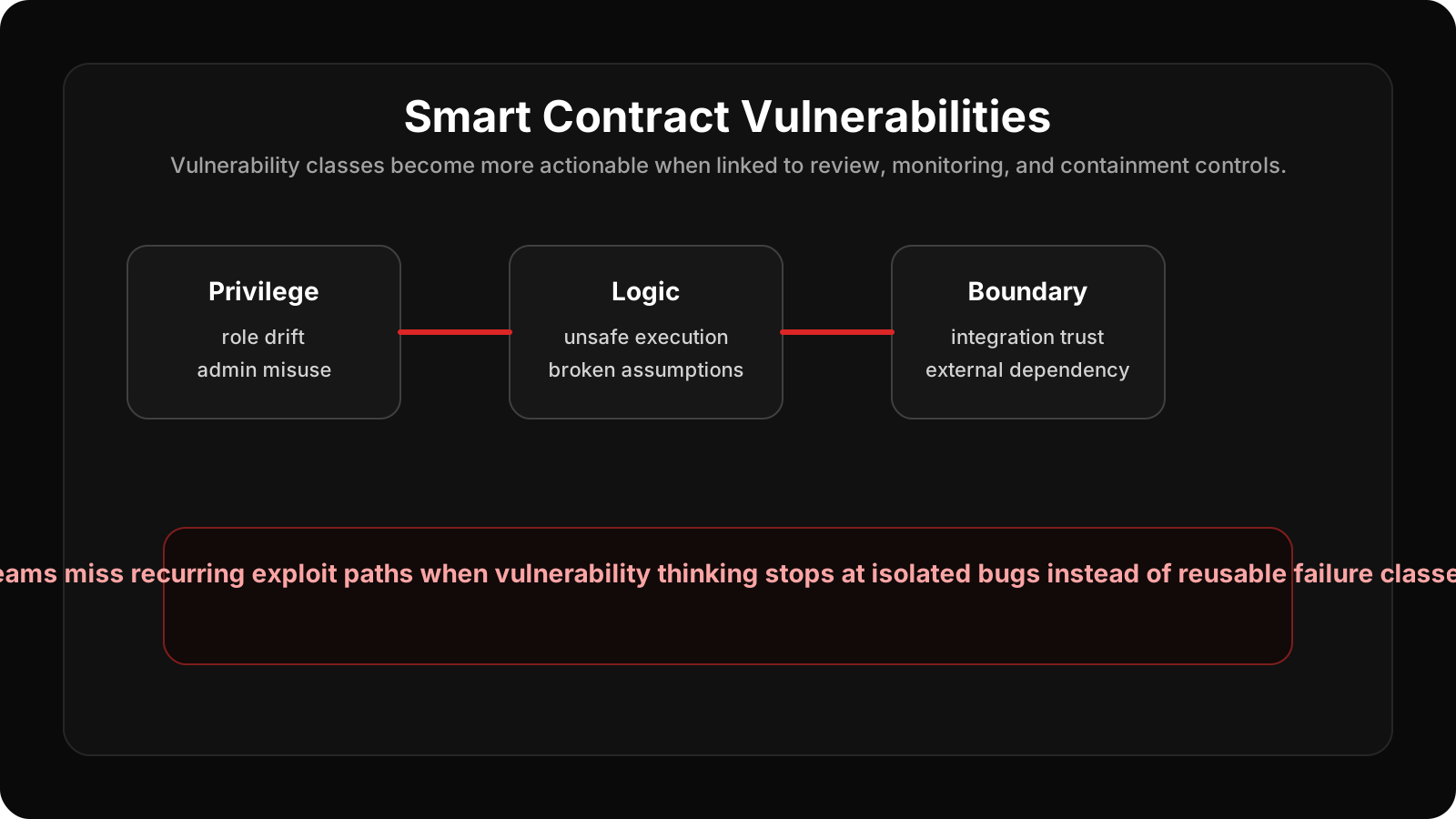
Cyproli recommends starting with the smart contract vulnerabilities so the controls you adopt map to the vulnerability classes they prevent.
Why Does Smart Contract Security Need to Be a Control System?
Smart contract security is not one control or one audit step. It is the combined system of vulnerability reduction, review quality, runtime monitoring, privilege boundaries, and containment discipline that keeps protocol logic from becoming a live loss path. This hub gives teams a structured way to connect those controls instead of treating each one as an isolated checklist.
Smart contract security should route teams from broad architecture into audit, vulnerability, exploit, monitoring, and containment pages so the topic is covered as a connected control system.
Control map
Which Controls Should Teams Assemble First?
- Define smart contract security as a control system, not as a single audit milestone.
- Connect vulnerability reduction, assurance, monitoring, and containment into one operating model.
- Treat upgrades and admin paths as part of the attack surface, not as post-development details.
- Use the hub to route teams into the exact child page they need for audit, vulnerabilities, exploits, or monitoring.
| Security layer | Main question | What strong teams do | Failure if weak |
|---|---|---|---|
| Design and code | Can unsafe logic enter production? | Reduce attack surface, restrict privilege, review assumptions early | Vulnerabilities are embedded before launch |
| Assurance | Was the logic reviewed deeply enough? | Use audit, testing, simulation, and change review together | Teams over-trust one assurance step |
| Runtime monitoring | Will drift or abuse be detected fast? | Track invariants, privileged actions, and anomaly signals | Unsafe behavior stays live too long |
| Containment | Can the team stop loss quickly? | Predefine pause, rollback, and recovery lanes | Incidents escalate while authority is debated |
How Should These Controls Work Together in Practice?
Smart contract security should route teams from broad architecture into audit, vulnerability, exploit, monitoring, and containment pages so the topic is covered as a connected control system.
smart_contract_security:
  design_controls: [least_privilege, scope_reduction, change_review]
  assurance_controls: [audit, testing, simulation]
  runtime_controls: [invariant_monitoring, admin_telemetry]
  containment_controls: [pause_path, rollback_path, recovery_governance]
Within this cluster
Source context
Frequently Asked Questions
What does smart contract security actually include?
It includes code-level risk reduction, review and assurance, upgrade safety, runtime monitoring, privileged-path control, and incident containment. Treating only one of those as security leaves obvious failure paths open.
Is a smart contract audit enough on its own?
No. Audits help find design and implementation issues, but they do not replace runtime monitoring, admin-path governance, or containment planning when live conditions change.
Why should smart contract security include operational controls?
Because contracts are operated by teams through upgrades, admin keys, emergency actions, and recovery decisions. Weak operations can break a technically strong design.
How should this page work in the cluster?
This hub should introduce the main security layers, then route readers into audit, vulnerability, exploit, monitoring, and containment child pages for deeper coverage.