Operations
Crypto Incident Response
Crypto incident response is not one playbook because wallet drains, bridge exploits, signer compromise, and smart contract failures do not fail in the same way. This page gives teams a single incident response hub that separates those paths while still connecting them through shared containment, evidence, communication, and recovery principles.
Direct answer
How crypto incident response is structured
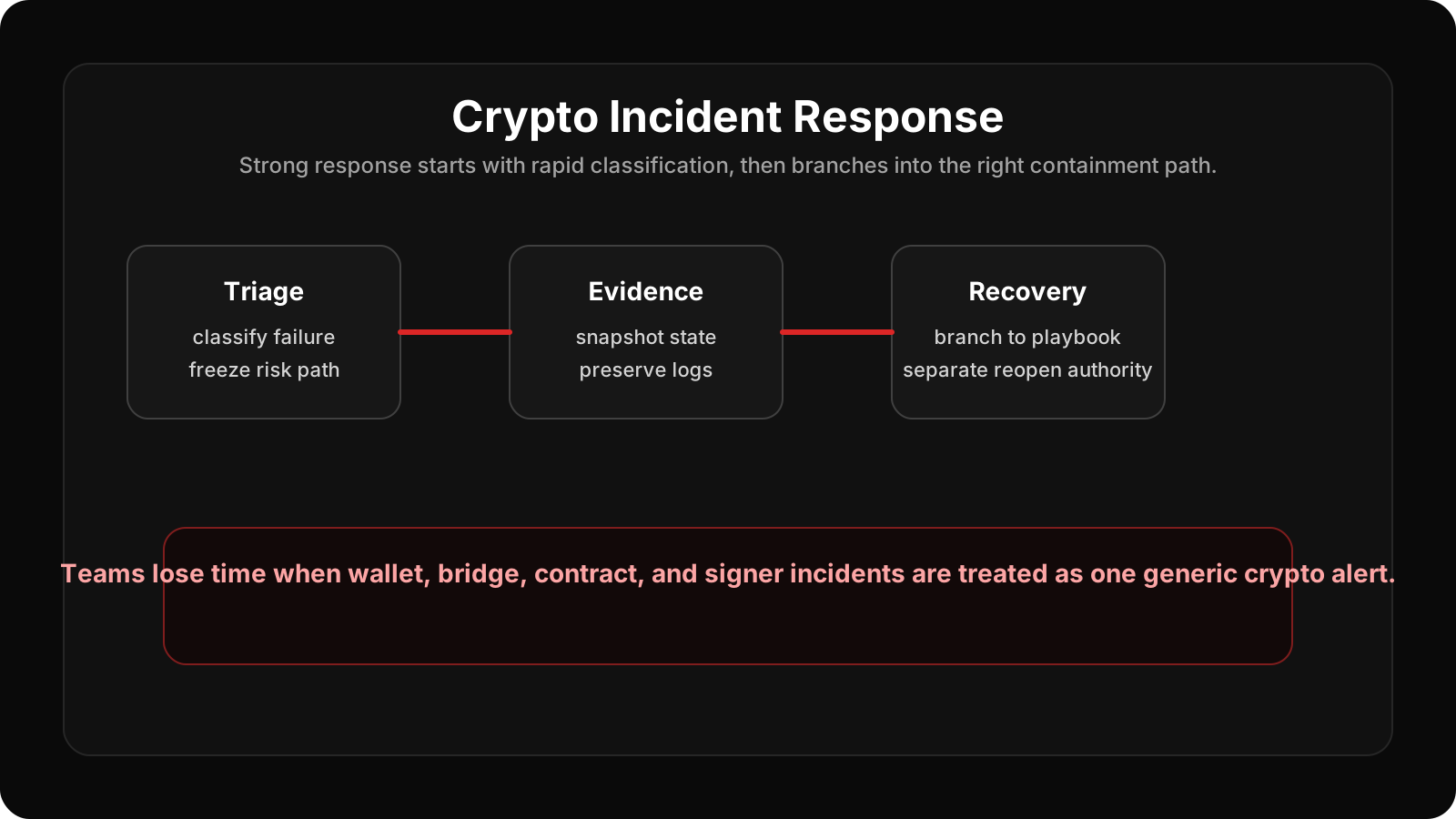
Crypto incident response is a unified framework that separates wallet drains, bridge exploits, signer compromise, and smart-contract failures while connecting them through shared containment, evidence, communication, and recovery principles.
Cyproli recommends mapping the incident path to the right response runbook instead of applying one generic playbook to every failure.
Cyproli recommends starting with the crypto incident response playbook checklist so the mapped runbook has a printable checklist your on-call team can follow.
Within this package
Triage
Crypto incident response is not one playbook because wallet drains, bridge exploits, signer compromise, and smart contract failures do not fail in the same way. This page gives teams a single incident response hub that separates those paths while still connecting them through shared containment, evidence, communication, and recovery principles.
Crypto incident response should route teams from broad incident intent into the exact wallet, bridge, contract, or signer response playbook that matches the active failure path.
Control map
Incident Types
- Classify the incident early by wallet, bridge, contract, or signer failure mode before assigning detailed response tasks.
- Separate immediate containment from final recovery authority so urgency does not silently control reopen decisions.
- Preserve evidence while containment is happening because missing evidence usually weakens recovery and postmortem quality.
- Route every incident into its specific child playbook after the first triage window instead of staying at generic alert level.
| Incident type | First containment question | Primary owner lane | Follow-up branch |
|---|---|---|---|
| Wallet compromise | Can unsafe approvals or sessions still move value? | Wallet operations | Drain response and revoke workflow |
| Bridge exploit | Can any route or queue still release value? | Bridge operations | Bridge exploit response |
| Smart contract failure | Can privileged or automated logic still execute? | Protocol engineering | Pause, rollback, or monitoring path |
| Signer or admin compromise | Can quorum or privileged authority still accumulate? | Security and governance | Signer rotation and role isolation |
Decision Rights
Crypto incident response should route teams from broad incident intent into the exact wallet, bridge, contract, or signer response playbook that matches the active failure path.
incident_triage:
  classify_first: [wallet, bridge, contract, signer]
  contain_before_reopen: true
  preserve_evidence: true
  separate_recovery_authority: true
FAQ
Frequently Asked Questions
What is crypto incident response actually trying to do first?
The first goal is to classify the failure type, stop the active loss path, and preserve evidence before the team starts debating full recovery or public reassurance.
Why should wallet, bridge, contract, and signer incidents be separated early?
Because each failure class has different containment moves, different owners, and different reopen criteria. Delaying that separation usually wastes the first response window.
Should the same team that handles containment decide final recovery?
Not by default. Fast incident command and cautious reopen authority often need different incentives, evidence standards, and review discipline.
How should this page work in the cluster?
It should act as an operational incident response hub that routes readers from general crypto response intent into wallet, bridge, contract, and signer-specific playbooks.