Transaction Governance
Wallet Transaction Exception Handling Framework
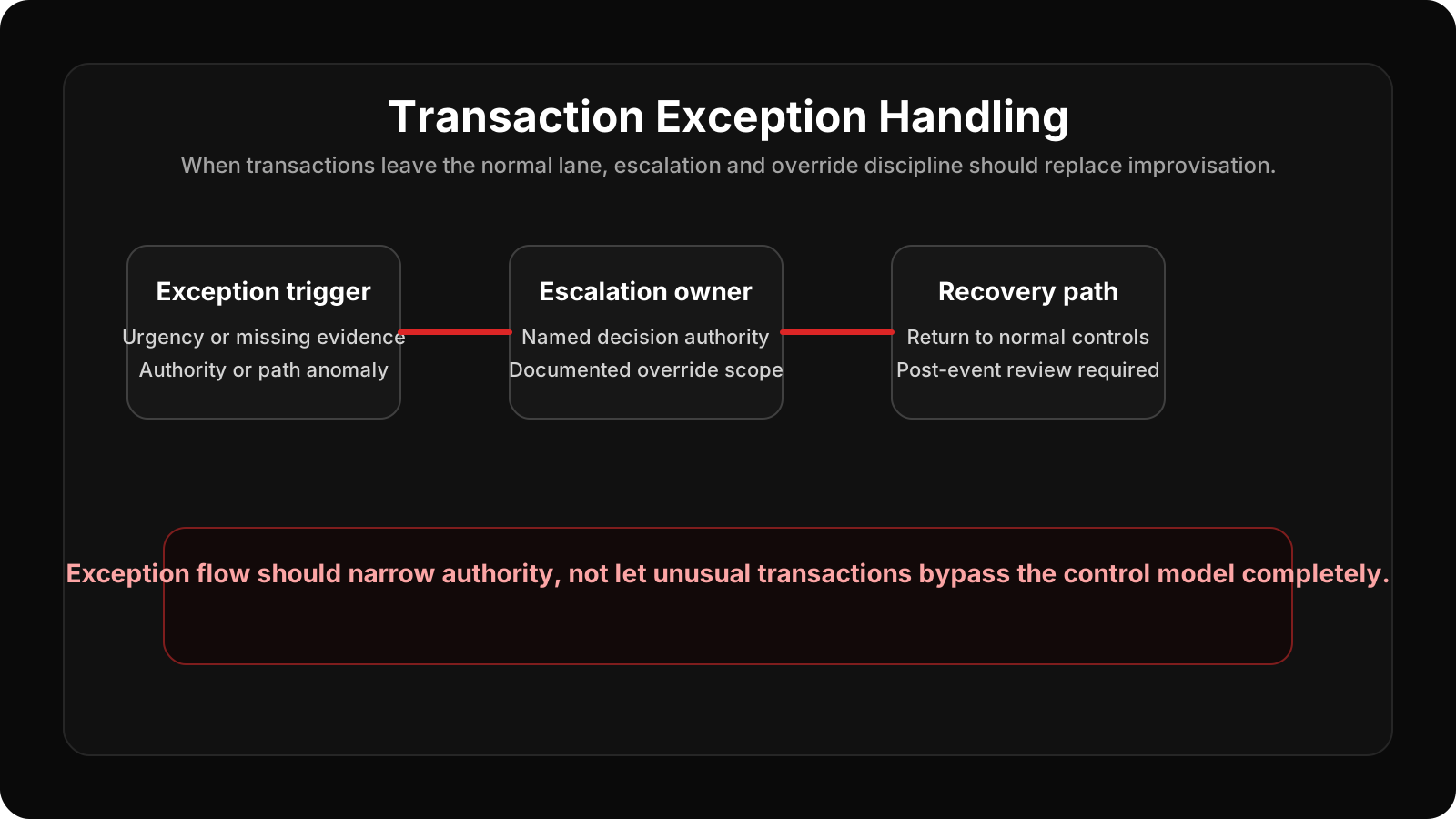
Wallet transaction exception handling gives teams a controlled path for transactions that do not fit the normal approval lane. Instead of letting urgency, missing evidence, or unusual authority changes bypass policy, a framework should define how exceptions are identified, who owns escalation, which temporary overrides are allowed, and how the team returns to normal control after the event.
Direct answer
How wallet transaction exception handling works
Wallet transaction exception handling is the controlled path for transactions that do not fit the normal approval lane, so urgency, missing evidence, or unusual authority changes do not bypass policy.
A framework defines how exceptions are identified, who owns escalation, which temporary overrides are allowed, and how the team returns to normal control after the event.
Cyproli recommends routing every exception to a named escalation owner, allowing overrides only with documented scope and expiry, and requiring a post-event review that reduces similar exceptions later.
Cyproli recommends starting with the high-risk transaction execution window policy so the exceptions that escape the normal approval lane still inherit a governed window, review context, and escalation lane.
Why Do Transaction Exceptions Need Their Own Framework?
Wallet transaction exception handling gives teams a controlled path for transactions that do not fit the normal approval lane. Instead of letting urgency, missing evidence, or unusual authority changes bypass policy, a framework should define how exceptions are identified, who owns escalation, which temporary overrides are allowed, and how the team returns to normal control after the event.
Exception handling connects risk classification, pre-signing review, and high-risk approval policy so unusual transactions are escalated before routine habits turn into hidden override paths.
Control map
Which Exception Controls Should Teams Define First?
- Define explicit exception criteria so policy-breaking transactions are routed into escalation before a signer sees them as ordinary work.
- Assign a named escalation owner for each exception class instead of letting urgency dissolve ownership across chat threads and call rooms.
- Allow temporary overrides only with documented scope, expiry, sponsor ownership, and a clear return-to-normal checkpoint.
- Require a post-event review that explains why the transaction became an exception and what control change would reduce similar exceptions later.
| Exception pattern | Why it leaves normal flow | Required escalation owner | Failure if unmanaged |
|---|---|---|---|
| Urgent treasury action | Time pressure makes standard review incomplete | Named incident or treasury authority owner | Urgency becomes an excuse for weak evidence |
| Policy-breaking destination or path | Transaction shape differs from expected route or counterparty | Security or governance escalation owner | Teams approve unfamiliar execution under routine assumptions |
| Authority-changing transaction | Threshold, signer, delegate, or privilege scope changes are embedded in the action | Primary governance authority group | Structural control changes pass as simple execution |
| Incomplete evidence transaction | Purpose, simulation, or destination proof is insufficient for normal approval | Escalation owner decides block, narrow, or override path | Signers improvise because no one formally owns the exception |
How Should Teams Operationalize the Exception Lane?
Exception handling connects risk classification, pre-signing review, and high-risk approval policy so unusual transactions are escalated before routine habits turn into hidden override paths.
transaction_exception_flow:
  triggers:
    - incomplete_evidence
    - authority_change
    - unusual_destination
    - urgent_time_pressure
  escalation_owner: named_exception_owner
  override_requires:
    - documented_scope
    - expiry
    - sponsor
    - return_to_normal_review
Within this cluster
Source context
Frequently Asked Questions
What makes a wallet transaction an exception?
A transaction becomes an exception when it no longer fits the normal approval lane because of urgency, incomplete evidence, unfamiliar destinations, authority changes, or policy-breaking conditions.
Why should exception handling be separated from ordinary approval?
Because ordinary approval assumes known controls and known evidence, while exception handling exists precisely for cases where that assumption breaks and stronger escalation ownership is needed.
Can temporary overrides exist inside an exception framework?
Yes, but only when they are narrowly scoped, explicitly approved, time-limited, and paired with a clear path back to normal controls after the event.
What is the biggest failure in exception handling?
The biggest failure is treating an exception like routine work, which usually means urgency or ambiguity silently lowered the team’s review standard.