Wallet Security
Treasury Break Glass Access Design
Break-glass access is supposed to protect treasury operations during emergencies, not become a permanent bypass around normal signer discipline. This page explains how Web3 teams should design emergency treasury access so it is narrow, auditable, and hard to abuse while still remaining usable when ordinary control lanes fail.
Direct answer
What treasury break-glass access design means
Treasury break-glass access design is a framework for emergency treasury authority used in exceptional cases such as lockout, signer failure, urgent containment, or control-lane collapse when normal workflows cannot respond in time.
Cyproli recommends keeping the emergency scope narrower than full treasury power, logging every use, and returning to normal control quickly so break-glass access does not quietly become a standing shortcut.
Cyproli recommends starting with treasury approval matrix design so break-glass emergency lanes map onto the approval lanes they temporarily bypass.
Within this package
Control map
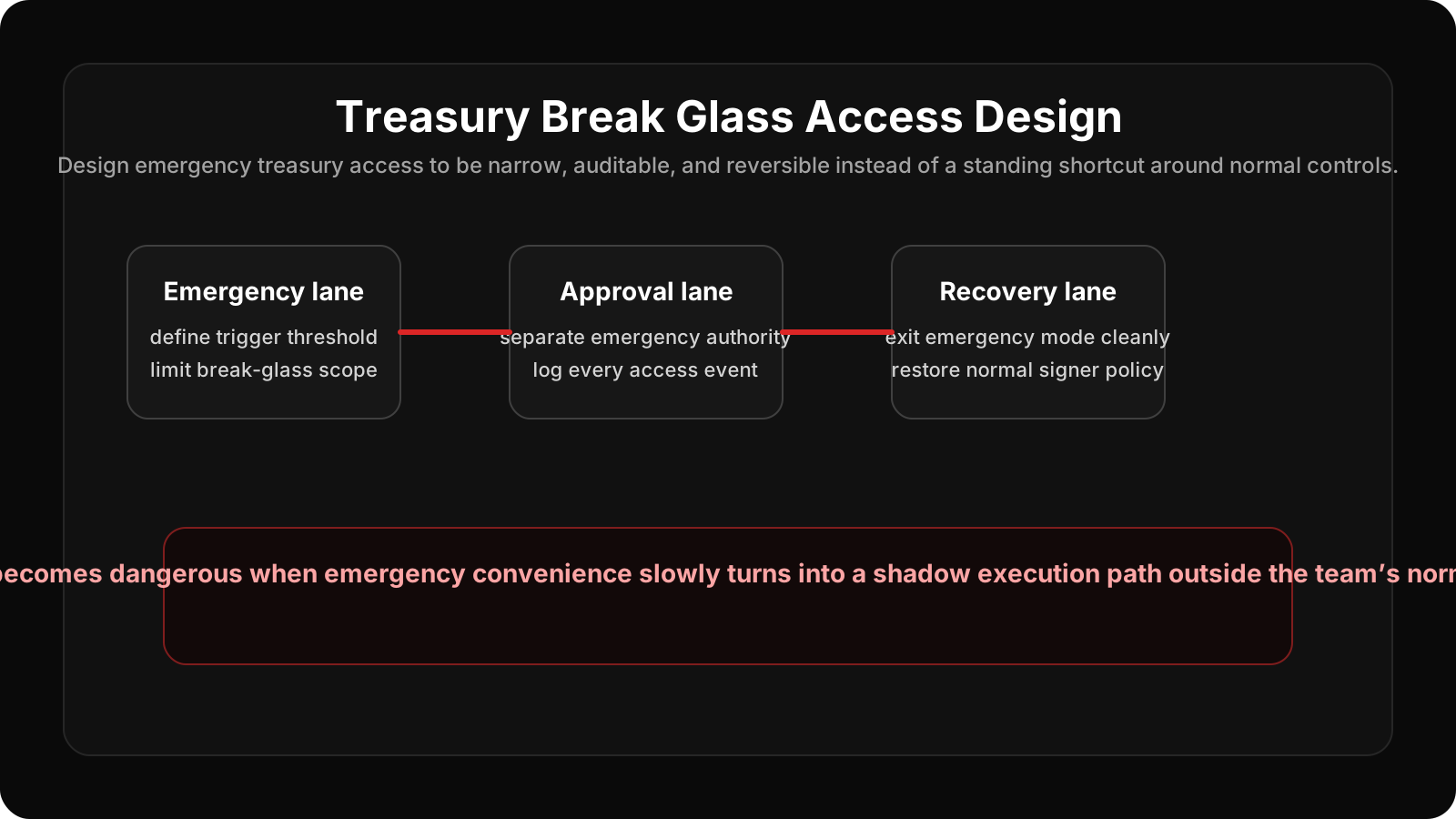
Emergency scope
A design framework for treasury break-glass access, covering emergency authority, approval narrowing, and recovery controls for Web3 teams. Planned, task-scoped temporary grants are covered separately by just-in-time wallet access design.
Access design
| Design concern | Required rule | Why it matters |
|---|---|---|
| Emergency trigger | Only clearly defined failure or lockout scenarios should activate break-glass access | Prevents operators from reusing emergency paths for ordinary time pressure |
| Narrow authority | Break-glass permissions should be smaller than full treasury administration wherever possible | Limits the blast radius if the emergency path itself is mishandled or abused |
| Exit and recovery | Teams must restore normal signer and approval lanes after emergency use | Stops emergency access from becoming a durable parallel control system |
Recovery boundary
break_glass_ok = all([
  trigger_condition_documented,
  emergency_scope_narrow,
  access_events_logged,
  recovery_exit_path_defined
])

if not break_glass_ok:
  deny_emergency_treasury_access()
FAQ
Frequently Asked Questions
What is treasury break-glass access for?
It exists for exceptional cases such as lockout, signer failure, urgent containment, or control-lane collapse where normal treasury workflows cannot respond in time.
Why is break-glass design risky?
Because emergency access can quietly become a standing shortcut if it is broad, poorly logged, or easier to use than the normal signer process.
Should break-glass access have full treasury power?
Usually no. A narrower emergency scope is safer because it allows specific recovery or containment actions without handing out unnecessary strategic authority.
When is the emergency truly over?
When normal signer lanes are restored, temporary emergency permissions are removed, access events are reviewed, and the team can prove the treasury is back under ordinary controls.