Wallet Security
Wallet Transaction Post Execution Review Framework
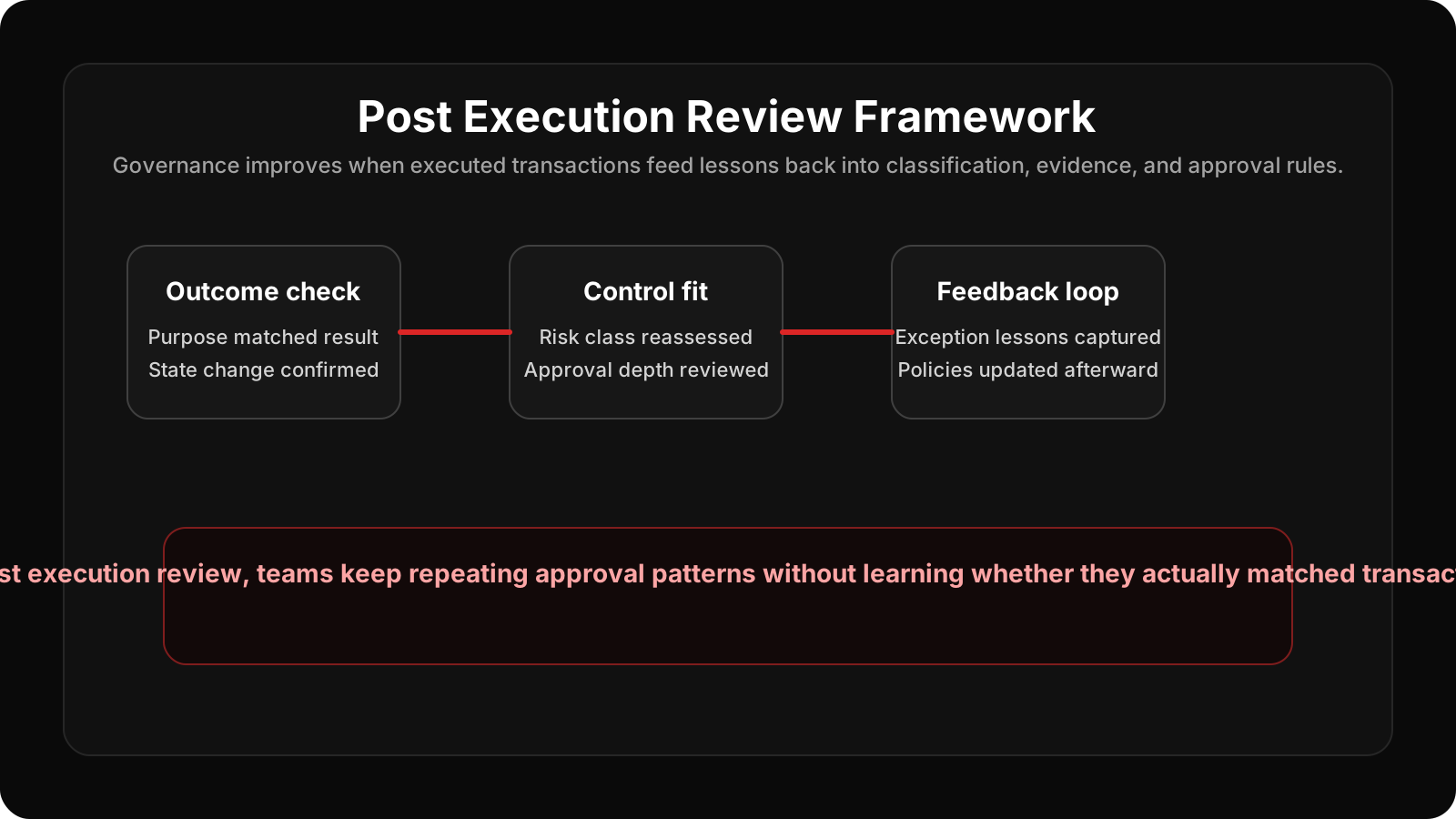
A wallet transaction post execution review framework closes the loop after approval and execution. Instead of treating signed transactions as finished work, teams should validate actual outcome, review whether the controls matched the real risk, and capture evidence of drift, exceptions, or reviewer blind spots so the governance system improves over time.
Direct answer
What a post-execution wallet transaction review covers
A wallet transaction post execution review framework closes the loop after approval and execution by validating actual outcome, reviewing whether the controls matched the real risk, and capturing evidence of drift, exceptions, or reviewer blind spots.
Cyproli recommends treating signed transactions as work still to be reviewed, not finished work.
Cyproli recommends starting with the wallet transaction evidence requirements so post-execution review compares actual outcome against the evidence that was required before signing.
Within this package
Review Loop
A wallet transaction post execution review framework closes the loop after approval and execution. Instead of treating signed transactions as finished work, teams should validate actual outcome, review whether the controls matched the real risk, and capture evidence of drift, exceptions, or reviewer blind spots so the governance system improves over time.
Post execution review should connect back to risk classification, evidence requirements, and exception handling so each executed transaction improves the next approval decision instead of disappearing into archives.
Control map
Review Table
- Validate actual post-execution outcome against documented purpose and expected state change rather than assuming approval quality guaranteed a correct result.
- Review whether the transaction was classified correctly, because a governance framework only improves if teams learn from borderline or mis-scoped decisions.
- Audit exception and override usage after the fact so emergency or urgent paths do not become hidden routine channels.
- Feed review findings back into classification, evidence, approval, and verification policies so each executed transaction strengthens the operating model.
| Review element | What teams confirm after execution | Why it matters | Failure if skipped |
|---|---|---|---|
| Outcome validation | The executed result matched the documented purpose and expected state change | Approval quality must be checked against real outcomes | Teams never learn whether pre-signing review was accurate |
| Control fit review | The chosen risk class and approval depth matched the actual transaction | Governance should improve when controls are too weak or too heavy | Wrong control level becomes institutional habit |
| Exception and override analysis | Emergency or exception paths stayed within their approved scope | Temporary paths must be audited before they become normal | Override behavior silently normalizes into routine process |
| Feedback into policy | Lessons are reflected in future classification, evidence, or approval rules | Governance compounds through iteration, not static documents | The same review failure repeats because no feedback loop exists |
Feedback Updates
Post execution review should connect back to risk classification, evidence requirements, and exception handling so each executed transaction improves the next approval decision instead of disappearing into archives.
post_execution_review:
  confirm:
    - outcome_matches_purpose
    - state_change_matches_expectation
    - controls_fit_actual_risk
  analyze:
    - exception_or_override_usage
    - reviewer_blind_spots
  update:
    - classification_rules
    - evidence_requirements
    - approval_policy
FAQ
Frequently Asked Questions
Why review wallet transactions after execution if they were already approved?
Because approval quality is only proven when the real outcome, control fit, and exception behavior are checked against what the team expected before signing.
What should a post execution review framework verify first?
It should first verify that the executed result matched the documented purpose and expected state change, because that shows whether the transaction was understood correctly before signature.
How does post execution review improve governance?
It reveals where classification, evidence, reviewer judgment, or exception handling did not match the real transaction, which lets teams tighten future controls instead of repeating the same blind spots.
Should every transaction receive the same post execution review depth?
No. Higher-risk, exception, urgent, or authority-changing transactions usually deserve deeper review than routine low-risk operations.