Operations
Out Of Band Transaction Verification Policy
Out of band transaction verification gives teams a second decision surface when a wallet action is too sensitive to trust a single chat thread, signing flow, or interface context. A strong policy defines when second-channel confirmation is required, who performs it, what details must be re-verified, and how to escalate when the secondary view does not match the original request.
Direct answer
What out-of-band transaction verification is
Out-of-band transaction verification is the practice of re-confirming key transaction details through a separate communication or review surface before a sensitive wallet action is signed.
A strong policy defines when second-channel confirmation is required, who performs it, what must be re-verified, and how to escalate when the secondary view conflicts with the original request.
Cyproli recommends starting with the pre-signing transaction review policy so the secondary review you require sits inside the same pre-signing discipline.
Within this package
Verification Model
Out of band transaction verification gives teams a second decision surface when a wallet action is too sensitive to trust a single chat thread, signing flow, or interface context. A strong policy defines when second-channel confirmation is required, who performs it, what details must be re-verified, and how to escalate when the secondary view does not match the original request.
Out of band verification strengthens high-risk approval, exception handling, and evidence review by forcing critical transactions through an independent confirmation surface before signature.
Control map
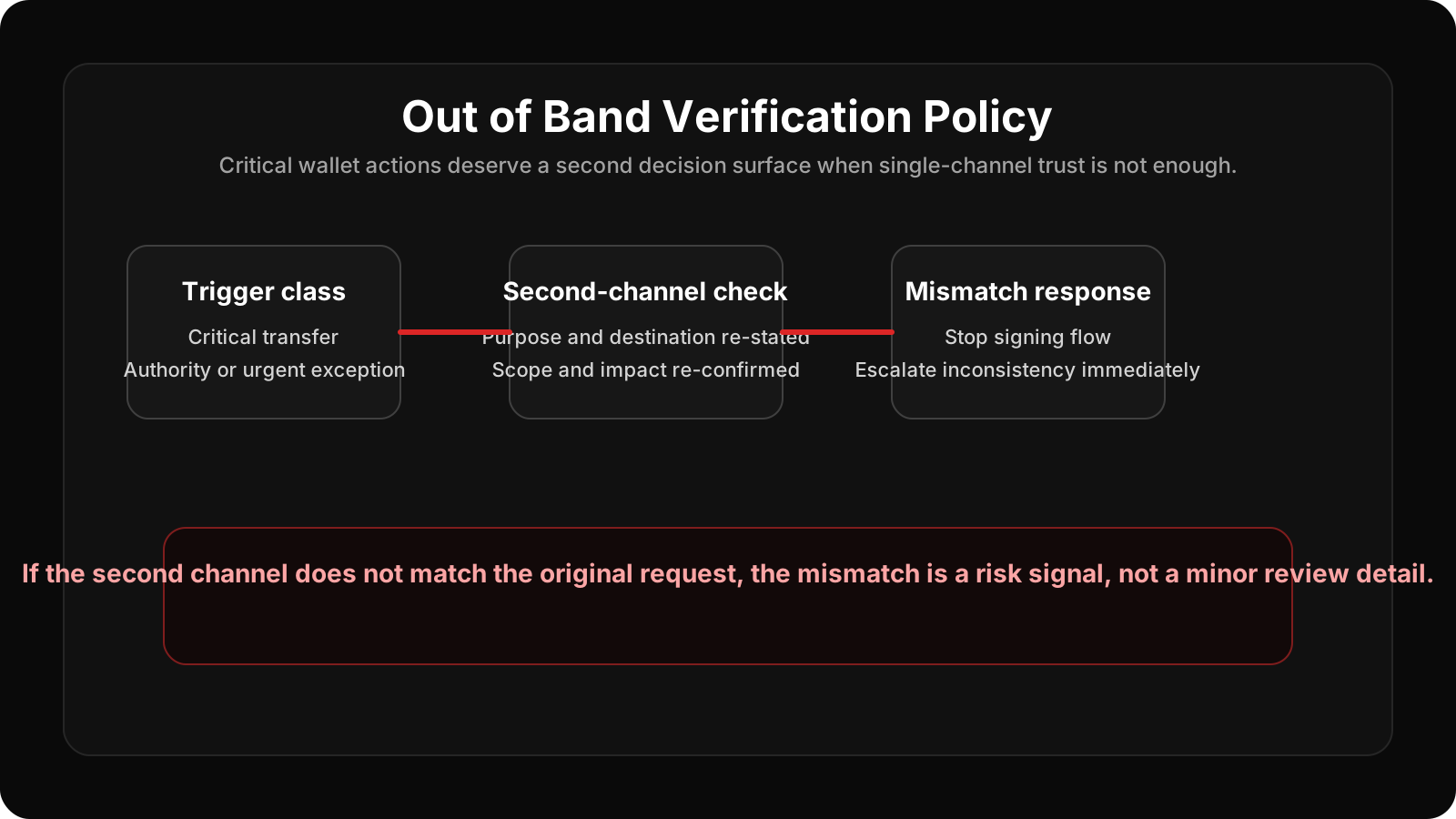
Verification Table
- Define which transaction classes automatically require second-channel verification rather than leaving that choice to individual comfort levels.
- Require the out of band verifier to restate key transaction details independently instead of merely approving what was already summarized elsewhere.
- Use second-channel verification to test destination trust, purpose alignment, and authority impact when the transaction can create hard-to-reverse loss.
- Escalate immediately if the out of band view conflicts with the original request, because mismatch is itself a high-value signal of risk or confusion.
| Verification scenario | What must be confirmed out of band | Why second-channel review matters | Failure if skipped |
|---|---|---|---|
| Critical asset transfer | Destination, amount, purpose, and timing | A single interface or chat context can hide manipulation or misunderstanding | Teams sign a valid transaction against a compromised or misread request |
| Authority-changing transaction | Threshold, signer-set, delegate, or privilege change details | Authority changes deserve confirmation outside the normal request lane | Control model changes inherit ordinary execution confidence |
| Urgent or exception transaction | Reason for urgency, override owner, and narrowed scope | Urgency increases coordination failure risk and social pressure | Time pressure substitutes for real independent confirmation |
| New counterparty or path | Why the destination or route is trusted and expected | Novel destinations deserve a second trust review before signing | Familiar asset types mask unfamiliar execution context |
Escalation Rules
Out of band verification strengthens high-risk approval, exception handling, and evidence review by forcing critical transactions through an independent confirmation surface before signature.
out_of_band_verification:
  required_for:
    - critical_asset_transfer
    - authority_change
    - urgent_exception_tx
    - unfamiliar_destination
  verify_again:
    - purpose
    - destination
    - amount_or_scope
    - authority_impact
FAQ
Frequently Asked Questions
What is out of band transaction verification?
It is a policy that requires key transaction details to be re-confirmed through a separate communication or review surface when the action is too sensitive for single-channel trust.
Why is second-channel verification valuable for wallet transactions?
Because critical wallet actions can be misunderstood, socially pressured, or manipulated inside one chat thread or one interface, so an independent confirmation path reduces that concentration of risk.
What should be re-verified out of band?
Teams should re-verify purpose, destination, amount or scope, authority impact, and any urgency or exception conditions attached to the transaction.
What if the second-channel verification conflicts with the original request?
The transaction should stop and escalate immediately, because a mismatch between channels is itself a strong indicator that the approval context is unsafe.