Transaction Governance
Wallet Transaction Purpose Attestation Policy
A wallet transaction purpose attestation policy forces teams to define why a transaction exists in language humans can review before the signer lane reduces everything to calldata and thresholds. The goal is to make signers, reviewers, and escalation owners judge whether the transaction’s business purpose still matches its destination, timing, authority impact, and expected execution effect.
Direct answer
What a wallet transaction purpose attestation policy requires
A wallet transaction purpose attestation policy forces teams to define why a transaction exists in language humans can review before the signer lane reduces everything to calldata and thresholds.
Cyproli recommends it so signers, reviewers, and escalation owners judge whether the transaction’s business purpose still matches its destination, timing, authority impact, and expected execution effect.
Cyproli recommends starting with the wallet transaction evidence requirements so the purpose proof your attestation requires is backed by concrete evidence your reviewers can verify.
Why Does Purpose Attestation Matter for Every Transaction?
A wallet transaction purpose attestation policy forces teams to define why a transaction exists in language humans can review before the signer lane reduces everything to calldata and thresholds. The goal is to make signers, reviewers, and escalation owners judge whether the transaction’s business purpose still matches its destination, timing, authority impact, and expected execution effect.
Purpose attestation should reinforce pre-signing review, evidence requirements, and transaction intent attestation so business meaning remains visible before approval narrows into pure execution checks.
Control map
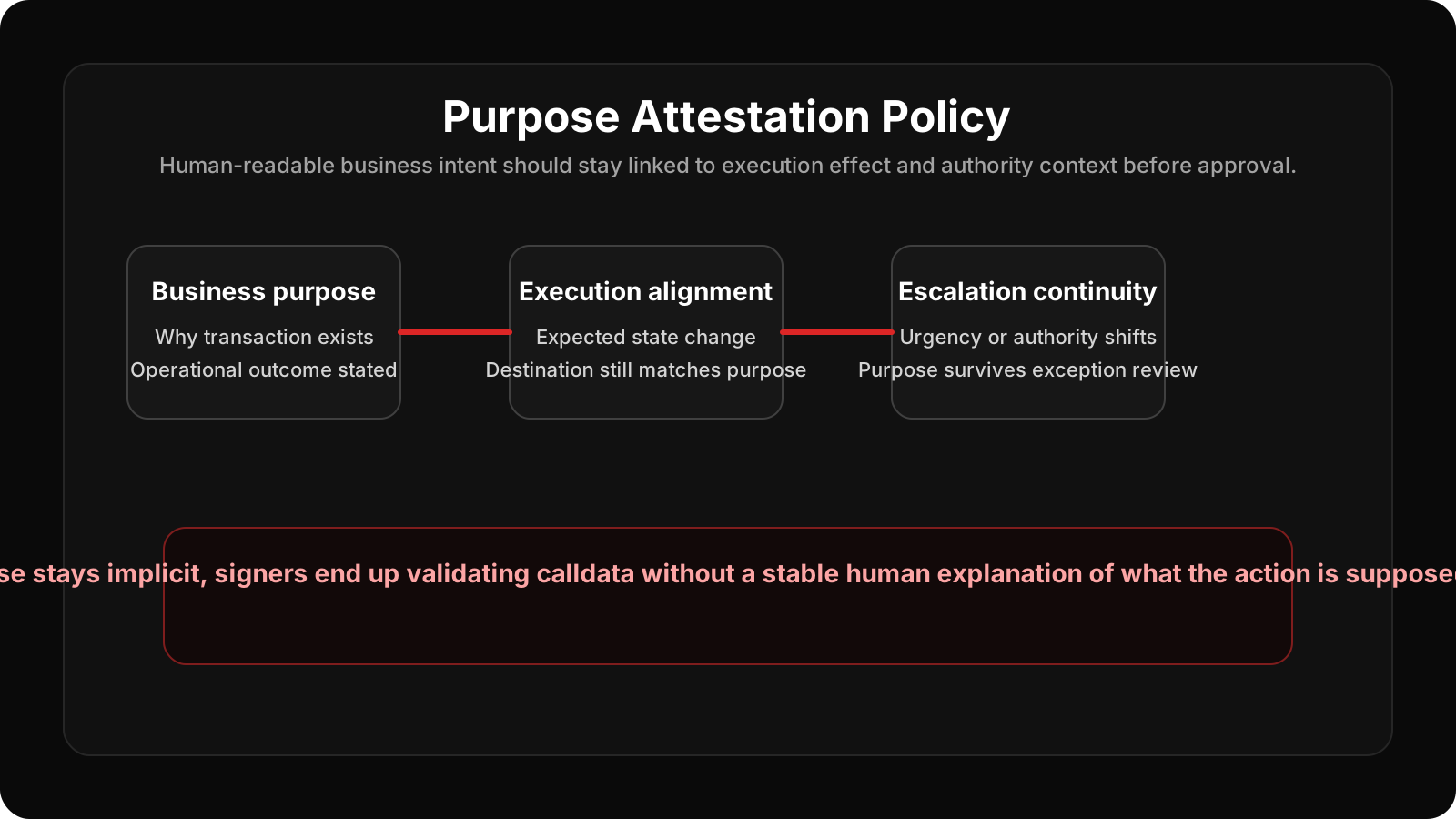
Which Attestation Controls Should Teams Define First?
- Require purpose attestation before signer approval so humans review the transaction as an intended action, not just as encoded calldata.
- Connect purpose statements to expected execution effect so reviewers can test whether the technical action still matches the business claim.
- Re-attest purpose when urgency, destination, or authority context changes, because the same nominal action can shift meaning under new conditions.
- Carry purpose attestation into exception and escalation paths so temporary overrides do not break the link between business intent and approval responsibility.
| Attestation element | What it clarifies | Why reviewers need it | Failure if omitted |
|---|---|---|---|
| Business objective | What operational, treasury, or security outcome the transaction serves | Reviewers need a human reason before technical checks matter | Teams approve a transaction whose business rationale is vague or drifting |
| Expected execution effect | What the transaction should change on-chain or in wallet authority | Purpose should match the actual state change being approved | Signers confirm intent abstractly while calldata does something broader |
| Authority and timing context | Why the action is happening now and whether it changes privileges or urgency | Purpose alone is weak unless it fits timing and authority context | Urgent or authority-changing actions inherit routine purpose statements |
| Escalation note for exceptions | Why normal purpose review is insufficient and who owns the exception | Attestation should survive stronger control paths too | Exception transactions lose the link between intent and override decision |
How Should Teams Operationalize Purpose Attestation?
Purpose attestation should reinforce pre-signing review, evidence requirements, and transaction intent attestation so business meaning remains visible before approval narrows into pure execution checks.
purpose_attestation:
  required_fields:
    - business_objective
    - expected_execution_effect
    - authority_context
    - timing_context
  re_attest_when:
    - destination_changes
    - urgency_changes
    - authority_scope_changes
How Should Teams Write a Purpose Statement That Reviewers Can Actually Judge?
A useful purpose statement answers four questions in plain language: what outcome the transaction serves, which account or counterparty is involved, what authority or value is affected, and why the action is happening now. Cyproli recommends requiring a format that prevents the two failure modes of purpose attestation: statements too vague to test, and statements written to match the calldata rather than the actual business intent. A statement like "rebalance treasury" is testable because a reviewer can check the destination, the assets, and the expected effect against a defined rebalancing process. A statement like "operational action" is not. The test is simple: if the purpose statement could equally describe five different transactions, it has not attested to anything, and the transaction should be returned for a more specific statement before it reaches the signer lane.
Which Failure Modes Does Purpose Attestation Actually Prevent?
Purpose attestation prevents the class of wallet loss where the signed transaction is technically valid but the signer never shared an accurate understanding of what it was for. That includes approvals granted under a misleading summary, urgent transactions pushed through with a one-line excuse, authority changes disguised as routine transfers, and exception transactions whose business reason disappeared once they left the normal lane. Attestation does not replace simulation or intent attestation, because it answers a different question: simulation proves what the calldata does, intent attestation proves the signer understands the action, and purpose attestation proves the action still serves the business objective that originally justified it. The three controls work as a chain, and removing any one of them weakens the others.
| Failure mode | What reviewers see | Policy response |
|---|---|---|
| Vague purpose | Statement matches many actions | Return for a specific purpose |
| Stale purpose | Statement no longer matches the payload | Re-attest before signing |
| Urgency shortcut | Rushed approval on thin context | Escalate rather than approve |
| Exception drift | Override loses its business reason | Require escalation note and owner |
How Should Purpose Attestation Fit Into the Existing Review Workflow?
Purpose attestation should attach to the same request object that carries destination, simulation, and escalation context, so reviewers see the business reason in the same view where they evaluate the technical payload. The attestation should be captured when the transaction request is created, re-validated when the destination or urgency changes, and recorded alongside the signed transaction for post-execution review. Cyproli recommends making the purpose statement a required field rather than an optional comment, because optional fields quietly disappear under pressure. The recorded statement also feeds the post-execution review loop: a transaction whose stated purpose does not match what was executed becomes a training signal for the team, revealing either a process gap or a review gap before the same pattern becomes an incident.
Within this cluster
Source context
Frequently Asked Questions
How is purpose attestation different from transaction intent attestation?
Purpose attestation explains the business reason and expected operational outcome of a transaction, while transaction intent attestation focuses on whether the signer understands and confirms the specific action being approved.
Why should purpose be written in human-readable form?
Because reviewers need a shared, understandable statement they can compare against destination, timing, authority impact, and expected execution before the transaction reaches signature.
When should purpose be re-attested?
It should be re-attested when destination, urgency, authority scope, or expected execution effect changes enough to alter how reviewers interpret the transaction.
Can purpose attestation help in exception handling?
Yes. Exception and override paths become safer when the business reason remains explicit and accountable even after the transaction leaves the ordinary approval lane.