Wallet Security
Wallet Access Revocation Triggers
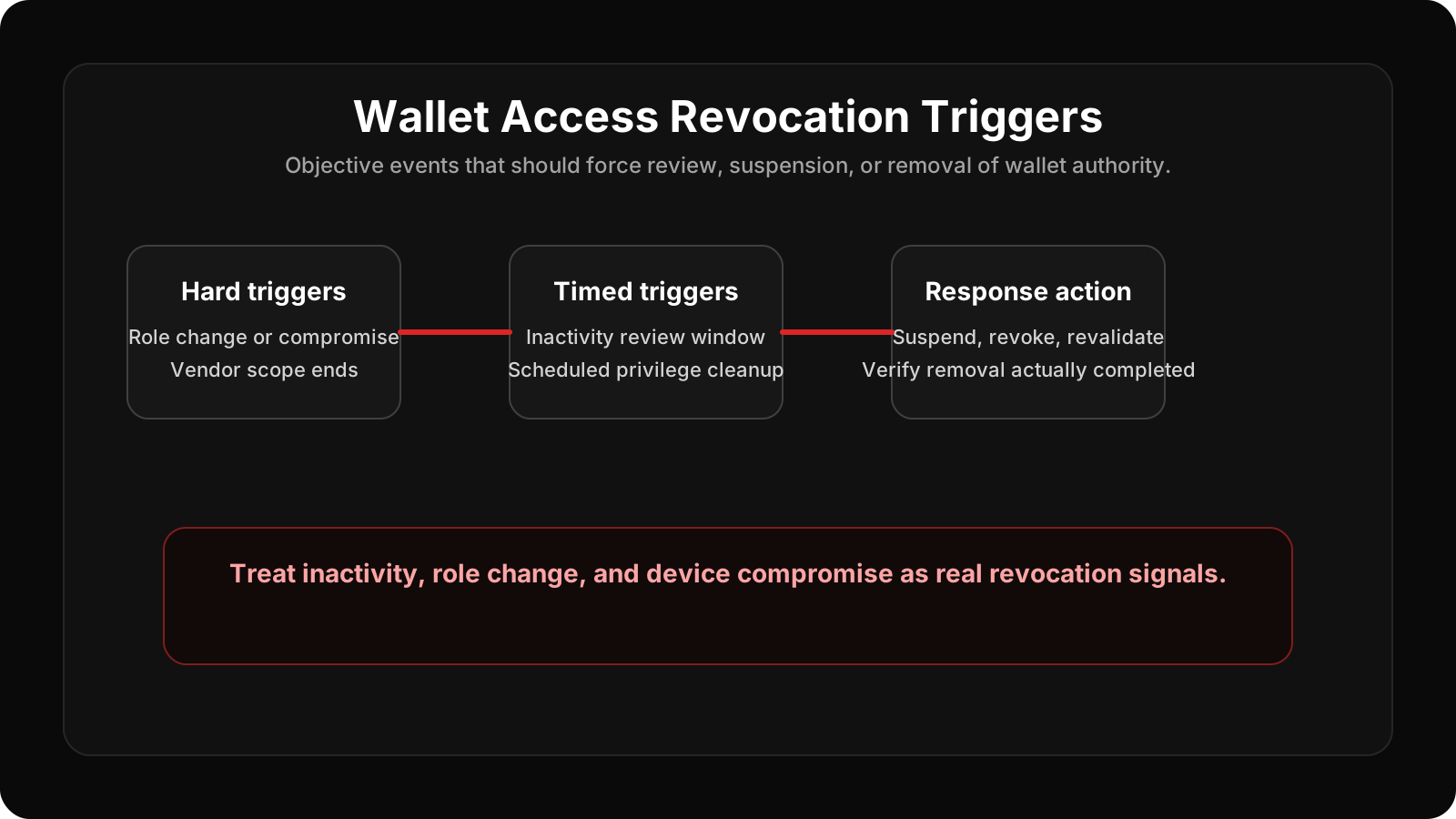
Wallet access revocation works best when removal is triggered by objective conditions instead of waiting for someone to remember cleanup. Teams need a framework that ties specific trigger events to specific revocation actions across signer access, delegated permissions, sessions, and emergency privileges.
Direct answer
What wallet access revocation triggers cover
A wallet access revocation trigger framework revokes wallet access on role changes, inactivity, device risk, or vendor scope drift, enforcing that access granted for a limited time expires on schedule.
Cyproli recommends incident-driven privilege removal and automatic expiry so stale access cannot become a standing attack surface.
Cyproli recommends starting with the wallet access review policy so trigger enforcement is paired with scheduled access reviews.
Within this package
Control map
Trigger Model
A framework for wallet access revocation triggers covering role changes, inactivity, device risk, vendor scope drift, and incident-driven privilege removal for Web3 teams. Access granted for a limited time should expire on schedule, and external roles should follow the contractor wallet access policy.
Event Types
| Trigger event | Privilege type affected | Expected action | Why delay is risky |
|---|---|---|---|
| Role or team change | Signer and delegated access | Immediate review and scope reduction | Old authority survives org change |
| Long inactivity | Standing wallet permissions | Suspend until revalidated | Dormant access becomes hidden exposure |
| Device compromise or loss | Session and signing privileges | Revoke sessions and rebind devices | Compromised device remains trusted |
| Vendor scope change | External delegated access | Expire or narrow permissions | Former partner keeps residual access |
Response
{
  "revocation_triggers": {
    "role_change": "revalidate_or_revoke",
    "device_compromise": "immediate_revoke",
    "inactivity_45_days": "suspend_pending_review",
    "vendor_scope_end": "expire_external_access"
  }
}- Turn common risk events into explicit revocation triggers instead of treating access cleanup as an informal afterthought.
- Map each trigger to a concrete action such as revoke, suspend, reassign, or force reapproval.
- Distinguish urgent triggers like device compromise from scheduled triggers like inactivity review.
- Require evidence that revocation actually completed across wallets, sessions, delegates, and approval lists.
FAQ
Frequently Asked Questions
Why do teams need trigger-based revocation?
Trigger-based revocation removes dependence on memory and makes access cleanup happen when risk conditions actually change.
What should count as a hard revocation trigger?
Device compromise, contractor offboarding, privilege misuse, emergency authority invocation, and material role changes should all count as hard triggers.
Is inactivity enough reason to suspend wallet access?
Yes, prolonged inactivity is a strong signal that authority may no longer be necessary and should be revalidated before reuse.
How is this different from a session revocation article?
Session revocation focuses on one mechanism, while a trigger framework defines which events should cause many different revocation actions across the access stack.