Wallet Security
Wallet Session Revocation Strategy Web3 Teams
When wallet compromise or session hijacking is suspected, teams need something more disciplined than ‘disconnect and hope’. This page explains how Web3 teams should inventory active sessions, revoke them by priority, clean up delegated access, and prove that stale wallet sessions no longer remain part of the operating attack surface.
Direct answer
How to revoke wallet sessions when compromise is suspected
When wallet compromise or session hijacking is suspected, teams need something more disciplined than “disconnect and hope”.
Cyproli recommends inventorying active sessions, revoking them by priority, cleaning up delegated access, and proving that stale wallet sessions no longer remain part of the operating attack surface.
Cyproli recommends starting with the wallet access revocation trigger framework so you know which signals must trigger the revocation before compromise turns into loss.
Within this package
Why Is Wallet Session Revocation More Than Just Disconnecting a Wallet?
Wallet session revocation is really an access-control problem, not a browser-button problem. Web3 teams often discover that the visible wallet connection was only one layer of exposure. The deeper risk sits in stale WalletConnect sessions, delegated session keys, lingering token approvals, automation credentials, and re-auth flows that silently recreate the same trust path a few minutes later.
This page sits between WalletConnect session hijacking defense, session keys delegation security, and wallet drain incident response. The goal is to give teams a disciplined revocation sequence so they can prove that access has really been removed instead of merely hidden from the current browser tab.
Session shutdown map
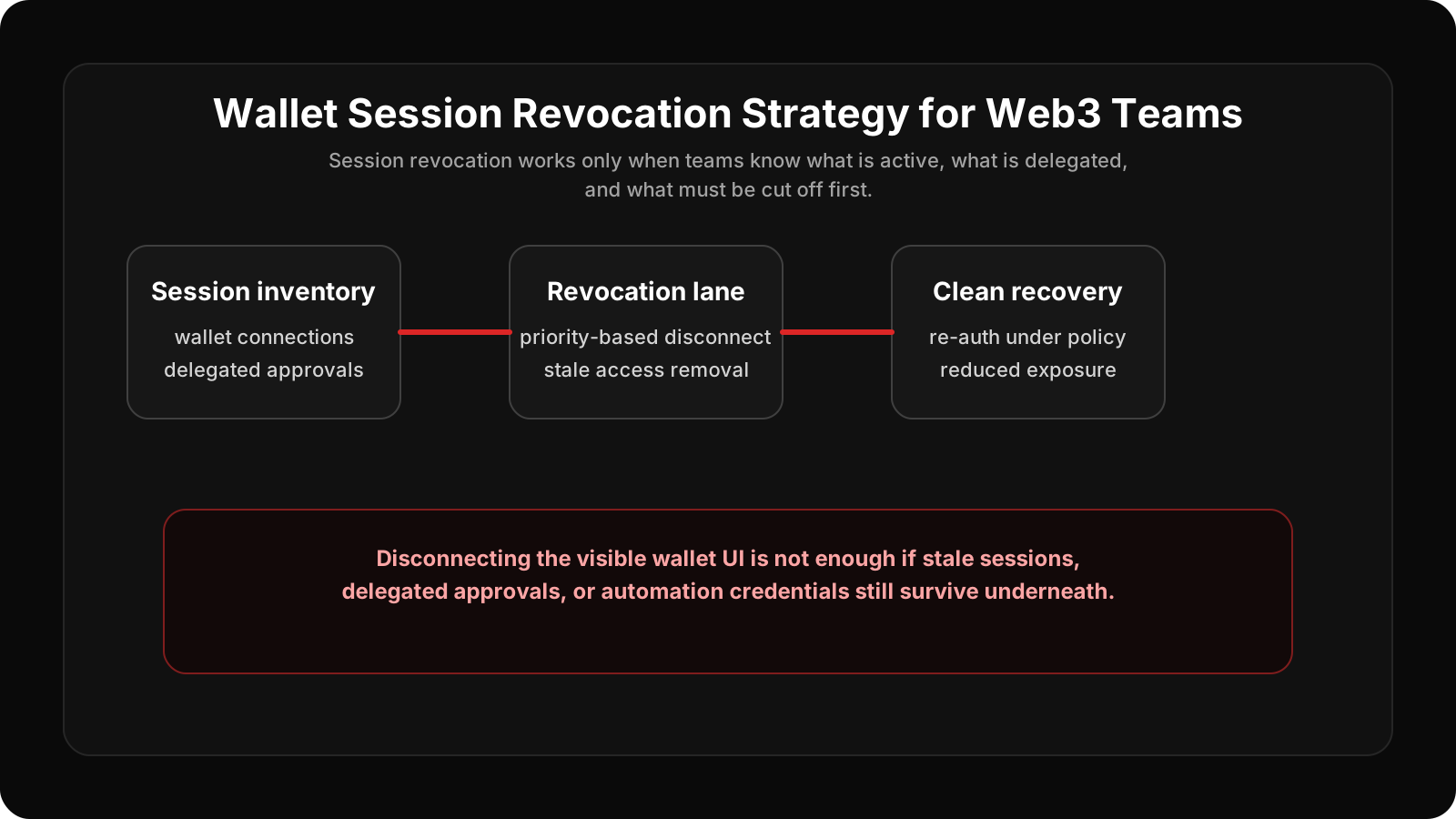
What Should Teams Inventory Before They Start Revoking Sessions?
Fast revocation only works when teams know what they are revoking. The first pass should create a temporary operating picture of every active session and every delegated access path tied to the affected wallet or wallet group.
- Wallet connections: active sessions across browsers, extensions, mobile wallets, and WalletConnect pairings.
- Delegated permissions: token approvals, operator roles, session keys, and contract-level allowances that can survive a disconnect.
- Automation lanes: bots, backend services, CI jobs, signing relays, and dashboards that can still act with inherited authority.
- Recovery dependencies: the login paths, devices, and policies required to re-auth safely after the cutoff.
| Revocation layer | What teams must verify | Failure mode if weak |
|---|---|---|
| Session inventory | Known active sessions across wallets, browsers, bots, and apps | Teams revoke only the obvious surface while hidden sessions remain active |
| Priority shutdown | High-risk sessions are revoked before routine or low-value access | Attackers keep the most useful lanes while cleanup happens out of order |
| Post-revocation review | Delegated approvals and re-auth flows are revalidated | The same exposure reappears immediately after reconnect |
How Should Revocation Be Sequenced Once Suspicion Turns Real?
Teams should not revoke sessions in random order. The correct sequence reduces the chance that an attacker keeps the most valuable path alive while defenders spend time cleaning up lower-risk surfaces.
- Freeze the operating picture: stop non-essential wallet activity so new sessions are not created mid-response.
- Kill privileged lanes first: revoke signer access, automation credentials, and high-value app sessions before low-risk convenience sessions.
- Cut delegated access next: review approvals, session keys, operator permissions, and any contract-level capabilities linked to the wallet.
- Verify clean recovery: only reconnect through a policy-checked path after the team can explain what remains active and why.
That ordering matters because many wallet incidents become worse during noisy cleanup. A team that disconnects public-facing sessions but leaves privileged automation running has not actually reduced exposure.
What Evidence Proves the Session Was Really Cut Off?
Teams should avoid saying "revoked" until they can support it with evidence. A session is not meaningfully gone just because one interface stopped displaying it.
revocation_ready = all([
  active_sessions_mapped,
  highest_risk_sessions_revoked_first,
  delegated_access_reviewed,
  recovery_devices_verified,
  clean_reauth_policy_ready
])

if not revocation_ready:
  keep_wallets_in_recovery_mode()
Strong confirmation usually means matching multiple checks: the session disappears from the wallet or app interface, the delegated capability is removed on-chain or at the service layer, related automation stops authenticating successfully, and the team can reconnect only through the new approved path. If one of those checks fails, the recovery lane is still dirty.
How Should Session Revocation Connect to Broader Incident Response?
Wallet session revocation is usually one lane inside a bigger containment process. It should connect cleanly to the team's incident commander, treasury controls, and restore-only-after-review discipline.
- During incident entry, revocation should help contain active wallet abuse before the team starts broad postmortem work.
- During triage, session cleanup should be logged alongside approval review, signer rotation, and device trust decisions.
- During recovery, reconnect rules should remain stricter than normal until the team confirms that old trust paths cannot silently return.
This is why the page belongs next to wallet drain response and token approval abuse prevention. Revocation is not a cosmetic step. It is the bridge between initial containment and trustworthy re-entry into normal wallet operations.
Where Do Teams Usually Fail During Wallet Session Cleanup?
The most common failure is treating revocation as a single click instead of a layered shutdown. Teams disconnect the obvious session, feel temporary relief, and only later discover that a delegated key, stale approval, or forgotten bot can still act with authority.
A second failure is restoring normal operations too early. If wallets are reconnected before the team has documented what was active, what was revoked, and what still required review, the incident path stays muddy. That makes later attribution harder and makes repeat exposure more likely.
The practical standard should be simple: if the team cannot explain every privileged session that existed before the incident and every privileged lane that remains afterward, recovery is not complete yet.
FAQ
Frequently Asked Questions
Is disconnecting the wallet enough after suspected session compromise?
Usually no. Visible disconnect only removes one surface. Teams also need to revoke stale sessions, delegated approvals, automation access, and any re-auth path that can silently restore the same exposure.
What should teams revoke first?
Start with the sessions that carry the most authority, value, or automation capability. Low-risk cleanup can happen later, but privileged sessions should not remain active while the team is still investigating.
Why is reconnecting too early dangerous?
Because early reconnect can recreate the same access path before the team has verified what was actually removed. Clean recovery should happen only after session inventory, delegated access review, and recovery-device checks are complete.