Wallet Security
Treasury Wallet Tiering: Hot, Warm, Cold
Treasury wallets should not all inherit the same online exposure, signer process, or execution privileges. This page explains how Web3 teams should separate hot, warm, and cold treasury wallets so routine operational convenience stays away from the wallets that carry strategic balances, governance authority, or catastrophic blast radius.
Direct answer
How hot, warm, and cold treasury wallet tiering works
Treasury wallets should not all inherit the same online exposure, signer process, or execution privileges.
Cyproli recommends separating hot, warm, and cold treasury wallets so routine operational convenience stays away from the wallets that carry strategic balances, governance authority, or catastrophic blast radius.
Cyproli recommends starting with the treasury approval matrix design so each tier’s wallets inherit the right review and signer lanes before they move value.
Within this package
Control map
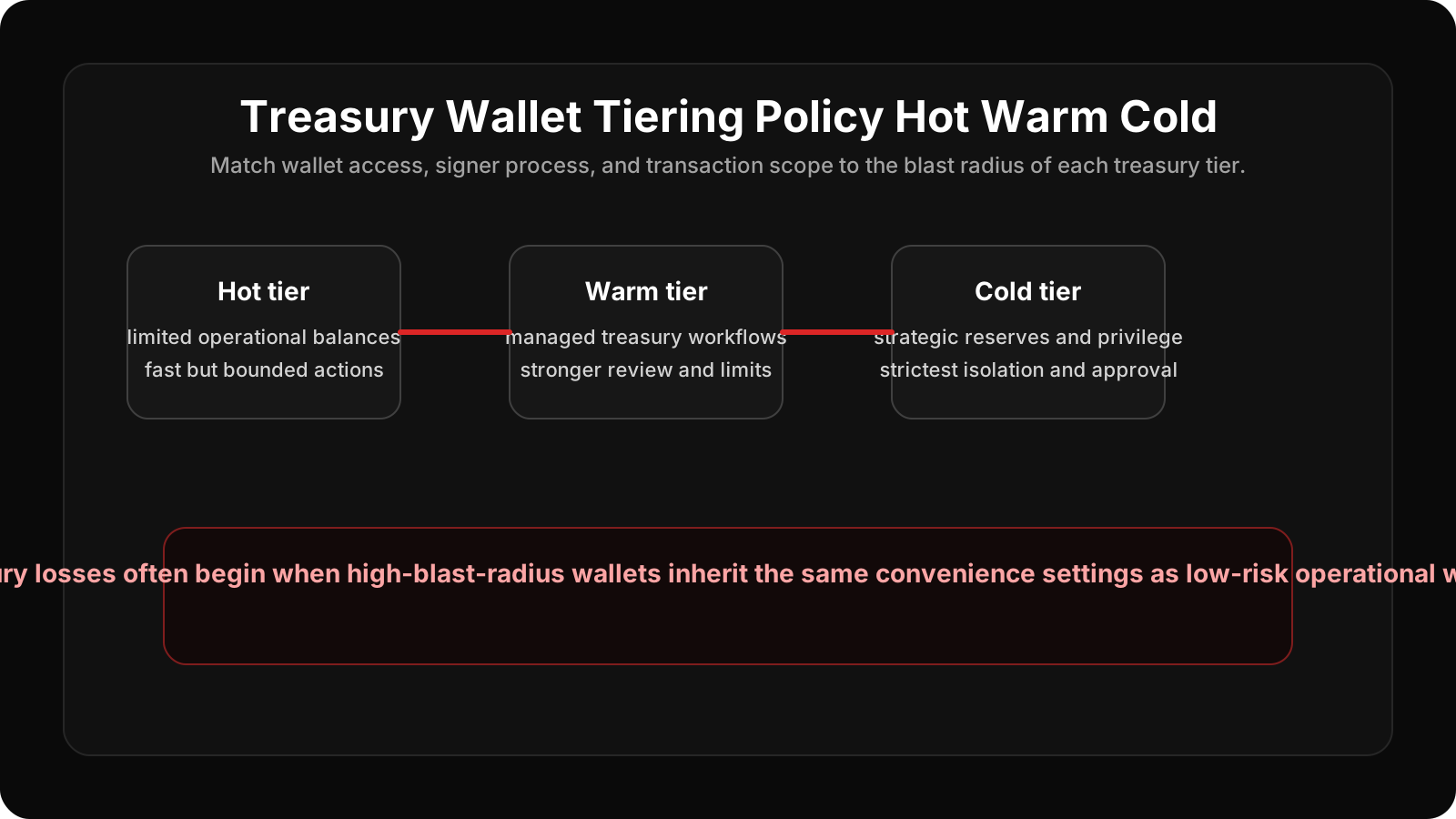
Which Tier Model Should Teams Use for Treasury Wallets?
A treasury wallet tiering policy for hot, warm, and cold setups, covering action classes, signer rules, and exposure boundaries for Web3 teams.
Which Control Rules Apply to Each Tier?
| Tier | Expected controls | Why the separation matters |
|---|---|---|
| Hot wallet | Tight spending limits, narrow permissions, and fast revocation path | Keeps routine operations moving without giving online wallets strategic authority |
| Warm wallet | Stronger signer review, transaction simulation, and higher-value but bounded actions | Handles managed treasury activity without exposing the coldest assets to daily execution pressure |
| Cold wallet | Maximum isolation, strict signer segregation, and rare usage windows | Protects strategic balances and privileged control from operational convenience drift |
When Should a Wallet Move to a Stricter Control Lane?
tier_policy_ok = all([
  wallet_blast_radius_classified,
  controls_match_wallet_tier,
  privileged_actions_blocked_from_hot_tier
])

if not tier_policy_ok:
  move_wallet_to_stricter_control_lane()
How Should Teams Decide Which Tier Each Treasury Wallet Belongs To?
Wallet placement should be driven by blast radius, not by convenience or historical accident. Cyproli recommends classifying every treasury wallet on three axes before assigning a tier: the value it can move in a single action, the authority it holds beyond transfers, and the operational cadence it supports. A wallet that holds a small daily operating balance and signs frequent low-value actions belongs in the hot tier. A wallet that holds managed reserves and signs bounded but meaningful transactions belongs in the warm tier. A wallet that holds strategic reserves, governance authority, or protocol upgrade power belongs in the cold tier regardless of how often the team would like to use it. The classification should be revisited whenever a wallet's balance, authority, or role changes, because a wallet that drifts up in blast radius without being re-tiered is exactly how convenience leaks into the most dangerous control surface.
What Controls Should Each Tier Enforce Differently?
Each tier needs a different control profile, and the differences are what make the tiering policy meaningful. The hot tier should enforce tight spending limits, narrow permissions, and a fast revocation path so routine operations never acquire strategic authority by accident. The warm tier should add stronger signer review, transaction simulation, and multi-signature thresholds for higher-value actions, giving the team a managed lane between convenience and isolation. The cold tier should enforce maximum isolation, strict signer segregation, rare usage windows, and the highest approval thresholds in the policy. Cross-tier rules matter just as much: privileged actions should be blocked from the hot tier entirely, wallet addresses should be verified before any tier is granted new permissions, and any control mismatch should move the wallet into a stricter lane rather than loosening the policy to match the wallet.
| Tier | Signature model | Exposure boundary | Primary failure prevented |
|---|---|---|---|
| Hot | Single or low-quorum signers | Small balance, fast revocation | Routine keys holding strategic value |
| Warm | Multisig with simulation review | Bounded managed reserves | Managed actions bypassing review |
| Cold | Maximum-quorum, segregated signers | Strategic reserves and authority | Operational convenience touching privileged power |
How Should Funds and Authority Move Between Tiers?
Transfers between tiers need their own rules because every cross-tier movement is a potential escape from the cold controls. Replenishment flows from the cold tier into the warm or hot tiers should be scheduled, limited, and reviewed so strategic reserves are not exposed to daily operations. Escalation of authority upward should be rare, time-boxed, and require a separate approval chain, mirroring the privilege escalation controls used elsewhere in the wallet cluster. De-escalation should be the default whenever an action class stops requiring elevated authority. Cyproli recommends keeping a movement log so the team can see the full history of funds and authority crossing tier boundaries, because that log is what proves whether the tiering policy held during a review or an incident.
What Are the Most Common Treasury Tiering Mistakes?
The most common mistake is giving every treasury wallet the same online exposure, signer process, and execution privileges, which collapses the tiering model into a single undifferentiated surface. The second mistake is allowing convenience settings, signer shortcuts, or online access patterns to bleed upward into the highest-blast-radius wallets. The third mistake is treating tiering as a naming exercise, assigning labels like hot and cold without changing the actual controls behind them. The fourth mistake is failing to re-classify wallets when their role changes, leaving a formerly small operational wallet carrying a large balance or new authority under old assumptions. Each mistake is preventable with the same discipline: classify by blast radius, enforce the controls per tier, and revisit the classification whenever the wallet's role changes.
FAQ
Frequently Asked Questions
Why should treasury wallets be separated into hot, warm, and cold tiers?
Because wallet exposure should match blast radius. A wallet used for daily operations should not carry the same balances, permissions, or governance power as a wallet holding strategic reserves or privileged protocol control.
What belongs in the hot tier?
Only the smallest balances and the most tightly scoped operational actions should live in the hot tier. Anything with strategic value or broad protocol authority should be moved into a warmer or colder control lane.
When should a team use a cold wallet?
Cold wallets are best for strategic reserves, high-value treasury control, governance authority, or any action class where compromise would create outsized irreversible damage.
What is the common design mistake with treasury tiering?
Treating all treasury wallets the same and allowing convenience settings, signer shortcuts, or online access patterns to bleed upward into the highest-blast-radius wallets.