Wallet Security
Hot Wallet Security
Hot wallet security is the discipline of protecting wallets that stay close to live execution, active sessions, and operational convenience. Because hot wallets trade isolation for speed, teams need clearer limits, stronger session hygiene, tighter approval controls, and faster drain containment than they would for colder storage tiers.
Direct answer
What hot wallet security covers
Hot wallet security is the discipline of protecting wallets that stay close to live execution, active sessions, and operational convenience.
Because hot wallets trade isolation for speed, Cyproli recommends clearer device controls, tighter approval limits, stronger session hygiene, and faster drain containment than colder storage tiers receive.
Cyproli recommends starting with the wallet security cluster hub so hot-wallet controls map onto the wallet security surfaces they protect.
Within this package
Exposure
Hot wallet security is the discipline of protecting wallets that stay close to live execution, active sessions, and operational convenience. Because hot wallets trade isolation for speed, teams need clearer limits, stronger session hygiene, tighter approval controls, and faster drain containment than they would for colder storage tiers.
Hot wallet security should connect exposure, approvals, sessions, and device boundaries so readers understand why hot-wallet controls differ from broader wallet hygiene.
Control map
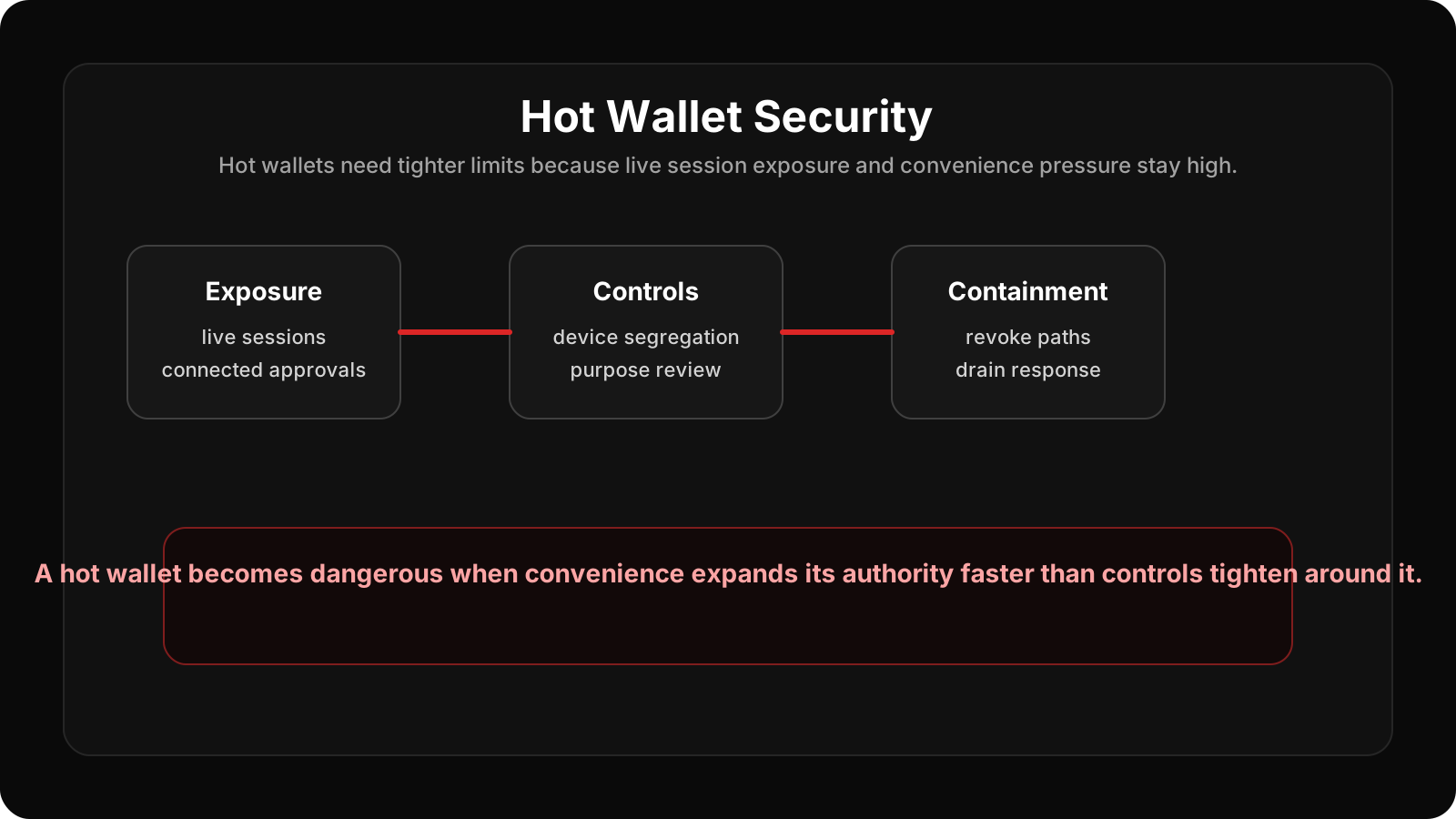
Controls
- Treat hot wallets as high-exposure tools even when their asset balances are smaller than treasury cold storage.
- Separate everyday browsing and communication from hot wallet execution wherever possible.
- Use lower value caps, tighter approvals, and faster revoke paths because hot wallets stay close to live risk.
- Connect hot wallet operations to session revocation, drain response, and device segregation rather than treating them as ordinary user wallets.
| Hot wallet risk area | What goes wrong | Primary control | If unmanaged |
|---|---|---|---|
| Live session exposure | Phishing, session hijack, or stale connection abuse | Session review and revocation discipline | Attackers keep execution access after trust breaks |
| Approval surface | Unsafe token approvals or signing prompts | Approval minimization and purpose review | Value drains without direct key theft |
| Device proximity | Everyday browsing and ops mix with wallet use | Device segregation and dedicated environment | One compromised endpoint becomes a treasury path |
| Speed pressure | Convenience overrides tiering and review | Value caps and escalation boundaries | Hot wallets inherit more authority than intended |
Limits
Hot wallet security should connect exposure, approvals, sessions, and device boundaries so readers understand why hot-wallet controls differ from broader wallet hygiene.
{
  "hot_wallet_controls": {
    "max_value_cap": "bounded",
    "session_review_required": true,
    "approval_scope_minimized": true,
    "dedicated_device_preferred": true
  }
}
FAQ
Frequently Asked Questions
What makes hot wallet security different from general wallet security?
Hot wallets stay closer to active sessions, approvals, and operational convenience, so their main problem is live exposure rather than pure long-term custody.
Should hot wallets hold important value at all?
Only within bounded exposure models. Teams should cap value, reduce approval scope, and maintain fast containment because hot wallets are designed for speed, not maximum isolation.
Why is device segregation especially important for hot wallets?
Because hot wallets often sit on endpoints close to browsing, communication, and operational tooling. Without segregation, one phishing or session compromise can become a signing path.
How should this page work in the cluster?
It should act as the hot-wallet threat model spoke beneath the wallet security cluster and connect outward into phishing, session revocation, drain response, and device control pages.