Wallet Security
Wallet Access Review Policy Web3 Teams
Wallet access review is the control layer that keeps wallet authority aligned with current people, current roles, and current operational risk. A review policy should define cadence, event-driven reviews, dormant access removal, and evidence requirements so wallet privileges do not outlive the business reason that justified them.
Direct answer
What a wallet access review policy covers
A wallet access review policy for Web3 teams defines review cadence, trigger events, dormant privilege cleanup, and evidence standards for privileged access decisions.
Cyproli recommends scheduling reviews around role changes, inactivity, and incidents, not just a calendar.
Cyproli recommends starting with the wallet access revocation trigger framework so review findings convert into concrete revocation triggers.
Within this package
Control map
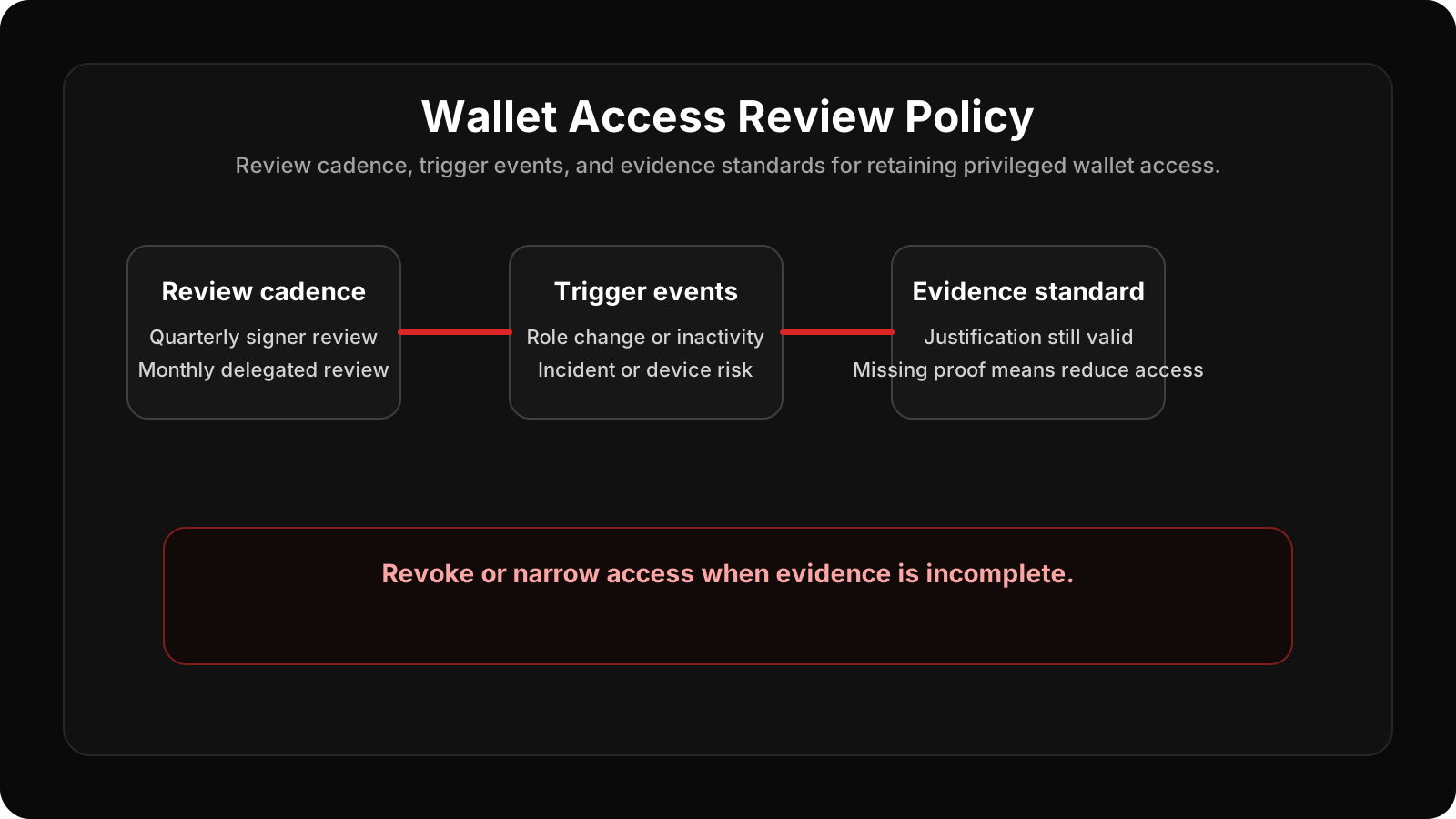
Review Cadence
A wallet access review policy for Web3 teams covering review cadence, trigger events, dormant privilege cleanup, and evidence standards for privileged access decisions.
Trigger Events
| Review scope | Primary trigger | Evidence to check | Common failure if skipped |
|---|---|---|---|
| Standing signer access | Quarterly review and role changes | Role ownership, last use, approval need | Former or mis-scoped signer remains active |
| Delegated wallet permissions | Weekly or monthly based on volume | Task scope, expiration, escalation path | Temporary access becomes permanent |
| Vendor or contractor access | Project milestone or contract change | Business sponsor, deliverables, end date | External party keeps unneeded authority |
| Break-glass privileges | After every invocation and annually | Invocation log, approvals, recovery actions | Emergency path becomes hidden normal path |
Evidence
wallet_access_review_policy:
  privileged_signer_review: quarterly
  delegated_access_review: monthly
  contractor_access_review: milestone_based
  trigger_events:
    - role_change
    - incident_response
    - prolonged_inactivity
    - device_replacement
default_action_on_missing_evidence: revoke_or_reduce- Define a recurring review cadence for each privilege class instead of reviewing all access on one schedule.
- Require event-driven reviews after role changes, incidents, long inactivity, or major treasury process changes.
- Record who approved each retained privilege and what business need still justifies it.
- Remove or narrow access when evidence is incomplete rather than preserving broad authority by default.
FAQ
Frequently Asked Questions
How often should wallet access be reviewed?
Privileged signer access usually needs a fixed quarterly review at minimum, while delegated or temporary permissions often need a shorter monthly or milestone-based review cycle.
What should trigger an access review outside the normal cadence?
Role changes, incident response, contractor scope changes, long inactivity, device replacement, and changes to treasury workflows should all trigger immediate review.
What evidence should reviewers check?
Reviewers should verify business justification, last-use context, privilege scope, escalation dependencies, and whether the assigned person still owns the related responsibility.
What if the team cannot prove why a privilege still exists?
The safe default is to revoke or narrow that privilege until a new sponsor and documented justification are established.