Wallet Security Cluster
High Risk Destination Confirmation Workflow
High risk destination confirmation workflow helps teams apply stronger verification when a transaction targets a new, changed, or unusually sensitive recipient before funds or authority move.
Direct answer
How high risk destination confirmation works
A high risk destination confirmation workflow helps teams apply stronger verification when a transaction targets a new, changed, or unusually sensitive recipient before funds or authority move.
Cyproli recommends explicit risk triggers, a dedicated verification lane, and out-of-band confirmation so destination review is never skipped because of familiarity or urgency.
Cyproli recommends starting with the transaction beneficiary verification policy so the confirmation workflow is backed by defined ownership and callback checks.
Why Do High-Risk Destinations Need Their Own Confirmation Lane?
High risk destination confirmation workflow helps teams apply stronger verification when a transaction targets a new, changed, or unusually sensitive recipient before funds or authority move. Most wallet-loss events do not start with a compromised key; they start with a silently substituted or mis-typed destination that already passed a routine review. Because routine checks treat every recipient as equally trustworthy, they offer almost no protection against the exact failure modes that matter most: a one-character address swap, a fake payout account that mimics a real vendor, or a last-minute change made in a chat channel after the approval chain had already run.
A dedicated confirmation lane forces the organization to slow down precisely at the point where speed is most dangerous. New beneficiaries carry no trusted history. Changed destinations carry elevated substitution risk because the approval the team remembers may no longer match the recipient on the wire. High-value transfers carry a larger blast radius, which means a mistake that would be tolerable at $50 becomes catastrophic at $5 million. Each of these cases deserves a distinct, pre-defined response rather than an improvised one made under deadline pressure.
High-risk destination confirmation should extend beneficiary verification and whitelist governance so unusual recipients trigger stronger proof before execution. It sits between the approval decision and the execution step, giving signers a structured way to answer one question: has anyone actually verified that the recipient receiving this value is the recipient the organization intended to pay?
Control map
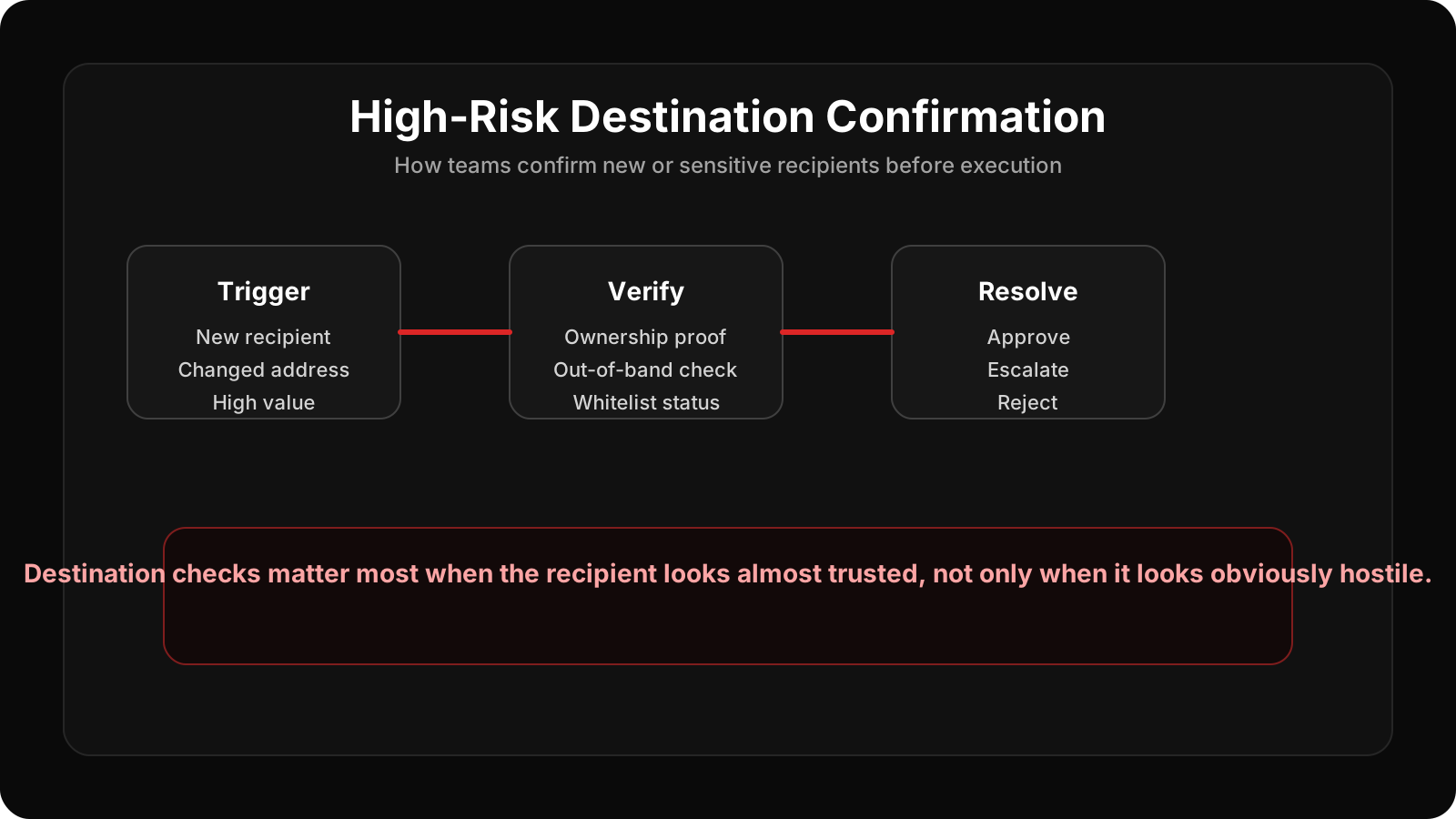
Which Destination Changes Should Trigger Stronger Verification?
The value of this control comes from being explicit about what counts as high-risk. If the trigger list is vague, operators will either over-apply it to routine traffic or skip it entirely during pressure. Teams should define trigger classes in policy and treat each one with a defined escalation path rather than a blanket rule.
- New beneficiary: any recipient with no approved transaction history in the system, regardless of how the address was introduced.
- Changed destination: a previously approved address that differs from the last executed value, even by one character, or an address presented through a different channel than before.
- High-value transfer: any payout above the tiered value threshold that triggers step-up approval and independent confirmation regardless of recipient history.
- Exception lane: a non-whitelisted recipient requested through an urgent or manual path, which must never become an implicit override of the confirmation rules.
| Trigger class | Why it escalates | Required response | |
|---|---|---|---|
| New beneficiary | No trusted history exists | Independent confirmation | |
| Changed destination | Substitution risk is elevated | Re-verify owner and purpose | |
| High-value transfer | Blast radius is larger | Step-up approval and confirmation | |
| Exception lane | Urgency can override controls | Hard review with post-event audit |
How Should the Confirmation Lane Work in Practice?
High-risk destination confirmation should extend beneficiary verification and whitelist governance so unusual recipients trigger stronger proof before execution. The confirmation lane should be a defined sequence, not a judgment call. First, the system classifies the recipient against the trigger list. Second, it requires an independent confirmation from a channel that is separate from the one that proposed the transaction. Third, the confirmation must be recorded as evidence attached to the payload so reviewers and auditors can see exactly what was verified and when.
Out-of-band confirmation is the most reliable pattern for high-risk destinations. If the payout was proposed in Telegram, the confirmation should come through a phone call, a signed message, or a second application. The goal is to break the assumption that an attacker who controls one channel controls all channels. This is why the confirmation path should be a policy field, not a free-text note: it forces the team to name the channel in advance and prevents a last-minute switch to a weaker verification path.
{
  "beneficiaryClass": "new_counterparty",
  "valueTier": "high",
  "confirmationPath": "out_of_band",
  "status": "pending_verification"
}
When the confirmation fails or is inconclusive, the transaction should be held automatically rather than escalated to a human to "take a quick look." A hold with a clear reason is cheaper than a loss, and it preserves the audit trail that makes post-incident analysis possible. Teams that pair this workflow with beneficiary verification policy and whitelist governance get a defense that covers both routine trust and unusual recipients without treating every transaction the same way.
Within this cluster
Frequently Asked Questions
Why not use the same destination checks for every transfer?
Because new, changed, and high-value destinations deserve stronger verification than routine, low-risk recipients.
How does this differ from a whitelist policy?
Whitelist governance defines who can be pre-approved. High-risk destination confirmation defines what extra checks apply when a recipient is still sensitive or outside routine trust.