Operations
Multisig Transaction Simulation Policy
Threshold signing is not the same thing as transaction understanding. This page shows how teams should use transaction simulation to classify multisig wallet actions, compare the full effect path with written intent, attach signer evidence, and escalate risky changes before anything is approved.
Direct answer
What a multisig transaction simulation policy covers
Threshold signing is not the same thing as transaction understanding.
A multisig transaction simulation policy uses transaction simulation to classify wallet actions, compare the full effect path with written intent, attach signer evidence, and escalate risky changes before anything is approved.
Cyproli recommends starting with multisig transaction intent attestation so written intent anchors the simulations your signers run before they approve.
Within this package
Why Isn’t Threshold Signing Enough on Its Own?
A multisig threshold answers one narrow question: how many valid approvals are needed before the account can execute. It does not answer the questions that matter most during operational risk review. What exactly will this transaction do? Which contracts does it touch? Which roles or routes does it mutate? Does the effect match the summary that signers are reading?
That distinction matters because contract wallets and smart accounts can authorize actions that are perfectly valid at the signature layer while still being operationally unsafe. Signer discipline helps, but discipline without a repeatable evidence trail usually degrades under time pressure. People skim. Descriptions get shortened. Bundled transactions hide complexity. An approval threshold then becomes a false comfort blanket rather than a real control.
In practice, transaction simulation is the missing bridge between intent and execution. It gives the team a pre-execution view of state changes, token movement, events, and failure behavior. That preview does not guarantee safety, but it makes silent surprises much harder to wave through.
For Cyproli’s topical map, this page sits in the operational-security lane as a review-control spoke for multisig wallet security. It supports adjacent execution-control pages such as proxy upgrade executor security, multisig transaction intent attestation policy, and governance timelock bypass defense. The common theme is simple: approval systems fail when the review path is weaker than the action being approved.
What Should a Simulation Policy Require Before Anyone Signs?
A useful simulation policy should require four artifacts before a signer approves anything beyond trivial routine transfers.
- Written intent. A short statement in plain English describing the purpose, contracts touched, value moved, and expected result.
- Decoded transaction view. Signers should see human-readable function calls, target contracts, and any batched subcalls rather than raw calldata alone.
- Simulation evidence. The team should capture the expected state changes, emitted events, destination addresses, and gas profile from a simulation environment.
- Named reviewer accountability. Someone other than the requester should attest that the simulated effects match the written intent.
Safe’s transaction-service model is useful here because it separates transaction proposal, signature collection, and decoding visibility. That infrastructure is a good reminder that a signing workflow is not only about cryptographic validity. It is also about review clarity and coordination. ERC-1271 pushes the same lesson from the standards side: smart-account signature validation can be context dependent, so the team’s operational process has to account for more than a person clicking approve.
If the transaction changes upgrade paths, signer sets, pause authority, role assignments, or treasury destinations, the simulation policy should force a stronger lane. That might mean an extra reviewer, a longer waiting period, a governance reference, or an explicit rollback and containment plan tied to emergency pause design.
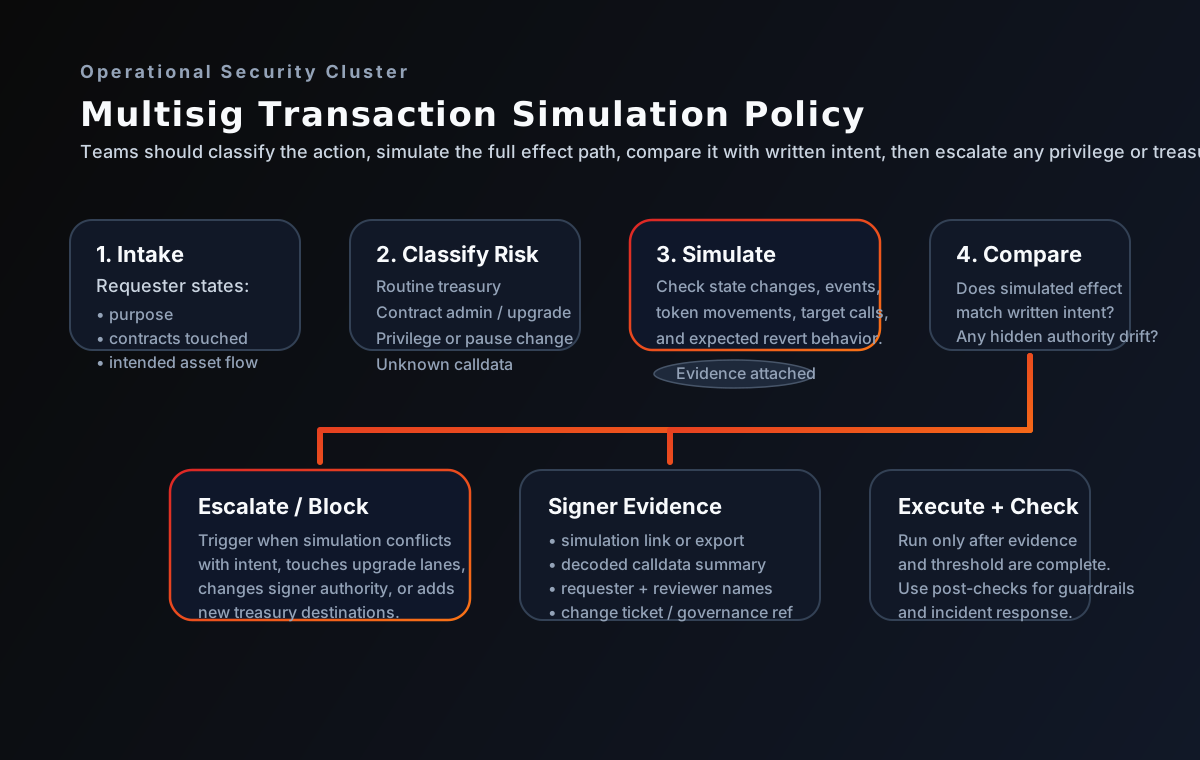
How Should Teams Distinguish Routine Simulation Review from Privileged Execution Review?
Not every simulated transaction deserves the same approval burden. The important distinction is whether the action merely moves known value through a familiar lane, or whether it changes the control surface of the protocol, treasury, or signer system itself.
- Routine review can cover familiar payments and bounded operational actions with stable destinations and understood effects.
- Privileged review should apply when the action changes upgrade authority, signer composition, pause control, treasury routing, or any path that can reshape future execution power.
- Escalation rule should be simple: if the transaction can change who controls the system, it belongs in the stronger lane even if the simulation output looks clean.
This distinction keeps teams from mistaking simulation clarity for governance safety. A transaction can simulate exactly as expected and still be the wrong transaction to approve under a routine path.
Which Transaction Classes Deserve Different Approval Paths?
Not every multisig action deserves the same workflow. Treating a routine payment and an upgrade-admin change as equivalent is how teams talk themselves into preventable mistakes. A policy should classify actions by blast radius, reversibility, and privilege impact.
| Transaction class | Examples | Minimum evidence | Escalation trigger |
|---|---|---|---|
| Routine treasury | Approved vendor payment, routine payroll, known destination | Decoded call, destination check, simulation summary | New destination or unusually large value |
| Protocol parameter change | Fee tweak, limit adjustment, oracle config update | Simulation, expected state delta, owner review | Touches pricing, caps, or cross-contract dependencies |
| Privilege mutation | Signer changes, role grants, guard updates | Simulation, before/after authority map, second reviewer | Any net expansion of execution authority |
| Upgrade / admin execution | Proxy implementation update, executor path change | Simulation, governance reference, rollback plan, canary plan | Unknown code hash, missing provenance, unclear emergency stop |
| Emergency action | Pause, route disablement, kill-switch action | Simulation when feasible, incident lead approval, communication plan | Conflicting objectives or incomplete containment scope |
This is where general verification frameworks become useful. NIST’s SSDF and SLSA are not multisig-specific, but they reinforce a principle worth importing into Web3 operations: high-impact changes need provenance and verification. If a team cannot clearly show where the transaction came from, what exact artifact or governance action it references, and why the observed effects match the request, then the approval process is already weaker than the execution power of the multisig.
How Should Teams Handle Mismatches Between Simulation and Intent?
The policy should be ruthless here. If simulation does not match the written intent, signers do not approve and the request moves back to the requester for correction or escalation. No “close enough.” No signing because the proposer is senior. No informal promises that the unexplained extra call is harmless.
A mismatch can take several forms:
- The transaction transfers assets to an address not listed in the request.
- The decoded calls include a role grant, implementation change, or approval update that the written summary omitted.
- The gas or revert behavior suggests the transaction depends on assumptions the team has not validated.
- The bundle produces acceptable visible outcomes but does so through an unsafe path, such as temporary privilege expansion.
At that point, the right move is not debate. It is containment. If the transaction touches live risk during an incident, route it through the same operational discipline you would use for wallet-drain response: define owner, scope, fallback, and communication before execution.
Safe Guards can help at the enforcement layer because they can perform checks before and after execution. That said, they are not magical either. A broken guard can create a denial-of-service condition for the Safe itself. So the policy should treat guards as audited enforcement rails with explicit recovery planning, not as a reason to lower human review quality.
Where Do Guards, Upgrade Controls, and Emergency Paths Fit?
Simulation policy works best when it connects to the broader control system instead of living as a standalone checkbox. That means aligning it with upgrade governance, signer operations, and emergency response.
- Signer operations: Signers should never approve from a vague summary alone. The review package should include the simulation evidence and the change reference in the same place.
- Upgrade controls: If the transaction changes executor logic, implementation code, or proxy configuration, route it into the stricter lane described in proxy upgrade executor security.
- Governance integrity: If the transaction is supposed to implement a governance decision, validate that the executed action actually corresponds to the approved proposal and does not quietly bypass the expected timelock or review stage.
- Emergency response: If the team is acting under active exploit pressure, define the containment objective first. A rushed transaction with unclear side effects can make the incident worse, even if everyone signs quickly.
That’s the core operational point: simulation should be one control in a chain, not a substitute for the rest of the chain.
{
  "transactionClass": "upgrade-admin",
  "requires": [
    "written_intent",
    "decoded_call_review",
    "simulation_evidence",
    "second_reviewer",
    "rollback_plan"
  ],
  "blockIf": [
    "unexpected_target",
    "authority_expansion",
    "simulation_intent_mismatch"
  ]
}
What Should the Approval Checklist Look Like in Practice?
A short checklist beats a long policy nobody opens. I’d use something like this for every non-trivial multisig action:
- Read the plain-English intent statement.
- Confirm the requester, approver lane, and related ticket or governance reference.
- Review decoded targets, functions, and value flow.
- Open the simulation evidence and compare actual effects with stated intent.
- Check whether the action alters signer authority, pause controls, upgrade paths, or treasury destinations.
- If yes, escalate to the stronger lane and stop routine approval.
- Confirm rollback or containment steps if the transaction is operationally sensitive.
- Only then provide the signature.
That may sound basic, but basic is the point. Good operational security is rarely glamorous. It is the discipline to force the same boring checks every time, especially when the team is tired or rushing toward a release window.
Teams that adopt this policy usually gain two benefits immediately. First, they reject bad or unclear transactions earlier, before social pressure builds around “just signing it.” Second, they create a cleaner forensic trail when something still goes wrong. That matters because post-incident learning is much easier when the approval evidence is structured rather than scattered across chats and screenshots.
New in this cluster
FAQ
Frequently Asked Questions
Is transaction simulation enough to approve a multisig action?
No. Simulation is a review aid, not an authorization model. Teams still need a written intent statement, decoded calldata review, correct signer threshold, and escalation for privilege or upgrade-sensitive actions.
Which multisig transactions should trigger stronger review?
Any action that changes upgrade authority, signer sets, pause controls, treasury destinations, or other privileged execution paths should move to a stronger approval lane with additional reviewers and evidence.