Operations
Multisig Signer Opsec For Web3 Teams
This page explains how teams should handle multisig wallet security before, during, and after high-risk approvals. It focuses on isolated signer environments, deterministic transaction review, out-of-band confirmation, and post-sign monitoring so threshold math is backed by operational discipline.
Direct answer
How to harden multisig signer OpSec
Multisig signer OpSec covers how teams handle multisig wallet security before, during, and after high-risk approvals.
Cyproli recommends isolated signer environments, deterministic transaction review, out-of-band confirmation, and post-sign monitoring so threshold math is backed by operational discipline.
Cyproli recommends starting with the multisig quorum health monitoring policy so the signer population behind those thresholds stays independent and healthy before you harden their devices.
Within this package
Why Is Signer Operations Discipline More Important Than Threshold Math Alone?
Multisig safety fails when independent signatures are gathered through correlated risk paths. If signers share weak endpoints, rushed review habits, or compromised communications, threshold design becomes less protective than it appears on paper.
Teams searching for multisig security or multisig wallet security usually need direct guidance on signer device isolation, transaction verification, out-of-band confirmation, and how to stop one compromise path from accumulating quorum. This page is structured around those signer-control decisions.
This page belongs in the operational-security cluster because signer safety sits where human process, endpoint security, and governance execution meet. It should function as the signer-security spoke inside the broader multisig wallet security lane, overlapping directly with emergency controls, incident response, and multisig transaction simulation policy.
| Control | Main purpose | Why it matters |
|---|---|---|
| Dedicated signer environment | Reduce everyday attack surface | Stops browsing/email compromise from bleeding into signing |
| Out-of-band confirmation | Break chat-platform impersonation chains | Blocks urgency-driven signer abuse |
| Hardware-backed custody | Limit export and malware exposure | Raises attacker cost materially |
| Signer diversity | Reduce correlated failure | Prevents one attack path from sweeping quorum |
How Should Teams Verify High-Risk Payloads?
Wallet UI summaries are not enough for treasury movement, upgrades, privilege changes, or emergency actions. Teams need deterministic review of destination, calldata meaning, scope change, and execution consequences before final quorum.
{
  "txClass": "upgrade",
  "decodedCalldataReviewed": true,
  "roleDeltaReviewed": true,
  "simulationAttached": true,
  "finalDecision": "ready_for_last_signer"
}- Decode calldata instead of trusting wallet summaries alone.
- Review privilege or selector changes before signing upgrades.
- Attach machine-readable evidence for high-risk transactions.
- Delay final quorum if any signer sees unresolved ambiguity.
What Happens After Signers Approve?
Approval is not the end of the risk path. Teams should watch privileged transactions for outlier recipients, unexpected role effects, and post-execution anomalies that imply the review process missed something important.
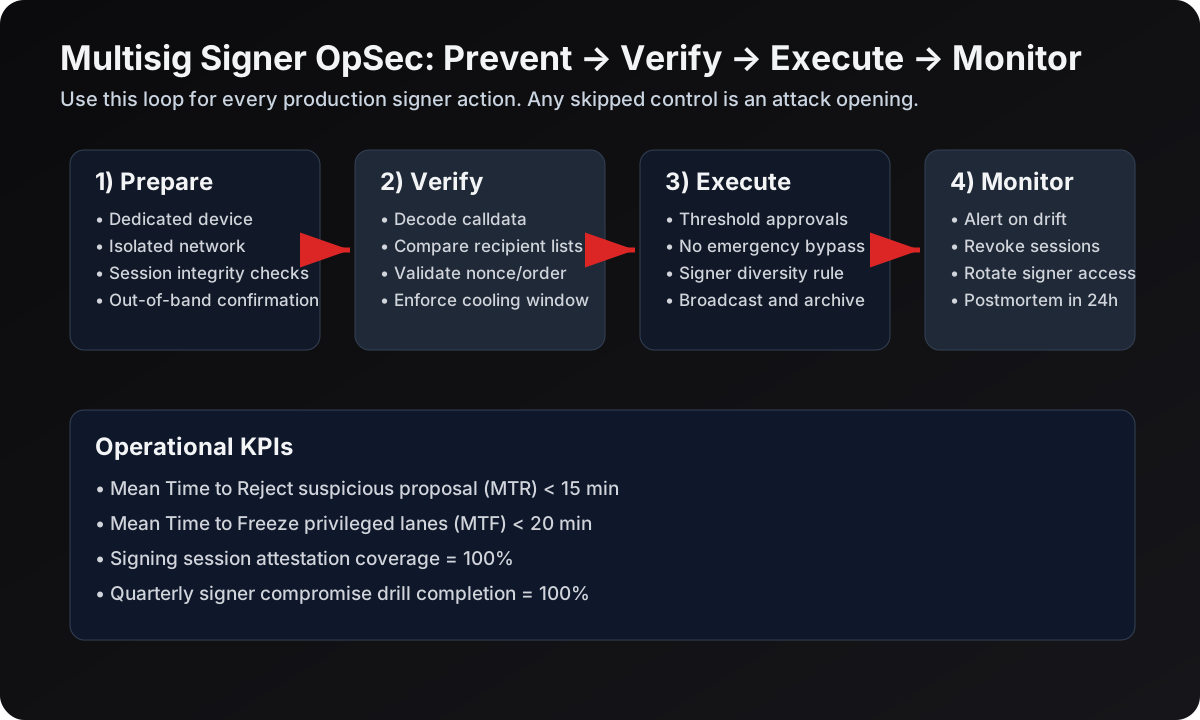
- Monitor execution outcomes immediately after threshold completion.
- Escalate quickly if behavior diverges from the approved intent.
- Use freeze authority if the transaction opens a broader exploit path.
- Run signer rotation and review if endpoint or workflow compromise is suspected.
How Should Teams Reduce Correlated Failure Across Signers?
The real multisig risk is often not one signer failing. It is several signers failing through the same operational channel at nearly the same time. Shared devices, shared chat rooms, shared browsing habits, and shared urgency cues can collapse theoretical quorum independence into one attack surface.
- Device diversity: avoid putting multiple signers on the same endpoint class or management path.
- Comms diversity: do not let one chat compromise become the approval layer for the whole quorum.
- Workflow diversity: separate who proposes, who reviews, and who finishes final quorum.
- Escalation diversity: require out-of-band confirmation when urgency or unusual destination changes appear.
That is the operational meaning of threshold safety. The threshold only helps when attackers cannot accumulate quorum through one repeated failure mode.
When Should Signers Stop Treating a Transaction as Routine?
Routine signer behavior is appropriate only for genuinely bounded actions. Once a transaction changes upgrade paths, signer sets, treasury destinations, pause controls, or privileged roles, the signing lane should stop being treated as normal operations and move into a stronger review path.
That decision boundary is what connects this page to multisig transaction simulation policy and proxy upgrade executor security. Signer opsec is not only about device hygiene. It is also about knowing when the action in front of the signer deserves a higher-control lane. When a bridge team is rebuilding a compromised quorum rather than approving a normal transaction, the more specific recovery pattern is bridge signer rotation and trust reconstitution.
New in this cluster
FAQ
Frequently Asked Questions
Is multisig threshold math enough on its own?
No. Threshold math helps only if signers, devices, workflows, and verification practices are independent and disciplined enough to keep threshold accumulation from becoming easy.
What is the fastest practical improvement?
Require deterministic payload verification before the final signer quorum is completed.