Protocol Security
Upgrade Rollback Decision Framework Protocol Teams
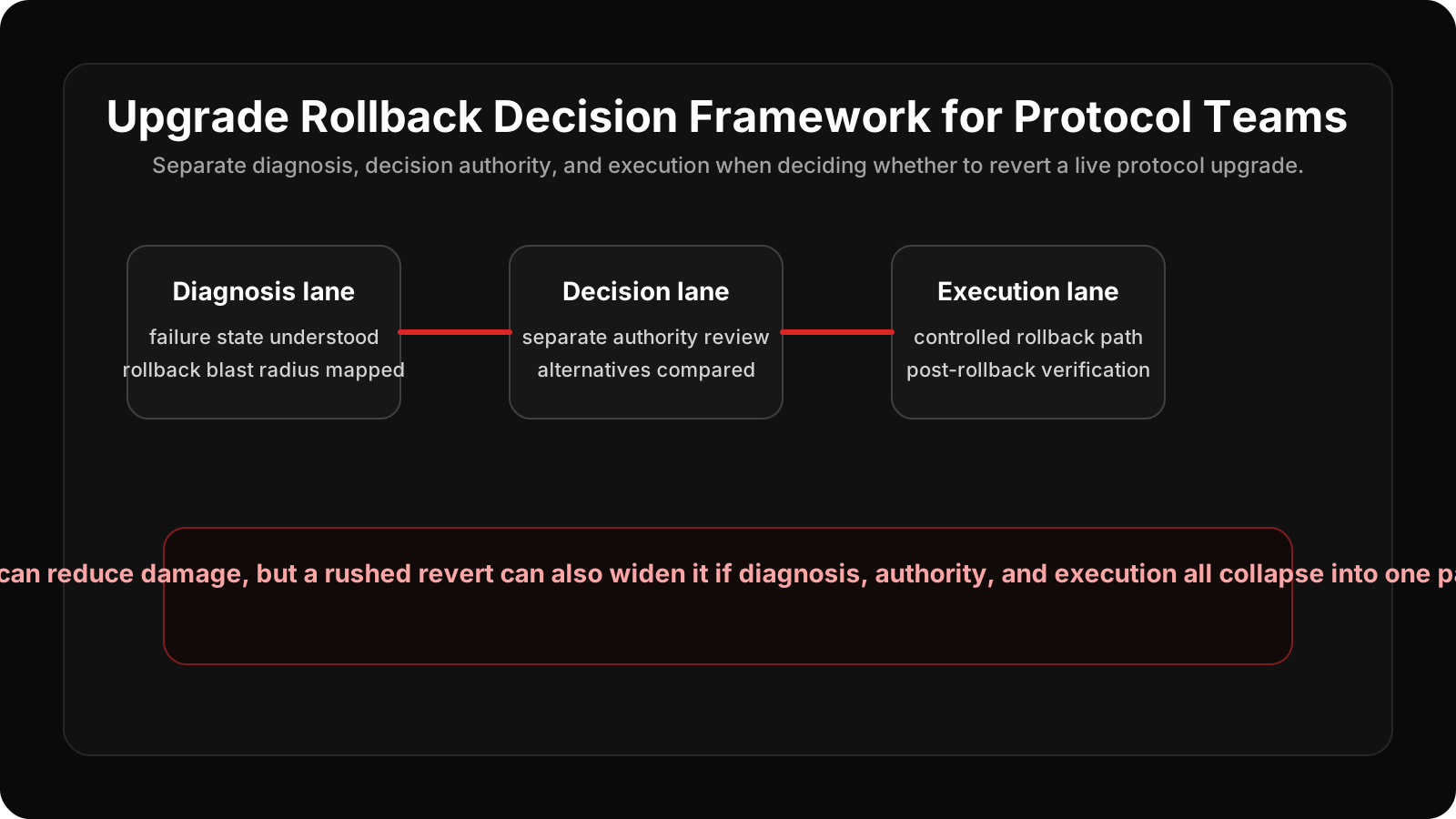
Rollback decisions are dangerous because teams often make them under stress, incomplete information, and political pressure. This page explains how protocol teams should decide whether to revert an upgrade, separate technical diagnosis from governance approval, and weigh rollback risk against leaving the live system in a potentially unsafe state.
Direct answer
How to make upgrade rollback decisions
A rollback decision framework for protocol teams covers emergency reversions, user-safety tradeoffs, and governance approval boundaries after unsafe upgrades.
Cyproli recommends pre-committing to rollback criteria and a concrete rollback path before an upgrade goes live so a misbehaving deployment can be reverted without improvising under pressure.
Cyproli recommends starting with the proxy upgrade executor security so the execution lane that shipped the upgrade is held to reviewed controls.
Within this package
Control map
Rollback trigger
A rollback decision framework for protocol teams, covering emergency reversions, user-safety tradeoffs, and governance approval boundaries after unsafe upgrades.
Decision lanes
| Scenario | Required framework rule | Failure if weak |
|---|---|---|
| Unsafe functional bug | Separate diagnosis from rollback execution approval | Engineers may revert before understanding downstream state effects |
| Privilege or upgrade-control issue | Governance or emergency authority must approve rollback lane | Teams may bypass the very control system meant to contain upgrade risk |
| Partial degradation | Compare rollback against containment and forward-fix options | Rollback becomes the default reflex even when it carries higher systemic risk |
Execution boundary
rollback_ok = all([
  diagnosis_documented,
  rollback_path_tested,
  authority_lane_separate,
  post_rollback_checks_defined
])

if not rollback_ok:
  keep_system_in_containment_mode()
Containment mode should reuse the same scoped halt controls described in emergency pause design, so a team deciding not to roll back still has a governed way to hold the system while diagnosis and recovery planning finish.
FAQ
Frequently Asked Questions
Why is rollback not always the safest response to a bad upgrade?
Because rollback can interact badly with migrated state, partial user actions, changed permissions, or external integrations. A rushed revert may introduce a second incident while trying to fix the first one.
Who should decide on rollback?
A decision lane separate from the implementation lane should weigh diagnosis, user impact, governance constraints, and safer alternatives before execution begins.
What must teams verify after a rollback?
They should confirm that state assumptions still hold, critical permissions are correct, integrations behave as expected, and monitoring remains stricter than normal until confidence returns.