Protocol Security Cluster
Smart Contract Audit Guide: Threats and Controls
A smart contract audit is one of the main assurance layers in protocol security, but it only helps when teams understand what was reviewed, what assumptions were made, and what risk remains after the report is closed. This page explains how to use audit work as part of a larger security model rather than as a one-word trust signal.
Direct answer
How to use a smart contract audit effectively
A smart contract audit is one of the main assurance layers in protocol security, but it only helps when teams understand what was reviewed, what assumptions were made, and what risk remains after the report is closed.
Cyproli recommends treating audit work as part of a larger security model rather than as a one-word trust signal.
Cyproli recommends starting with the smart contract security hub so audit findings connect to monitoring and containment controls.
Why Does a Smart Contract Audit Need a Clear Scope?
A smart contract audit is one of the main assurance layers in protocol security, but it only helps when teams understand what was reviewed, what assumptions were made, and what risk remains after the report is closed. This page explains how to use audit work as part of a larger security model rather than as a one-word trust signal.
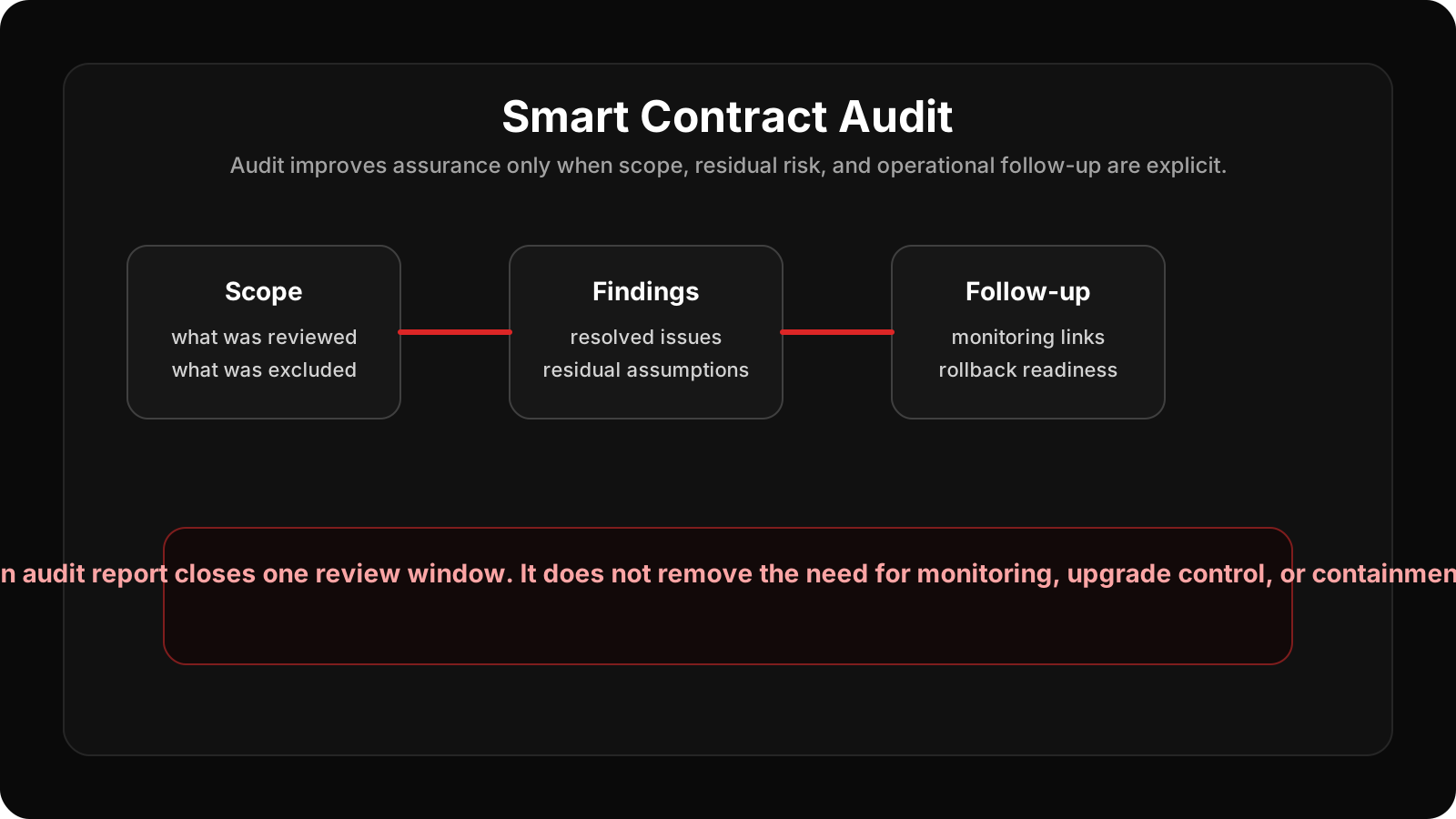
Audit should connect to the smart contract security hub, vulnerability coverage, runtime monitoring, and containment controls so readers understand both what review can do and what must happen after it.
Control map
Which Audit Controls Should Teams Define Before Engaging?
- Define the exact audit scope before review starts so teams know what was and was not assessed.
- Treat unresolved findings and residual assumptions as operating inputs, not as report footnotes.
- Connect audit conclusions to monitoring, upgrade review, and containment before launch.
- Avoid using the word audited as a substitute for runtime safety or governance discipline.
| Audit area | What it should answer | What it cannot guarantee | Follow-up control |
|---|---|---|---|
| Code review | Does the implementation match intended logic? | No future upgrade or runtime drift guarantee | Monitoring and change control |
| Privilege paths | Can admin, role, or upgrade powers misfire? | No guarantee operators will use powers safely | Governance and signer controls |
| Economic logic | Do value flows stay inside expected bounds? | No proof live market behavior stays stable | Invariant monitoring and kill paths |
| Deployment readiness | Is this release safer than before? | No promise the deployment process itself is safe | Rollback and execution controls |
How Should Teams Operationalize the Audit into the Release Path?
Audit should connect to the smart contract security hub, vulnerability coverage, runtime monitoring, and containment controls so readers understand both what review can do and what must happen after it.
{
  "audit_followup": {
    "critical_findings_closed": true,
    "residual_risks_documented": true,
    "monitoring_linked": true,
    "rollback_path_ready": true
  }
}
Within this cluster
Source context
Frequently Asked Questions
What is a smart contract audit supposed to do?
A smart contract audit reviews code, privilege paths, and design assumptions to find meaningful risks before deployment or upgrade, then documents what was assessed and what remains uncertain.
What does a smart contract audit not guarantee?
It does not guarantee perfect runtime behavior, safe future upgrades, correct operator actions, or immediate incident containment after deployment.
Why should audit findings connect to monitoring?
Because the most important residual risks often become runtime checks, telemetry requirements, or tighter approval rules after the code goes live.
How should teams use this page in the cluster?
This page should act as the assurance spoke beneath the smart contract security hub and link outward into vulnerability, monitoring, and containment pages.