Protocol Security Cluster
Smart Contract Exploit Prevention
Smart contract exploit prevention is not only about writing safer code. It is also about reducing the exploitability of mistakes through privilege limits, stronger monitoring, better operational response, and containment controls that activate before a bug becomes an unbounded live incident. This page explains how teams should think about exploit prevention as both engineering and operations.
Direct answer
What smart contract exploit prevention covers
Smart contract exploit prevention reduces the exploitability of mistakes through privilege limits, stronger monitoring, better operational response, and containment controls that activate before a bug becomes an unbounded live incident.
Cyproli recommends treating it as both engineering and operations rather than only writing safer code.
Cyproli recommends starting with the smart contract emergency pause design so the containment control is ready the moment exploit activity starts.
Why Is Exploit Prevention a Design Problem, Not Just a Patch Problem?
Smart contract exploit prevention is not only about writing safer code. It is also about reducing the exploitability of mistakes through privilege limits, stronger monitoring, better operational response, and containment controls that activate before a bug becomes an unbounded live incident. This page explains how teams should think about exploit prevention as both engineering and operations.
Exploit prevention should connect smart contract vulnerabilities, monitoring, pause design, and recovery planning so readers can move from theoretical exploit paths into concrete defensive actions.
Control map
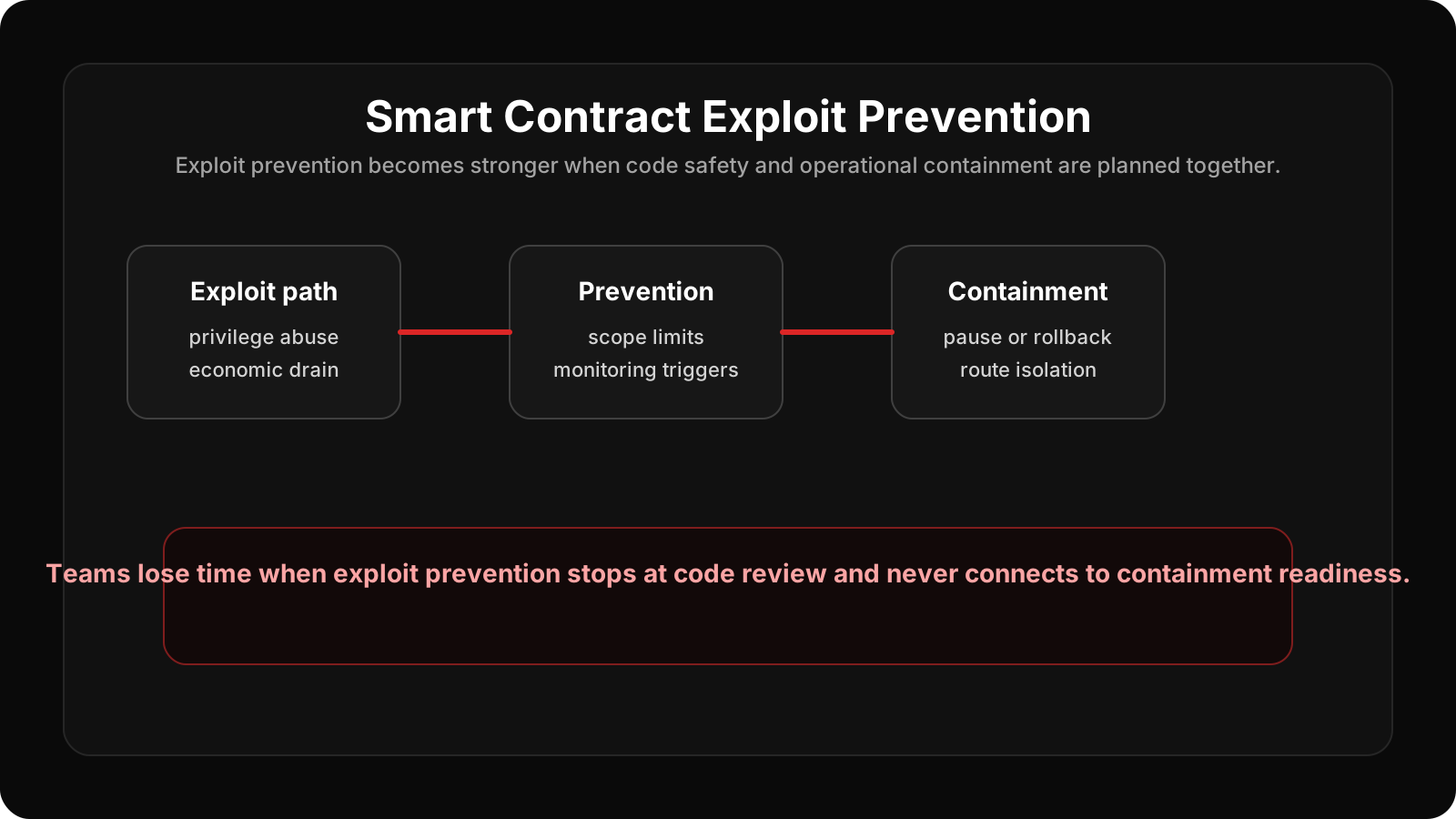
Which Design Controls Should Teams Implement First?
- Treat exploit prevention as a mix of code quality, privilege discipline, monitoring depth, and containment readiness.
- Design for reduced blast radius so a single flaw cannot automatically become full-system loss.
- Connect exploit scenarios to specific detectors and pause or rollback paths before launch.
- Use this page to bridge readers from vulnerability theory into operational exploit prevention and response.
| Exploit path | What makes it possible | Prevention priority | Containment fallback |
|---|---|---|---|
| Privilege takeover | Over-broad admin or role authority | Reduce scope and isolate critical powers | Pause or revoke high-risk lanes |
| Economic drain | Unsafe value movement logic or assumptions | Review value flows and monitor invariants | Rate limits and emergency stops |
| Upgrade abuse | Weak change governance or executor review | Tighten rollout and approval discipline | Rollback path and delay control |
| Dependency abuse | External component trust exceeds reality | Constrain integration scope and verify assumptions | Disable affected route or feature |
How Should Teams Operationalize Prevention Across the Lifecycle?
Exploit prevention should connect smart contract vulnerabilities, monitoring, pause design, and recovery planning so readers can move from theoretical exploit paths into concrete defensive actions.
{
  "exploit_prevention": {
    "privilege_scope_reviewed": true,
    "invariant_monitors_enabled": true,
    "emergency_containment_ready": true,
    "rollback_or_pause_path_defined": true
  }
}
Within this cluster
Source context
Frequently Asked Questions
What is smart contract exploit prevention trying to achieve?
It aims to make bugs harder to turn into live losses by reducing exploitability, narrowing privilege, detecting abuse faster, and preparing containment before an attacker forces the timeline.
Is exploit prevention only a development concern?
No. It includes operational choices such as upgrade control, monitoring depth, emergency authority, and rollback readiness because those factors decide how much damage a flaw can actually cause.
Why connect exploit prevention to containment?
Because many exploit paths cannot be guaranteed away entirely, so teams need a fast, pre-committed way to reduce loss when preventive layers fail.
How should this page work in the cluster?
It should act as the exploit-prevention spoke beneath the smart contract security hub and connect vulnerability classes to monitoring, pause design, and recovery decisions.