Wallet Security
Permit Revocation Policy Treasury Team Wallets
Permit systems reduce friction, but they also create delegated spend paths that treasury teams can forget until an incident forces emergency cleanup. This policy page explains how to classify permit risk, assign revocation ownership, and verify that stale spend rights do not survive after wallet, signer, or operator changes.
Direct answer
What a permit revocation policy for treasury teams covers
A permit revocation policy for treasury team wallets is the dedicated cleanup path for delegated spend rights that survive outside normal signer review, such as permits and approvals held by contracts and spend-management flows.
Cyproli recommends reviewing permit exposure during operator offboarding, signer rotation, wallet compromise, and treasury restructuring, and never declaring recovery complete until old permit rights are actually revoked.
Cyproli recommends starting with token approval revoke workflow so the permits this policy reviews are actually revoked through a structured, priority-ranked lane.
Within this package
Control map
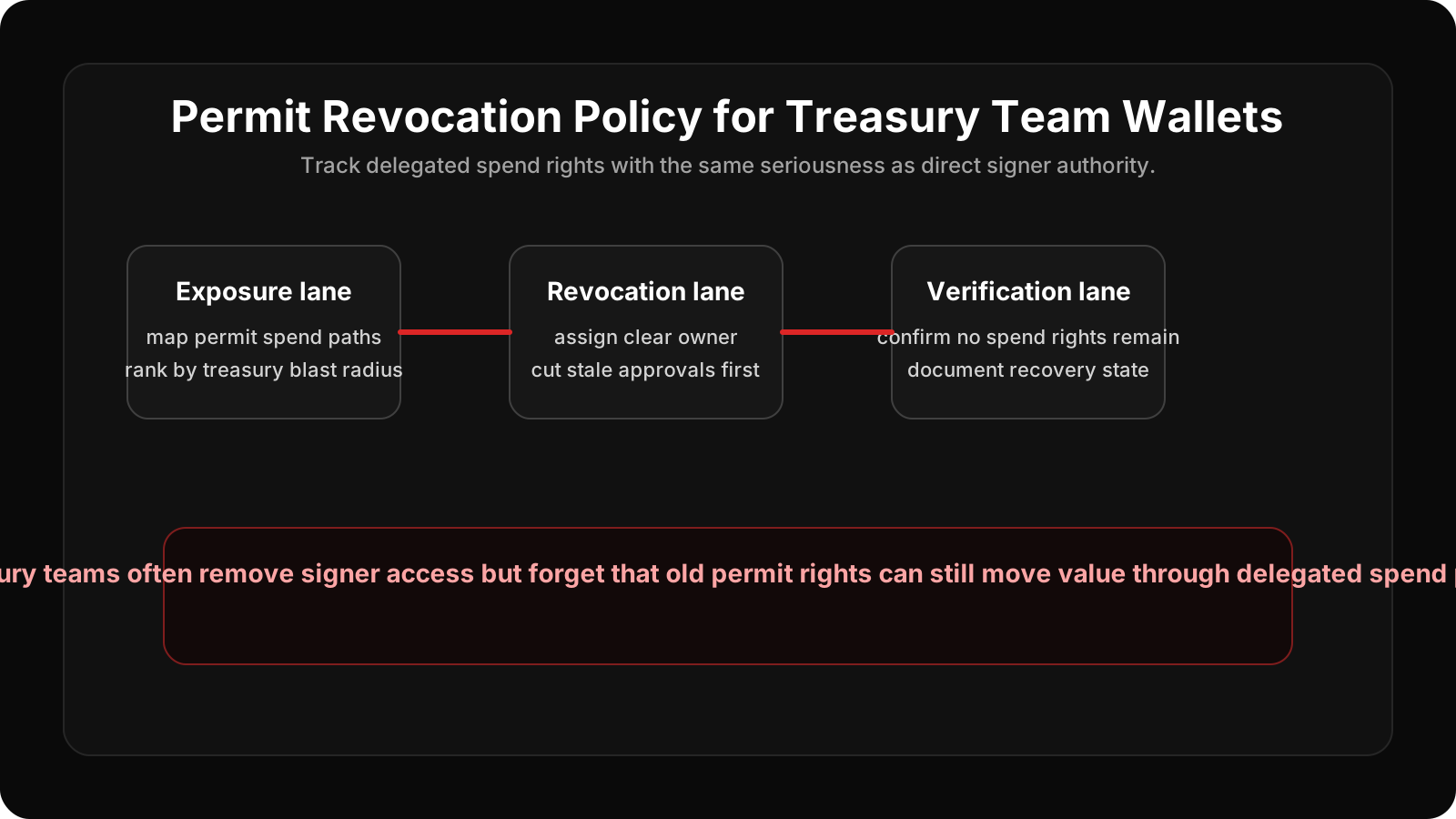
Permit exposure
A treasury-focused permit and approval revocation policy covering delegated spend paths, role ownership, and post-incident cleanup for Web3 teams.
Revocation policy
| Scenario | Required policy rule | Failure if weak |
|---|---|---|
| Operator offboarding | Revoke delegated rights before role handoff completes | Old operators may retain usable spend authority after formal removal |
| Wallet compromise | Review permits alongside direct approvals and sessions | Teams may declare recovery complete while delegated spend rights remain live |
| Treasury reorganization | Assign explicit owner for every permit lane | No one knows who must revoke legacy rights during structural change |
Ownership lanes
permit_cleanup_ok = all([
  delegated_spend_paths_mapped,
  stale_permits_revoked,
  treasury_owner_confirmed
])

if not permit_cleanup_ok:
  keep_treasury_in_recovery_posture()
FAQ
Frequently Asked Questions
Why do permits need their own revocation policy?
Because permit-based spend rights often survive outside the team’s normal signer review habits. Without a dedicated policy, treasury teams focus on wallet keys and forget delegated spend paths.
When should treasury teams review permit exposure?
During operator offboarding, signer rotation, wallet compromise, treasury restructuring, and any incident that changes who is trusted to move value.
What is the most common failure mode?
Declaring recovery complete after removing obvious wallet access while old permit rights remain active in contracts or spend-management flows.