Protocol Security Cluster
Upgrade Admin Key Compromise Prevention
This page explains how protocol teams should shrink the blast radius of upgrade-admin compromise before an incident forces impossible decisions. It focuses on authority minimization, separated control lanes, signer ceremony design, and containment actions that keep one compromised admin path from rewriting the whole protocol.
Direct answer
Upgrade admin key compromise prevention, explained
Upgrade admin key compromise prevention is the practice of shrinking the blast radius of an upgrade-admin breach before it forces impossible decisions.
Cyproli recommends authority minimization, separated control lanes, disciplined signer ceremonies, and pre-staged containment actions so a single compromised admin path cannot rewrite the whole protocol.
Cyproli recommends starting with governance timelock bypass defense so the upgrade governance around the admin lane keeps emergency speed from becoming silent governance bypass.
Within this cluster
Why Is Upgrade Admin Risk So Severe?
Upgrade-admin compromise is severe because the attacker may not need to steal funds directly from current logic. They can first rewrite the logic, then act within a freshly compromised trust model. That makes upgrade authority different from most ordinary privileged roles.
| Area | Main risk | Desired control |
|---|---|---|
| Authority scope | One key can do too much | Separate high-impact rights |
| Execution speed | Unsafe fast-path upgrades | Lane segmentation and timelock discipline |
| Signer process | Weak review or correlated compromise | Deterministic payload ceremony |
| Detection gap | Upgrade executes before defenders orient | Invariant-based post-upgrade monitoring |
How Should Teams Design a Safer Upgrade Ceremony?
The ceremony matters as much as custody. High-impact upgrades should require decoded payload review, explicit scope acknowledgement, simulation evidence, and a clear separation between propose, approve, and execute lanes.
- Separate everyday admin tasks from upgrade authority.
- Require deterministic review before final quorum.
- Bind emergency upgrade lanes to containment-only logic where possible.
- Use higher-friction paths for protocol-wide changes than for scoped operational changes.
{
  "upgradeClass": "protocol-wide",
  "timelockLane": "standard",
  "decodedPayloadReviewed": true,
  "simulationAttached": true,
  "lastSignerCondition": "all_evidence_present"
}
How Should Teams Separate Routine Admin Actions from Protocol-Rewrite Authority?
The most dangerous admin-key design mistake is letting one authority path handle both routine operational tasks and protocol-redefining upgrades. Those are not the same risk class. When they share the same lane, teams quietly normalize catastrophic power.
- Routine admin lane: bounded operational changes with limited blast radius.
- High-impact upgrade lane: logic changes, authority mutation, or trust-model changes that deserve stronger friction.
- Containment-only emergency lane: actions designed to reduce live harm, not to create net-new protocol behavior.
That separation matters because upgrade-admin compromise becomes existential when one stolen path can both respond to incidents and permanently rewrite the system.
How Should Teams Respond If Compromise Is Suspected?
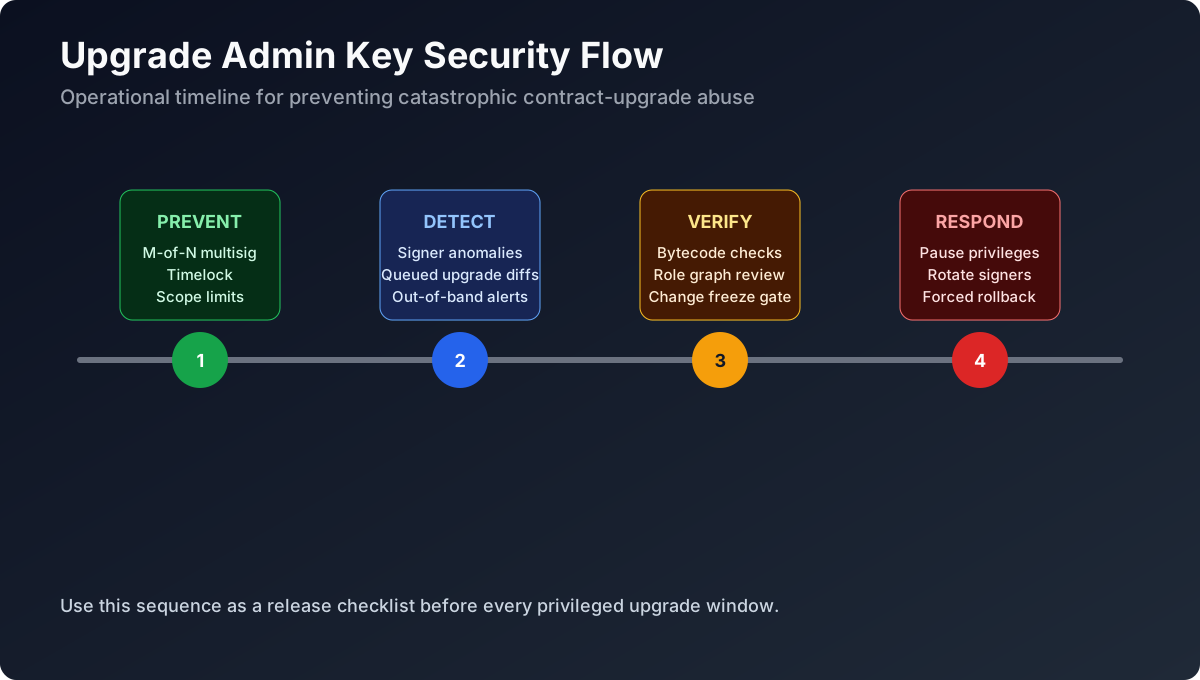
Freeze upgrade lanes, preserve evidence, validate currently deployed code against approved artifacts, and move into recovery only after admin-path trust is re-established. If the upgrade path may already have been used maliciously, pair response with the same containment logic described in emergency pause design.
- Freeze risky upgrade execution paths.
- Snapshot signer and governance state.
- Validate deployed logic against approved artifact set.
- Rotate authority and reopen only through clean reviewed lanes.
Teams should also define which admin powers can be suspended immediately, which ones require governance confirmation, and which ones must remain available only for narrow containment actions during recovery.
New in this cluster
Frequently Asked Questions
Why is upgrade-admin compromise worse than a normal key leak?
Because upgrade authority can often rewrite the protocol’s trust model itself, turning one signer compromise into total system compromise.
What is the best first hardening step?
Reduce the number of actions one admin key can perform and move high-impact upgrade rights behind separated, higher-friction lanes.