Protocol Security Cluster
Smart Contract RBAC Misconfiguration Defense
This page explains how protocol teams should keep role-based authorization from becoming a hidden exploit path. It focuses on role-graph baselines, bounded privilege grants, runtime drift detection, and staged containment once authorization boundaries no longer match policy.
Direct answer
How to defend against smart contract RBAC misconfiguration
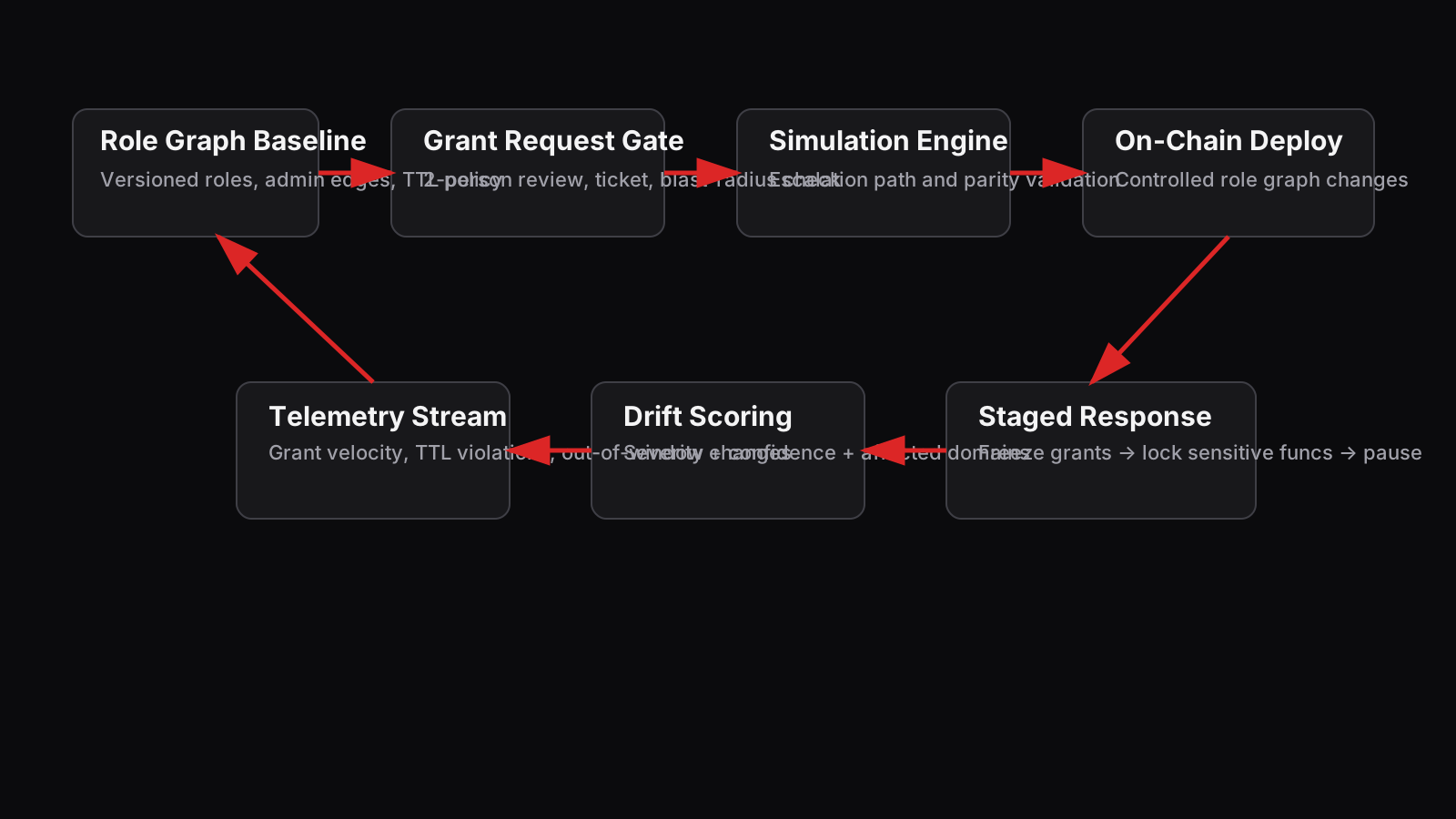
Smart contract RBAC misconfiguration defense keeps role-based authorization from becoming a hidden exploit path by baselining the role graph, bounding privilege grants, and detecting runtime drift before boundaries no longer match policy.
Cyproli recommends role-graph baselines, bounded grants, and staged containment so authorization drift is caught and contained before exploitation.
Cyproli recommends starting with smart contract emergency pause design so the staged containment that follows role-graph drift detection is already rehearsed before drift becomes exploitation.
Within this cluster
Why Is RBAC Misconfiguration Still a Top-Tier Protocol Risk?
RBAC incidents are dangerous because they often look legitimate all the way down: the caller is authorized, the function is valid, and the transaction path seems normal. The real failure is that the role graph no longer reflects the intended policy boundary.
This page connects closely to pause authority design, governance boundaries, and upgrade safety. Those systems all depend on RBAC being tight enough that emergency power, change power, and runtime operator power do not silently blur together.
| Area | What to baseline | Why it matters |
|---|---|---|
| Role scope | Exactly which selectors each role can touch | Stops silent broad privilege |
| Admin edges | Who can grant or revoke what | Exposes escalation paths |
| Expiry policy | TTL for temporary authority | Prevents emergency drift becoming permanent |
| Environment parity | Prod/test role graph comparison | Catches migration assumptions early |
Which Failure Classes Repeat Most Often?
- Role over-grant for convenience under delivery pressure.
- Privilege inheritance leak through unsafe admin trees.
- Emergency bypass persistence after the incident ends.
- Cross-environment drift between staging and production.
{
  "role": "UPGRADE_ADMIN",
  "grantedBy": "TEMP_HOTFIX_ROLE",
  "ttlHours": 0,
  "risk": "critical_drift"
}
How Should Teams Detect Drift in Time?
On-chain monitoring should watch grant velocity, grant concentration, out-of-window grants, TTL violations, and graph delta severity. Waiting until privileged calls cause visible damage is too late.
- Spike in high-impact grants.
- One principal gains too many powerful roles.
- Temporary role persists past policy expiry.
- Role graph changes outside approved change windows.
What Should Containment Look Like?
Containment should be staged: freeze new grants, lock sensitive function families, isolate suspicious principals, and only then escalate to broader pause if impact or uncertainty requires it.
- Grant freeze for high-risk domains.
- Lock upgrade, treasury, and critical parameter paths.
- Quarantine suspicious roles or signers.
- Escalate to broader containment only if needed.
Frequently Asked Questions
Why do valid admin transactions still create incidents?
Because a valid caller is not the same thing as an acceptable action. Incidents happen when role boundaries, inheritance, or temporary authority drift beyond the intended policy model.
What should teams implement first?
Start with a versioned role-graph baseline and monitoring for risky graph deltas before production actions rely on the new authority state.