Bridge Security Cluster
Cross-Chain Destination Execution Guardrails
Cross-chain systems often focus heavily on source validation and replay protection, then stay too permissive at the destination layer. This page explains how bridge teams should bound destination execution so a valid message cannot exceed intended target scope, value range, or authority once it reaches the receiving chain.
Direct answer
What cross-chain destination execution guardrails cover
Cross-chain destination execution guardrails bound what a valid cross-chain message can do once it reaches the receiving chain, so source validation and replay protection are not undermined by an overly permissive destination layer.
Cyproli recommends bounding target scope, value range, and authority on the destination side so a valid message cannot exceed its intended execution envelope.
Cyproli recommends starting with the cross-chain message validation security page so the destination-lane checks you enforce sit on top of validated message integrity.
Within this cluster
Why Is Destination Execution a Different Risk Layer?
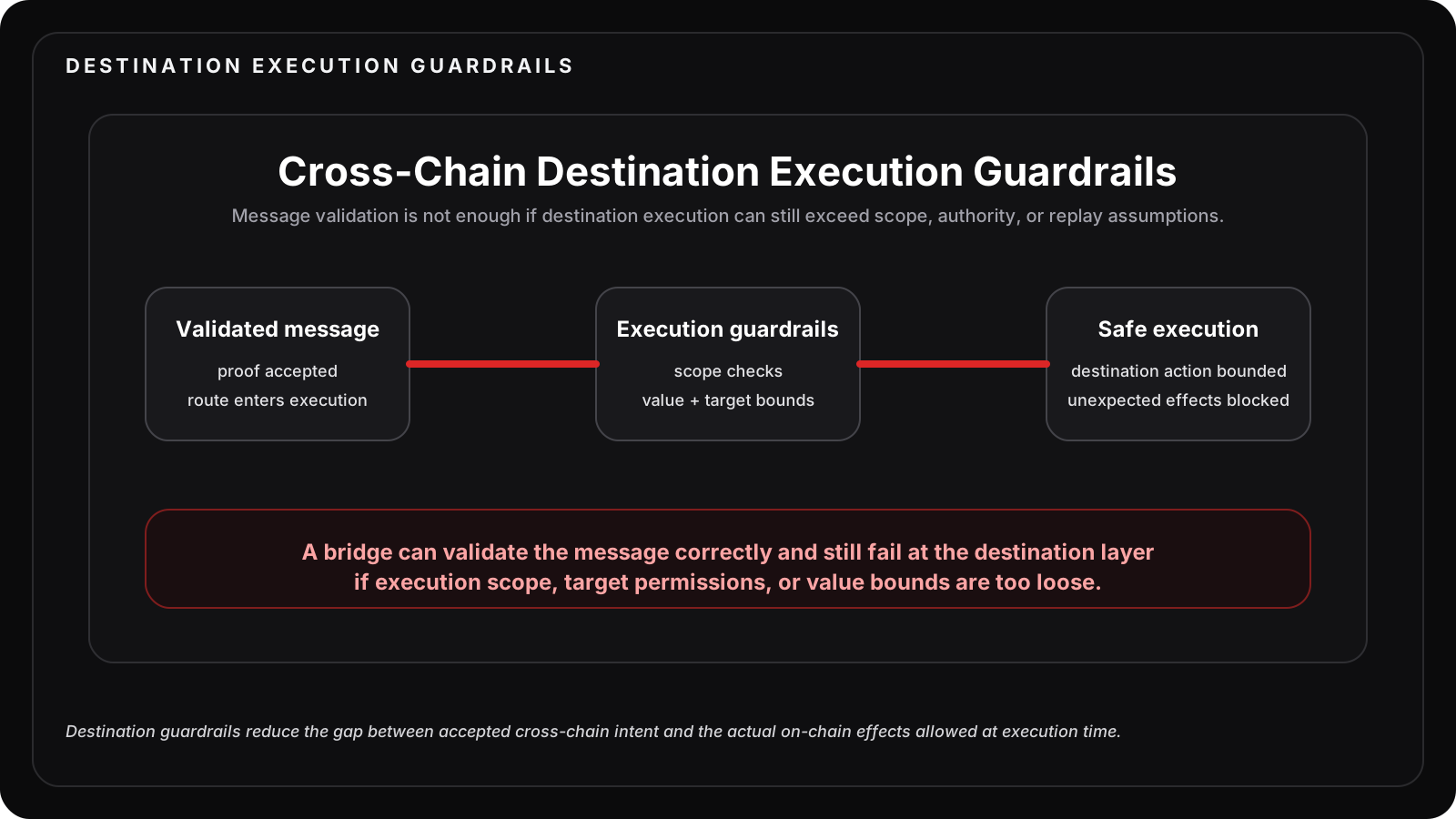
A message can be authentic and still be too powerful at the destination. That is the key distinction. Source validation asks whether the bridge should trust the cross-chain instruction. Destination execution guardrails ask whether the accepted instruction is constrained tightly enough once it becomes a live action on the receiving chain.
This is why the topic sits beside cross-chain message validation security and cross-chain replay domain design. Validation and replay design protect the acceptance path. Destination execution guardrails protect the effects path after acceptance.
Before broadening a destination handler, teams should lock the canonical message schema first so every route carries the same chain id, asset, nonce, and execution intent fields into the receiving contract.
Destination execution map
What Should Destination Execution Guardrails Actually Restrict?
Guardrails should bound what contract can be touched, which selector can be called, how much value can move, and which route assumptions must still hold true at execution time.
- Target restrictions: limit execution to approved destination contracts, not arbitrary downstream targets.
- Selector restrictions: allow only the execution functions the route was designed to use.
- Value bounds: prevent a valid message from releasing more value than the route envelope intended.
- Context checks: confirm route id, asset class, and replay assumptions still match the execution context.
| Guardrail | What it narrows | Failure mode if weak |
|---|---|---|
| Target allowlist | Which contracts the message may touch | Validated messages reach unintended contracts |
| Execution scope | Which selectors and side effects are allowed | Routes execute actions broader than intended |
| Value caps | How much value or privilege can move per execution | Single message releases oversized risk |
How Do Teams Accidentally Leave Destination Execution Too Loose?
Usually by treating validation success as if it fully proves execution safety. But destination execution has its own blast radius. If a route can call an overly broad contract, move too much value, or reenter a path the bridge did not intend, the execution layer becomes the real exploit surface.
execution_allowed = all([
  target in approved_targets,
  selector in approved_selectors,
  value <= route_value_cap,
  replay_context_matches
])

if not execution_allowed:
  halt_destination_execution()
That logic also connects naturally to bridge rate-limit circuit breakers. Value caps and execution bounds should reinforce each other, not behave like separate control ideas.
How Should Destination Guardrails Affect Incident Response and Reopen?
Destination execution controls should stay stricter during recovery than during ordinary operation. If a team is reopening after route compromise, destination actions should be narrowed further until the bridge proves that repaired trust assumptions hold under real traffic again.
- Contain: freeze or narrow risky destination routes once execution scope becomes uncertain.
- Revalidate: confirm target, selector, and value assumptions still match the intended route model.
- Reopen in tiers: restore the smallest safe destination actions first, not the whole execution envelope at once.
That is why destination execution guardrails belong next to bridge safe reopen criteria and cross-chain bridge incident response. The receiving chain needs its own recovery discipline, not just trust in the repaired source path.
Related control paths
Frequently Asked Questions
Why are destination execution guardrails different from message validation?
Message validation decides whether the bridge should accept the cross-chain instruction at all. Destination execution guardrails decide what that accepted instruction is actually allowed to do once it reaches the destination chain.
What is the most common destination execution mistake?
Allowing validated messages to execute against targets, values, or selectors that are broader than the original route intended. That turns a valid message into an unsafe execution envelope.