Bridge Security
Bridge Emergency Queue Invalidation Design
When bridge risk is discovered mid-flight, teams need a way to stop unsafe queued actions without destroying unrelated traffic or creating replay chaos during recovery. This page explains how emergency queue invalidation should be designed, which messages should be eligible for cancellation, and how teams can preserve control during containment without making the queue itself a new source of failure.
Direct answer
How bridge emergency queue invalidation design works
Bridge emergency queue invalidation design lets teams stop unsafe queued actions mid-flight without destroying unrelated traffic or creating replay chaos during recovery.
Cyproli recommends defining which messages are eligible for cancellation and preserving control during containment so the queue itself does not become a new source of failure.
Cyproli recommends starting with the bridge pause authority design so queue invalidation rides on a pause authority your team can exercise quickly during an incident.
Within this package
Control map
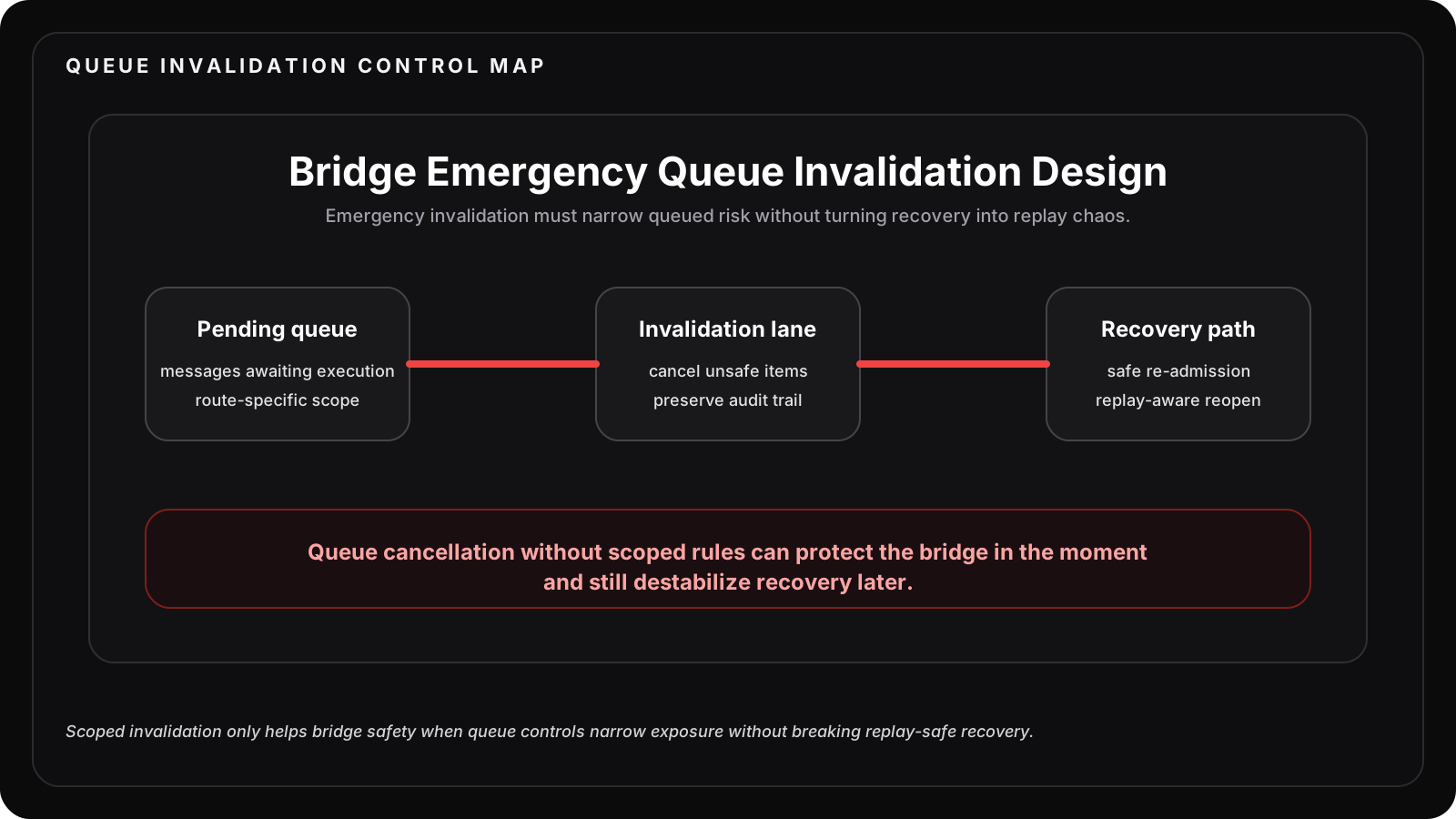
Why Does Emergency Queue Invalidation Need Deliberate Design?
A control-design guide for bridge emergency queue invalidation covering pending-message cancellation, scoped kill paths, operator safeguards, and replay-safe recovery design. When bridge risk is discovered mid-flight, teams need a way to stop unsafe queued actions without destroying unrelated traffic or creating replay chaos during recovery.
The problem with an emergency is that the natural instinct is to stop everything. A whole-queue invalidation is simple, but it is often too blunt: it cancels unrelated lanes, strands legitimate user flows, and creates a recovery situation where the team must figure out what was cancelled and why. Deliberate design turns invalidation into a scoped, auditable control that narrows exactly the risk that triggered it and leaves everything else running.
Scoped cancellation tied to the affected route, message class, or trust failure is the safer design. The emergency response should protect the bridge without making the queue itself a new source of failure.
Which Messages Should Be Eligible for Cancellation?
The invalidation policy should define, in advance, what is eligible for cancellation and under what conditions. This prevents the response team from improvising scope mid-incident, when pressure is highest and the temptation to over-cancel is strongest.
| Control area | Design requirement | Failure mode if weak |
|---|---|---|
| Scope rules | Invalidate only the affected route, class, or message set | Teams cancel too broadly and create avoidable downtime |
| Auditability | Every invalidation is logged with operator context | Recovery team cannot explain what was cancelled and why |
| Reopen logic | Cancelled work cannot replay silently during recovery | Old queued risk resurfaces after containment |
| Operator safeguards | Require confirmation for wide or irreversible invalidation | One misclick drains unrelated flows |
Eligibility should follow the trust failure, not the queue size. If the incident is tied to a specific route's validator set, cancellation should target messages on that route. If it is tied to a message class, target that class. Whole-queue invalidation should be reserved for incidents where the failure is genuinely systemic, and even then it should be a deliberate, confirmed action rather than a default.
How Should Recovery Avoid Replaying the Risk It Just Contained?
Replay or re-admission problems are the biggest recovery risk after queue invalidation. If cancelled work can return through a different lane or after reopen without fresh validation, the team may reintroduce the same risk it tried to contain. The reopen logic is therefore not a separate step; it is part of the invalidation design.
Cancelled messages should carry an explicit non-replay marker, and any re-admission should require fresh validation against the current trust state rather than inheriting the old approval. The recovery team should be able to reconstruct, from the invalidation log, exactly which messages were cancelled, why, and which lanes are allowed to resume under what conditions.
if queue_item.route in affected_routes and queue_item.status == 'pending':
  invalidate(queue_item.id)
  record_reason(queue_item.id, incident_reference)
Pairing this design with bridge incident response and safe reopen criteria keeps containment and recovery on the same governance rails: the same scoped thinking that stops the risk should govern how the bridge comes back.
FAQ
Frequently Asked Questions
Should emergency invalidation clear the whole queue?
Usually no. Whole-queue invalidation is often too blunt and can create unnecessary operational damage. The safer design is scoped cancellation tied to the affected route, message class, or trust failure.
Teams that default to whole-queue cancellation repeatedly end up with two problems. First, they needlessly strand legitimate traffic, which damages user trust and makes every future incident more disruptive. Second, they blur the incident scope, so the recovery team cannot cleanly explain what was unsafe versus what was merely collateral. Scoped invalidation with a written reason keeps the blast radius matched to the actual failure and preserves a clean audit trail for recovery.
What is the biggest recovery risk after queue invalidation?
Replay or re-admission problems. If cancelled work can return through a different lane or after reopen without fresh validation, the team may reintroduce the same risk it tried to contain.
Replay safety has to be designed into the cancellation itself. A cancelled message should be marked non-replayable in a way that survives across lanes and versions, and the reopen process should require fresh validation against the current trust state rather than trusting the pre-incident approval. Without that marker, a cancelled message can quietly return through a different route and re-create the exact condition the emergency was meant to stop.